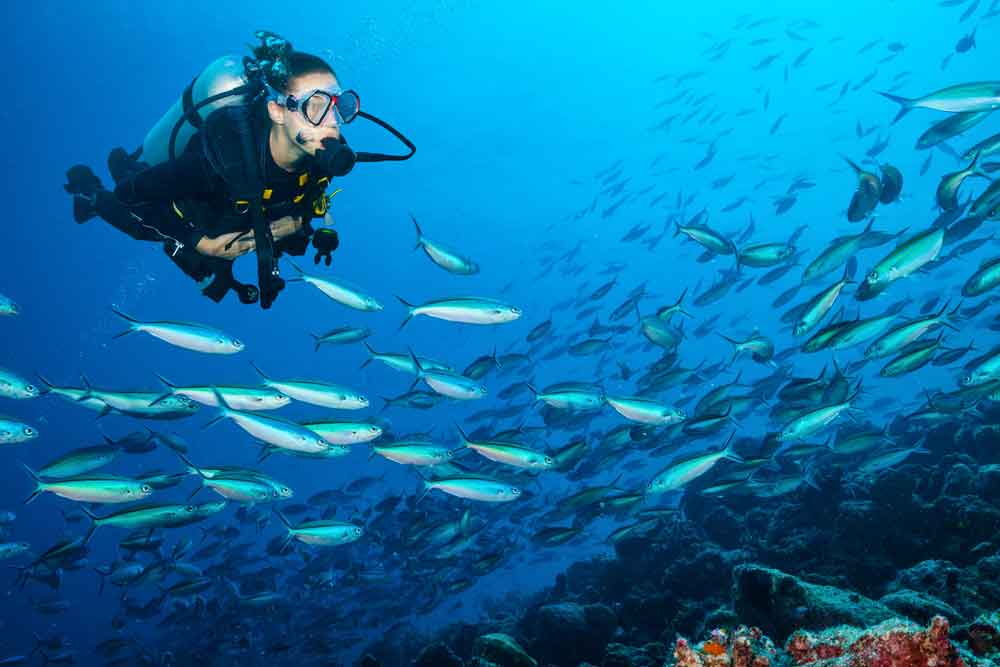
India’s long coastline stretches over 7,500 km across the Arabian Sea, Bay of Bengal, and Indian Ocean. It is here that entire economies are born, starting with fishing nets being cast and mended before sunrise. Behind the daily rhythm that feeds millions is the power of women with their labour, knowledge, and leadership. This World Oceans Day, let us find out how they contribute to keeping the coastal economy alive.
Women And The Fish Economy
In coastal towns of Tamil Nadu, Kerala, Odisha, Andhra Pradesh, Maharashtra, and Gujarat, fish vending involves negotiation and timing. Women fish vendors arrive at auction yards before dawn, often after managing household responsibilities through the night. They compete for the freshest catch, calculate margins in seconds, and then travel (sometimes for miles) on foot, bicycles, or crowded buses to reach local markets.
Their presence ensures that fish doesn’t just land on docks but reaches kitchens. Many households across India consume seafood sourced, priced, and distributed by women whose financial decisions are based on decades of experience. In places like Chennai’s Kasimedu harbour or Kochi’s coastal markets, women traders often form informal networks that decide pricing trends long before formal market reports catch up.
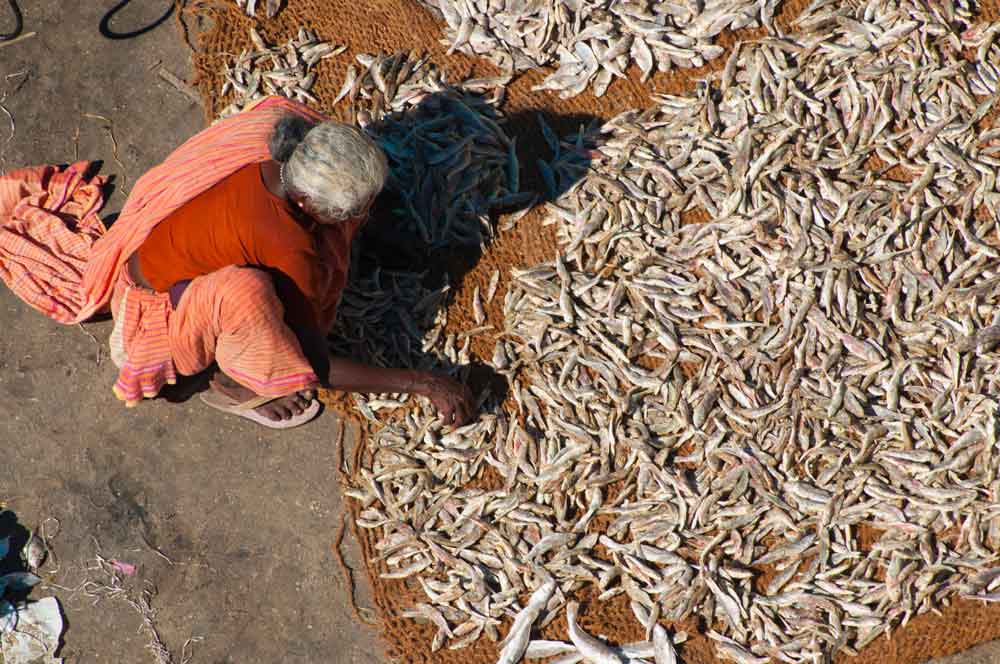
Alongside them are women processors who are involved in cleaning, drying, salting, and packing fish in small-scale units. These are the invisible factories of the coastal economy, where labour is intense but deeply skilled. Processing units run by women’s self-help groups have become particularly important in improving income stability, especially during monsoon bans when fishing is restricted.
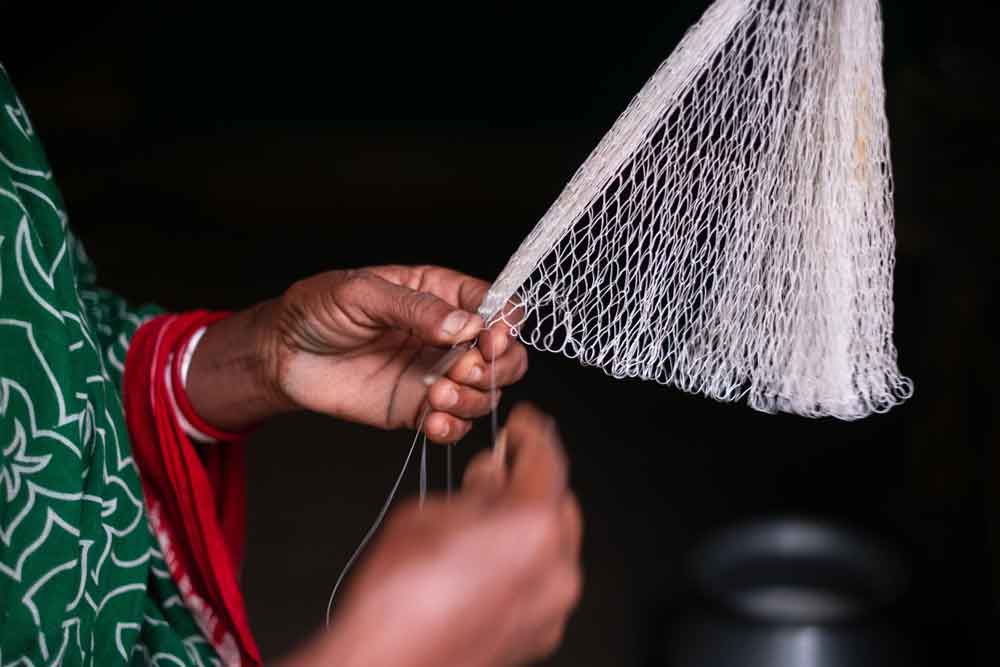
Before fish can be caught, nets must be made, repaired, and remade again. In many coastal villages, net-making is a skill passed through generations of women. Their work is meticulous since every knot determines durability and a fisherman’s success at sea. Women in this sector often work from their homes or community spaces, balancing caregiving with long hours of handwork. While mechanised net production exists, traditional net-makers continue to play a crucial role, especially for small-scale fishers who rely on customised gear.
Seaweed Farming
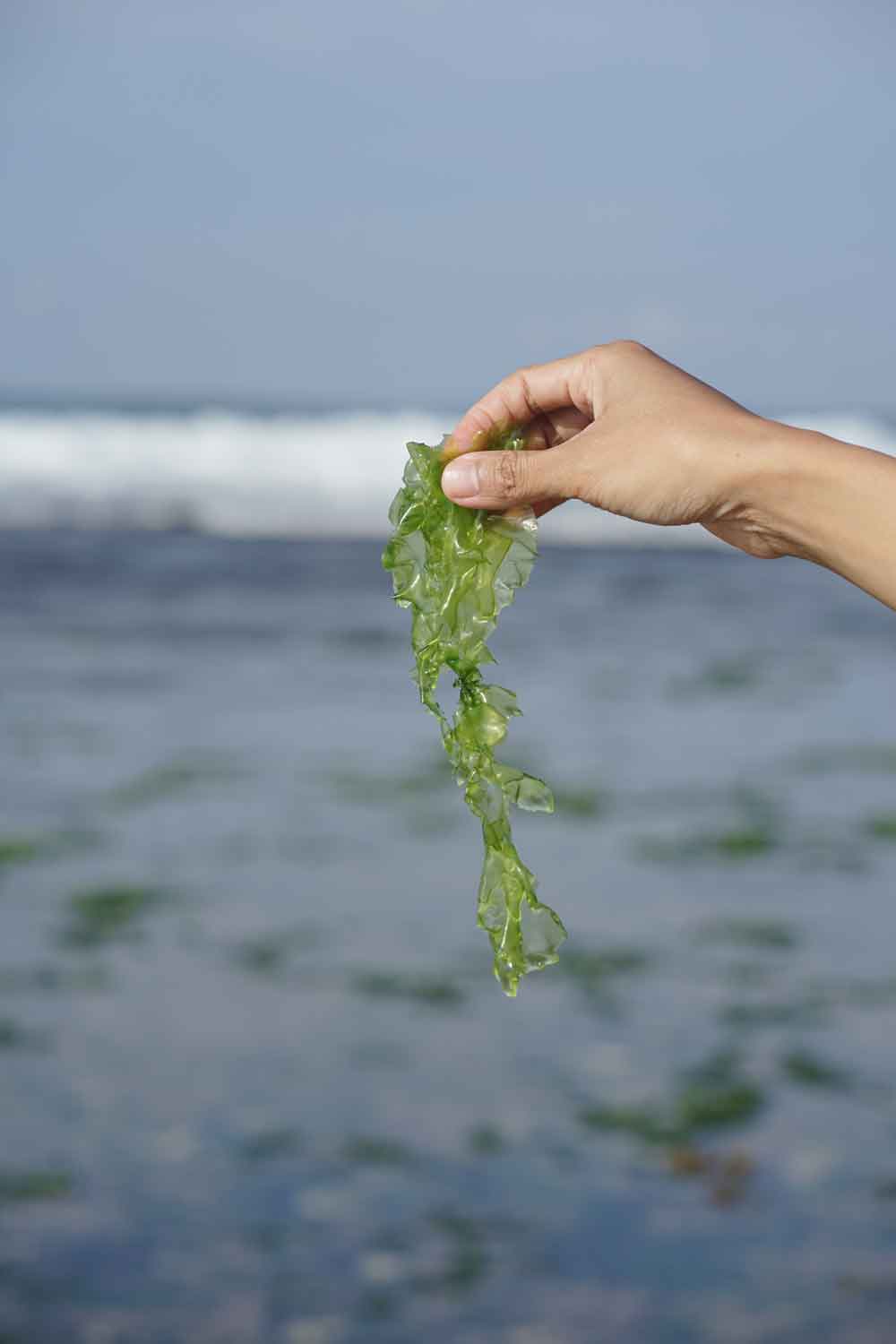
One of the most significant shifts in India’s coastal economy has unfolded just beneath the surface of the water. Seaweed farming has emerged as a sustainable livelihood, particularly in coastal districts of Tamil Nadu such as Ramanathapuram and Palk Bay, where women’s self-help groups have taken the lead.
For many women, seaweed cultivation has offered a rare blend of predictable income tied to the sea, but not dependent on the uncertainties of fishing. Seaweed grows on ropes and rafts in shallow coastal waters, requiring relatively low investment and offering steady returns within weeks.
This work has transformed into financial independence. Women who once depended entirely on seasonal fishing income or male household earnings now manage cultivation cycles, negotiate sales with processing companies, and reinvest profits into education, housing, and small enterprises.
Beyond income, seaweed farming is part of a larger blue economy shift that values marine resources not just for extraction but for regeneration. Seaweed absorbs carbon, supports marine biodiversity, and can be used in food, pharmaceuticals, and biofertilizers.
Protecting The Sea
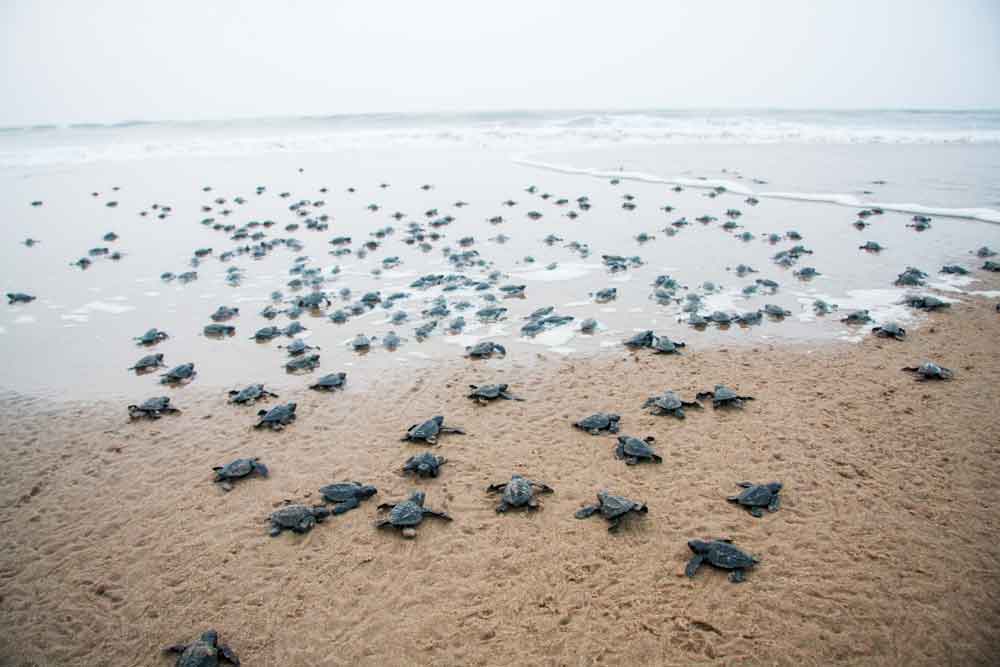
Not all coastal labour is economic in the traditional sense. Some of the most important work is invisible, of protecting ecosystems that sustain both livelihoods and biodiversity. Along India’s eastern coastline, women conservation volunteers play a critical role in protecting turtle nesting sites, especially for Olive Ridley turtles. During nesting season, women patrol beaches at night, often working alongside forest departments and local NGOs. They help prevent poaching, guide hatchlings safely to the sea, and educate communities about the importance of marine conservation. These women are often from fishing families themselves. Their knowledge of tides, currents, and coastal patterns is used for conservation. In doing so, they challenge the idea that livelihoods and environmental protection are separate worlds.
A New Generation
Perhaps the most transformative change is happening within fishing families themselves. Across coastal India, daughters of fishers are entering fields that once seemed distant. Whether it is marine engineering, environmental law, oceanography, entrepreneurship, or policy advocacy, these women carry dual identities. They are trained professionals navigating urban institutions, yet they remain deeply connected to their coastal roots. Some work on marine conservation projects, others on sustainable fisheries policy, and some launch startups focused on seafood supply chains or coastal tourism. Their understanding of the lived realities around the ocean can help contribute better infrastructure, or draft coastal regulation laws.
India’s blue economy narrative often focuses on ports, exports, and industrial fisheries. But on the ground, it is women who sustain the everyday functioning. Coastal economies are not just about extraction, but about care and community knowledge, which come naturally to women. As sea levels rise and climate pressures intensify, their roles become even more critical. On World Oceans Day, it is important to acknowledge all these women who shape the coastal economy every day, often without visibility.