At the headquarters of the United Nations in New York, delegates from around the world gathered in March for the 70th Session of the Commission on the Status of Women (CSW-70), the world’s largest annual forum dedicated to gender equality. Representing India at the session was Savitri Thakur, Minister of State for Women and Child Development, who delivered India’s perspective on a theme that has increasingly shaped the country’s policy narrative, women-led development.
Speaking at an event titled ‘Women-Led Development and South-South Cooperation – Success Stories from the IBSA Fund,’ Thakur emphasised that empowering women is not simply about welfare programmes but about transforming women into leaders of economic and social change. Her message reflected a shift in development thinking from women as beneficiaries to women as drivers of growth and decision-making.

Women-Led Development: A Global Conversation
The Commission on the Status of Women is the principal global platform dedicated to advancing gender equality and women’s empowerment. Each year it brings together governments, UN agencies and civil society groups to discuss policies and commitments that shape the global agenda on women’s rights.
At CSW-70, discussions focused on strengthening women’s participation in public life and ensuring access to justice for women and girls. Addressing the gathering, Savitri Thakur highlighted India’s progress in building an ecosystem where women are not just supported but positioned to lead development across sectors.
During the special event on women-led development, she also spoke about the role of the IBSA Dialogue Forum, a partnership between India, Brazil and South Africa. Through the IBSA Fund, the three countries collaborate on development projects in the Global South, many of which directly empower women.
Thakur pointed out that the fund, created in 2004, has supported over 50 development projects across nearly 40 countries, demonstrating how cooperation among developing nations can address poverty, inequality and gender gaps.
But beyond statistics and policy language, her remarks carried a deeper message: the transformation of societies depends on the leadership of women at every level, from international institutions to rural communities.
Moving From Women’s Development To Women-Led Development
For decades, development programmes around the world focused on women’s development or schemes that provided assistance to women in education, healthcare or livelihood. While these efforts improved welfare, they often positioned women as passive recipients. The concept of women-led development flips that model.
Instead of asking how governments can help women, the idea is to ask what happens when women themselves shape the economy, local governance and community solutions. In India, this approach has been visible in multiple ways:
- Women leading self-help groups (SHGs) and micro-enterprises
- Women participating in local governance through Panchayati Raj institutions
- Women driving digital and financial inclusion
- Women entrepreneurs building startups and rural businesses
Self-Help Groups Transform Rural Economies
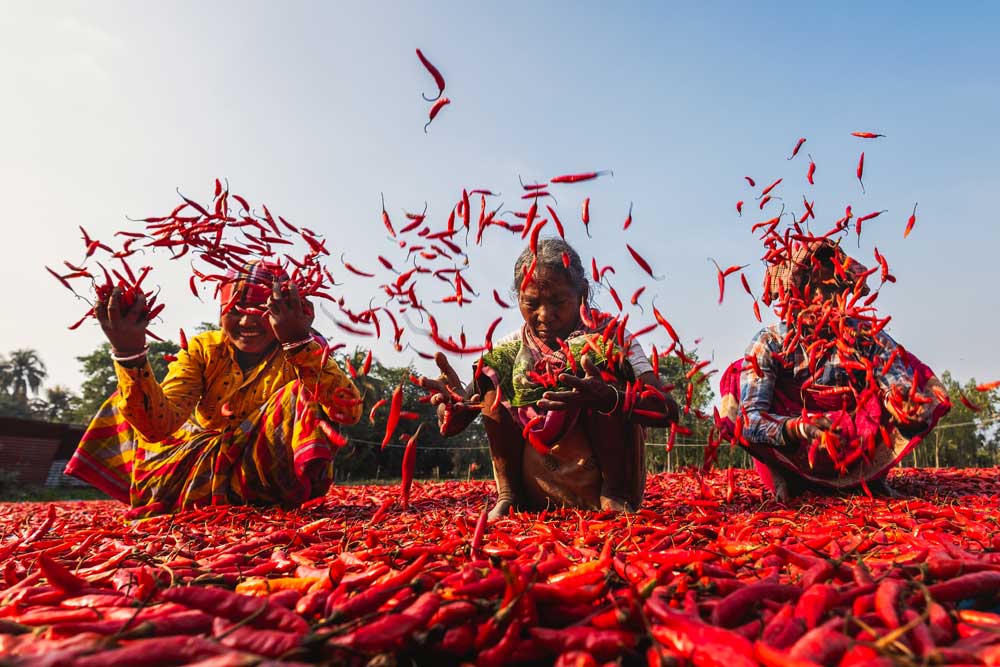
Perhaps the most powerful examples of women-led development are found in rural India. Across villages, millions of women participate in self-help groups or small collectives that save money, access micro-credit and run businesses. These groups have become engines of rural economic activity.
A group of women in a village may begin by saving a few hundred rupees a month. With access to credit, they might start small ventures such as producing spices, running dairy units, tailoring garments or managing small food processing businesses. Over time, the group becomes a local institution and starts negotiating with banks, running supply chains and mentoring other women.
What began as financial cooperation often evolves into community leadership. Women who once had limited public roles become decision-makers in village councils, school committees and local markets. For many development experts, these stories represent the real meaning of women-led development that translates into economic independence and a social voice.
Women Entrepreneurs Building New Possibilities
From urban tech startups to rural craft enterprises, women are increasingly launching businesses that create jobs and local opportunities. Digital platforms and e-commerce marketplaces have opened new markets for women artisans and producers who previously sold only within their villages. Government programmes and financial inclusion initiatives have expanded access to bank accounts and loans, enabling more women to start businesses. But equally important has been the shift in perception. Women are now seen as innovators and employers, not just workers. Many entrepreneurs also become mentors in their communities, encouraging younger women to pursue education, financial independence and leadership roles.

Grassroots Leadership And Social Change
Women-led development is not only economic. It also includes leadership in social justice and community welfare. Across India, grassroots leaders are working to address issues such as domestic violence, access to healthcare and education for girls. Such leadership demonstrates how local activism can influence national and even global conversations about gender equality. It is often these grassroots experiences that inform policy discussions at international forums like the Commission on the Status of Women.
Why Global Partnerships Matter
While many stories of women-led development begin locally, global cooperation plays a crucial role in expanding opportunities. The IBSA Dialogue Forum is one example of how countries of the Global South share knowledge and resources. Instead of traditional donor-recipient models, IBSA emphasises partnership among developing nations facing similar challenges.
Through the IBSA Fund, projects have supported livelihoods, education and community infrastructure in countries across Africa, Asia and Latin America. Many initiatives specifically focus on empowering women through training, entrepreneurship and leadership development.
For India, participating in such partnerships also allows it to showcase lessons learned from its own development programmes, particularly the success of self-help groups and community-driven initiatives. As Savitri Thakur highlighted in her remarks, these collaborations prove that solutions can emerge from within the Global South, rather than being imported from elsewhere.
Bridging The Gap Between Global Dialogue And Local Reality
Events like CSW-70 often produce ambitious declarations and policy commitments. But their real impact depends on how those ideas translate into everyday life. When a woman in a rural self-help group becomes a business owner, or when a young entrepreneur launches a startup employing other women, they embody the very principles discussed in international forums. Development becomes transformative when those most affected by it become the leaders shaping it.
A Vision For The Future
Policies alone cannot achieve gender equality. What matters is creating ecosystems where women have the resources, confidence and authority to lead. India’s emphasis on women-led development reflects that vision. From self-help groups to international partnerships like the IBSA Dialogue Forum, the idea is that women’s leadership can drive inclusive growth, stronger communities and more equitable societies.