As India welcomes 2026, cities are changing on the road and in the way women move. The future of mobility is electric, sustainable, and increasingly inclusive. From electric scooters and e-bikes to expanding electric public transport networks, Indian cities are steering toward cleaner, greener, and safer transport options. Women make up nearly half of urban commuters and this shift promises more autonomy and freedom in their daily journeys.
Why Electric Mobility Matters
Urban transport in India has long been a major source of air pollution and greenhouse gas emissions. Road transport alone accounts for a significant share of the country’s total energy-related emissions, contributing around 12–13.5 per cent of CO₂ emissions, with two- and three-wheelers responsible for roughly 20 per cent of that share.
Electric mobility, whether through scooters, bicycles, or public transport, is central to meeting India’s climate goals. By the end of 2025, India had over 5.5 million EVs on the road, with sales of electric vehicles steadily rising each year thanks to government incentives, infrastructure growth, and consumer demand.
The environmental impact is already visible. Between 2020 and 2024, EV adoption helped avert millions of tonnes of CO₂ emissions, while electric buses and EVs began modernising city transport.
Electric Two-Wheelers For Women
Electric scooters and motorcycles are emerging as a practical, affordable alternative for daily commuters in India’s urban landscapes, particularly women who crave freedom and flexibility. In a country where two-wheelers made up nearly 73 per cent of all registered vehicles as of 2024, a shift to electric can significantly reduce pollution from private transport. Unlike petrol scooters that involve higher fuel and maintenance costs, electric models are cost-effective with average operating costs far lower over time, making them an attractive option for daily travel.
Yet challenges remain. Research shows that women are under-represented as drivers and two-wheeler owners, partly because of safety concerns, limited access to finance, and fewer driving licenses issued to women compared with men. To increase adoption, mobility planners and policymakers are beginning to think about gender-responsive electric mobility systems. This includes addressing vehicle design, financing, and infrastructure to make electric scooters more accessible, affordable, and appealing for women riders.
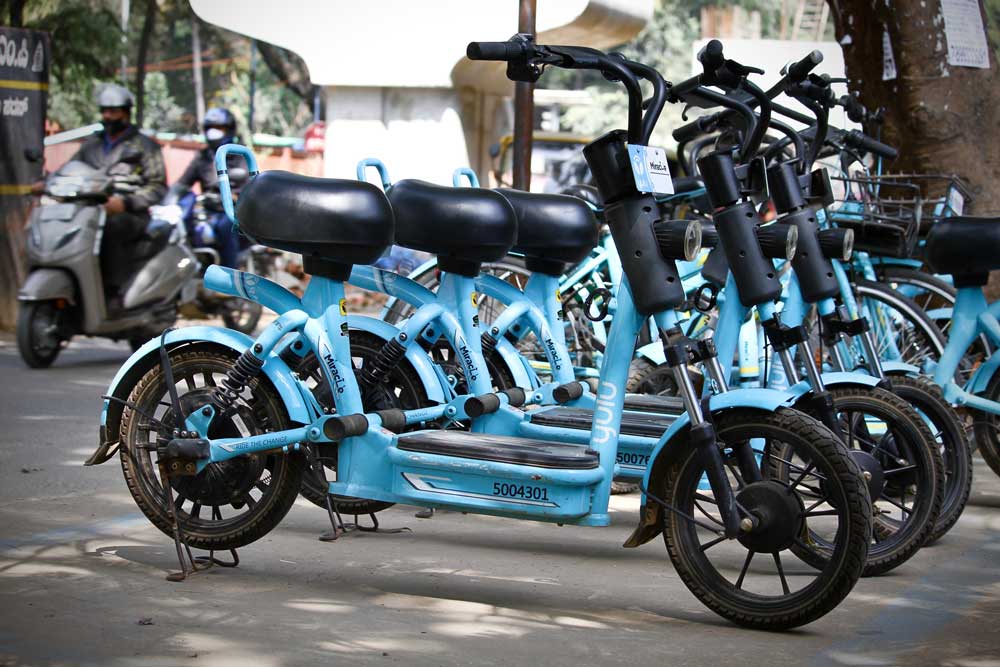
Electric bicycles (e-bikes) are gaining traction as an accessible and sustainable mode of personal transport, especially in congested cities where private car use is impractical and public transport might be unreliable or unsafe.
In recent years, numerous initiatives have expanded cycling infrastructure and promoted non-motorised transport systems. Cities like Udaipur, for example, have been recognised for their comprehensive cycling networks, with dedicated lanes and widespread public bicycle availability, making cycling a safer and cleaner alternative.
E-bikes take this a step further, offering power-assisted mobility that makes longer commutes or hillier terrains manageable, which can be especially empowering for women who juggle work, family, and multiple daily errands.
Beyond personal use, e-bikes also open livelihood opportunities for women in last-mile services, deliveries, and community-based mobility enterprises, turning mobility solutions into economic participation pathways.
Electric Public Transport And Shared Mobility
The electrification of public transport is another cornerstone of India’s sustainable mobility future. Large metropolitan areas are deploying electric bus fleets, aiming to reduce urban air pollution while offering reliable, cost-effective travel options. Under schemes such as PM E-Bus Sewa, states like Andhra Pradesh are adding hundreds of electric buses to city routes, a move expected to cut millions of tonnes of CO₂ emissions and modernise public transport infrastructure.
Beyond Greener Routes
While electric mobility brings environmental gains, sustainable transport must also be safe and accessible for women. Safety concerns shape how women travel daily from the moment they leave home to reach a bus stop or bike lane to the point they arrive at their destination.
Studies highlight that women’s perception of safety significantly influences their willingness to use various modes of transport, particularly public and shared options. Addressing this requires strategies that blend infrastructure improvements with community awareness, technology (like AI-enhanced safety tools), and dedicated planning for women’s needs.
Initiatives such as bicycle lanes, well-lit streets, segregated pathways, and community-based approaches all contribute to an environment where women feel secure, confident, and in control of how they move.
Government Roadmaps For An Electric Future
India’s rise in electric mobility is backed by policy measures that aim to make electric transport mainstream. Incentives under schemes like FAME II, tax rebates, subsidies for electric scooters and three-wheelers, and significant investments into charging infrastructure are helping to lower barriers to EV adoption. Cities like Surat are pushing ambitious goals, aiming for 50 per cent of all vehicle sales to be electric by 2030, supported by a network of charging stations and incentives for women-led electric vehicle enterprises.
Meanwhile, the national mission toward net-zero emissions by 2070 and the growth of renewable energy capacity further underpin the vision of a clean, electrified transport ecosystem.
As India accelerates into 2026, sustainable mobility seems to be the mainstream future. At the heart of this transformation are urban women, who are redefining how cities breathe, move, and grow. For this revolution to be truly inclusive, policymakers, planners, and communities must ensure that electric mobility is green, safe, and accessible.