Every Onam, Kerala becomes a feast for the eye. White-and-gold kasavu saris appear on Instagram feeds and courtyards bloom into elaborate pookkalams. The Onam feast or Sadya is often the highlight of the festival, and banana leaves are laden with tradition vegetarian dishes such as avial, olan, thoran, pachadi, sambar and payasam. But behind every picture-perfect Onam is the labour of women. For many Malayali women today, that is changing. One of the most interesting aspects of the present-day festival is what they are willing to carry forward, and what they are not.
The story of Onam begins with a king who represents an almost radical ideal of equality among people, extended to gender. Mahabali, the mythical ruler of Kerala, is remembered as a just and generous king whose kingdom had neither poverty nor discrimination. So, the central idea of Onam is not simply abundance, but it is also an egalitarian society. Mahabali is eventually sent to the netherworld, but is granted permission to return once a year to see his beloved subjects. That return is what Thiruvonam commemorates.
The festival is celebrated across religious and caste identities, while also emphasising its harvest-festival roots. It includes Malayalis who are religious, secular, Christian, Muslim, Hindu, atheist, and those for whom the festival is primarily cultural.
Today, a woman does not have to reproduce every tradition perfectly to claim the festival as hers. She can make one dish instead of fifteen, celebrate with friends instead of relatives, wear a sari or refuse one, make a tiny pookkalam on an apartment balcony, or order a Sadya thousands of kilometres from home.
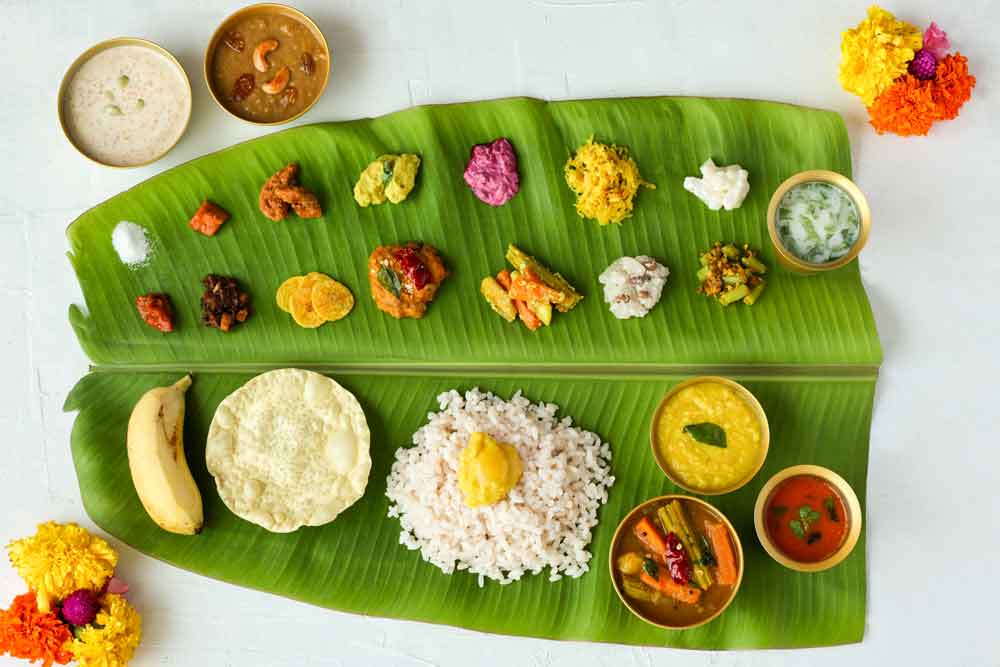
Preparing The Sadya
There are women who still love creating Onam exactly as their mothers and grandmothers did. They wake early to begin the feast prep, because the chopping, grinding and cooking are not merely chores but a form of memory. The kitchen becomes an archive, and cooking becomes a way of remembering women who may not have left behind written records. But there are also women who ask why tradition should require one person to do all the work.
The traditional Onam Sadya is an extraordinary culinary production. Depending on the region and household, it can include parippu (plain boiled dal that is usually served with a dollop of ghee), sambar, avial, olan, erissery, thoran, kalan, pachadi, pickles, banana chips, sharkara varatti and several kinds of payasam. Even serving it is a skill because the dishes are placed on the banana leaf in a particular order and at particular moments. That means an Onam lunch can represent hours, and sometimes days of unpaid domestic labour.
Today, women don’t follow one single way to celebrate Onam. For some, reclaiming tradition may mean learning her grandmother's recipe. For another, it may mean refusing to spend an entire day cooking. For another, it may mean insisting that the men in her family learn to cook and serve alongside. A daughter may learn her mother’s recipes but not abide by all her rules.
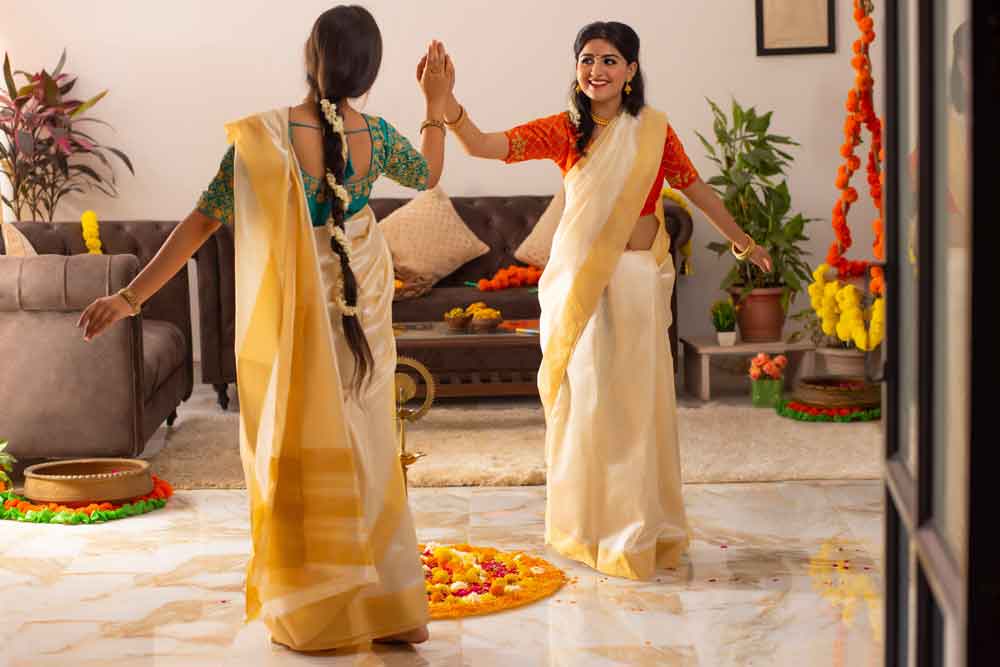
Entering Public Spaces
There is another history of Onam that sits outside the kitchen, of women making public space for themselves. The festival's songs, dances, games and gatherings have offered women occasions to step outside the strictly domestic world and participate in something collective. In different parts of Kerala, Onam has been marked through women's performances and games, from Thiruvathirakali to swings and other forms of communal celebration. What looks like festivity can also be read as a small but significant claim to visibility, of women gathering together, performing together and occupying public space together.
A woman who might be expected to be quiet and contained in everyday life can, during Onam, sing loudly, dance in a circle, dress up, compete, perform and be seen. Contemporary women have expanded that space further. Onam celebrations in colleges, workplaces and Malayali associations have become places where women organise events, take the stage, compete in cultural contests and build friendships beyond the family. The festival becomes not merely something women preserve, but something they actively create.
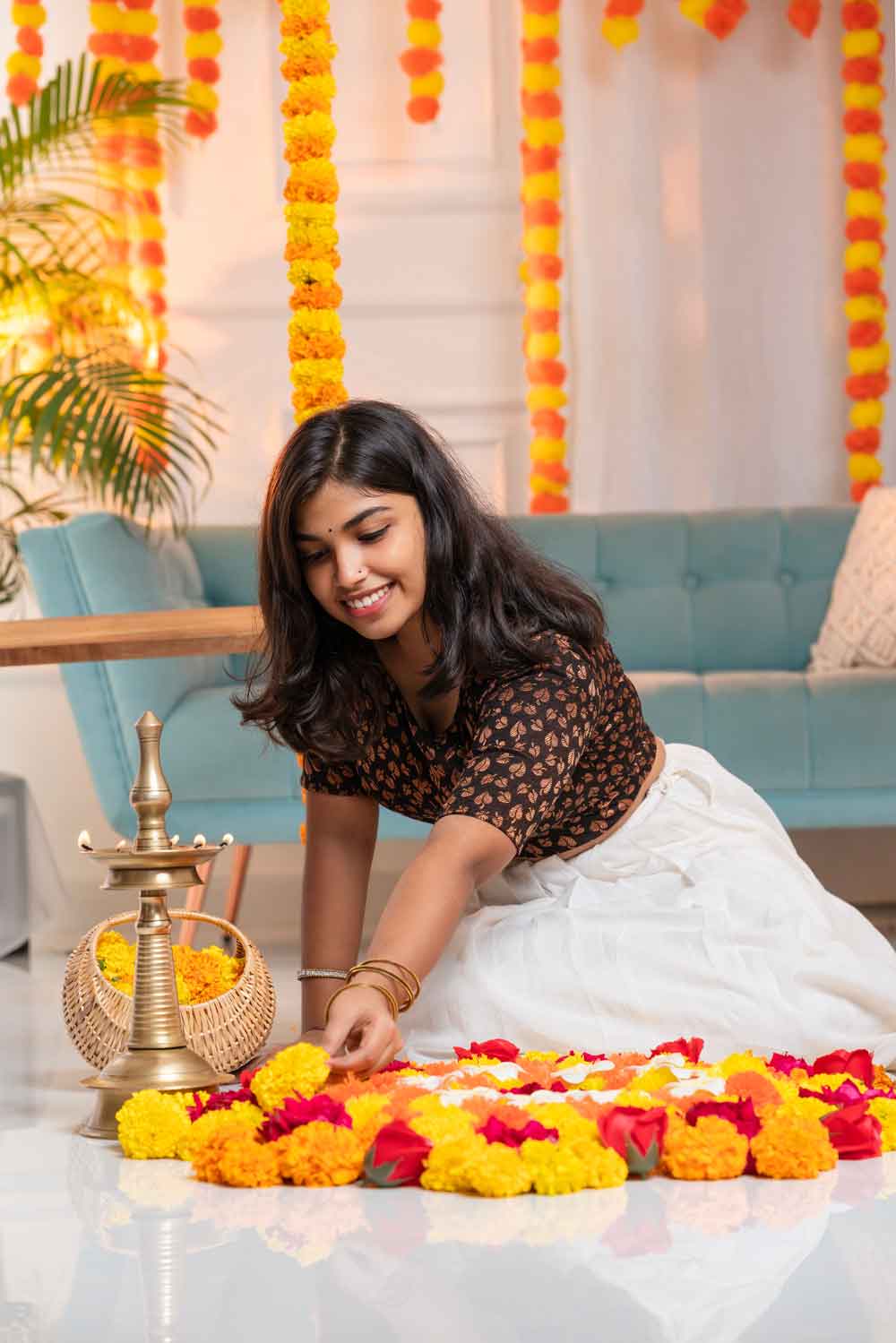
Instagram Onam Versus Reality
The pookkalam is another important part of Onam. Traditionally, these floral carpets used locally available flowers. Today, contemporary ones increasingly feature commercially available varieties such as chrysanthemums and marigolds and the pookkalam has become almost tailor-made for Instagram. We see them geometric, meticulously colour-coordinated and photographed from above. There are competitions, and this floral rangoli that once welcomed Mahabali into a courtyard is now a declaration of creativity and aesthetics, with women as designers.
The kasavu or white sari edged in gold has become one of the most recognisable visual elements of Onam. But contemporary Malayali women are making it their own. The kasavu may appear as a traditional sari, a set-mundu, a blouse paired with jeans, a contemporary silhouette or a deliberately minimalist look. On social media, Onam fashion has become its own genre.
But real Onam is considerably messier than Instagram. It includes women rushing back from work to finish cooking, widows, single women, divorced women, migrants, women who live alone, women whose families are scattered across countries and time zones. Some people celebrate lavishly, while for others, Onam is simply a day off and a good meal!