Globally, the festive period has become synonymous with consumption. Statistics from consumer insights firms show that while holiday spending supports retail economies, it also generates significant stress. Over half of consumers surveyed reported feeling financial stress during the holiday season, as budgets tighten against gifting expectations and festive purchases.
For many Indian women, December arrives not as a pause but as a crescendo. Office deadlines pile up, children’s school calendars erupt with festive days, family WhatsApp groups buzz with gift lists, Secret Santas, and décor expectations. Add inflation anxiety, emotional burnout, and a year that already demanded too much. Christmas, once a season of rest, begins to feel like another performance.
Its environmental impacts are equally sobering. Research published in The Guardian found that the average person in the UK produces 23 times more carbon emissions on Christmas Day than on a normal day, largely because of gift consumption, travel, and festive energy use.
In India, while Christmas is celebrated by a smaller population, the cultural tilt toward festive shopping and decorations around the season, influenced by global trends, still shows parallels with overconsumption patterns. Retail bounce during festival periods, including Christmas, sees e-commerce spikes of up to 20 per cent in sales compared with non-festive months.
But across Indian cities and smaller towns, a subtle shift is underway. More women are choosing what they’re calling a quiet Christmas, with scaled-down celebrations, fewer but deeply considered gifts, minimal décor, and an intentional resistance to over-consumption. This is not about cancelling joy, but merely reclaiming it in a unique way.

The Myth Of ‘Doing It All’
The past few years have reshaped how Indian households think about money and energy. Rising food prices, school fees, EMIs, medical expenses, and lifestyle inflation have made December spending feel heavier than ever. At the same time, emotional labour, planning meals, hosting, gift-buying, and coordinating family expectations still fall disproportionately on women. A quiet Christmas responds to this reality and offers an alternative. You can choose rest instead of a larger-than-life performance.
What A Quiet Christmas Looks Like
A quiet Christmas is about fewer gatherings, but with people you genuinely want to be with. Instead of a week of elaborate hosting, opt for one meaningful meal. Give intentional gifts that tell a story and appeal to the recipient, rather than just ticking boxes or filling a cupboard. Your décor doesn’t need to be Pinterest-perfect; it just needs to feel personal. Think of all these changes as the difference between fast fashion and a well-tailored kurta. One impresses briefly; the other stays with you.
Choosing Fewer Gifts
Gift fatigue is real. Many Indian women find themselves buying gifts out of obligation for teachers, colleagues, and relatives, often resulting in generic items that neither giver nor receiver remembers. Instead, here are some practical ways to scale back without guilt:
Set a clear boundary early: Communicate openly with family or friend groups that you want to present just one thoughtful gift per household, or perhaps insist on a 'no gifts for adults' rule, just the kids. Most people are secretly relieved when someone else says it first.
Shift from objects to experiences: For people who matter, you can present something they value over material gifts. This could be a handwritten letter with a shared memory, a home-cooked meal voucher, babysitting or elder-care time, a planned walk, movie night, or chai date in January.
Support small, local, or women-led businesses: Block-printed table linen, homemade plum cakes, or knitted scarves from self-help groups or local artisans carry meaning and circulate money within communities.
Repurpose what you already have: This doesn’t mean you give away rubbish to people who neither need, nor want it. Instead, use old dupattas as gift wrap, newspapers tied with twine, or reusable cloth bags. These are not just eco-friendly choices, they are deeply rooted in local tradition.
In many European countries, such as Germany, Christmas markets prioritise handcrafted items such as often wooden toys, candles, and ceramics, with less emphasis on mass-market electronics or fashion. These markets celebrate community and craftsmanship rather than just consumerism. In fact, in many Indian cities like Delhi and Bangalore, this tradition has taken root with German Christmas markets showcasing local and European artisans, emphasising sustainability and storytelling through hand-made goods.
Rethinking Décor
The pressure to decorate properly has intensified with social media. Matching trees, colour-coded ornaments, and LED overload seem to be the norm. But many women are stepping back and discovering that warmth doesn’t come from wattage. Have one focal Christmas point instead of a full house makeover. If you’re not reusing your old tree, get a small tabletop one, decorate a corner with candles, or a single window dressed with fairy lights. Use handmade and memory-rich ornaments like your children’s crafts, dried orange slices, pinecones, cinnamon sticks, old family baubles, or ornaments collected over the years. Include natural elements such as green branches, flowers from the local market, brass or earthen lamps. Décor should feel like an extension of your home, not a costume it wears for ten days.
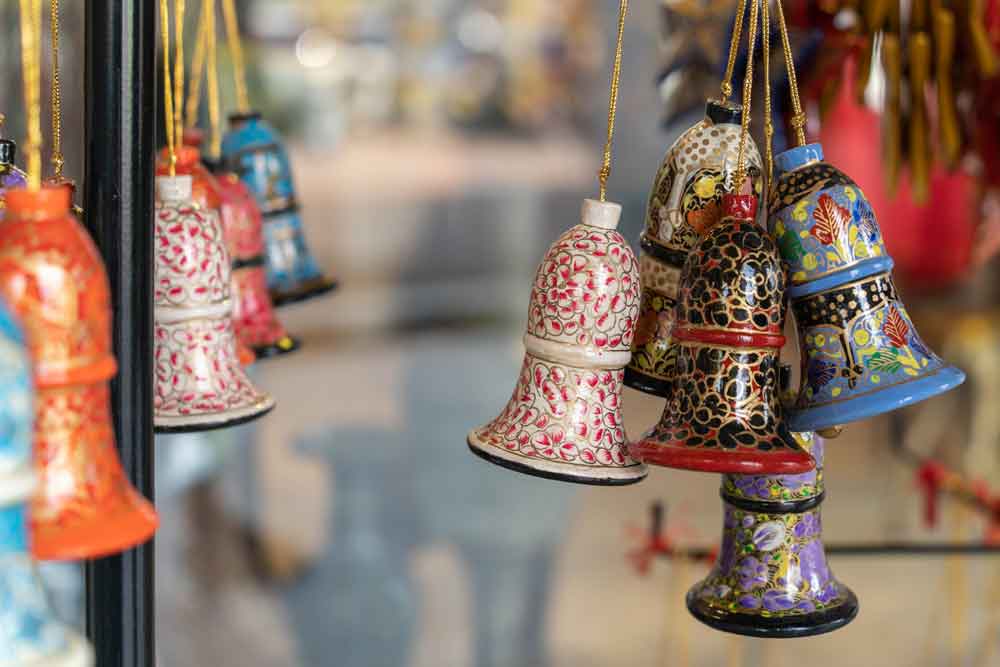
Across India, artisans and craft communities offer an inspiring alternative to mass-produced decor. Kashmir’s papier-mâché baubles and ornaments are handcrafted and eco-friendly, blending traditional artistry with festive charm. Many artisans now export these pieces to markets abroad. Terracotta crafts such as Molela plaques from Rajasthan and Hatima Putul dolls from Assam reflect regional heritage and make meaningful keepsakes. Kondapalli wooden toys from Andhra Pradesh exemplify age-old craftsmanship that can double as décor or heirloom playthings.
Buying from local craft collectives, markets, or federations supports thousands of artisans nationwide, and turns gifting into support for sustainable livelihoods rather than just transactions.
Celebration Without Waste
Food is at the heart of Christmas, but overcooking often leads to stress, leftovers, and guilt. A quieter approach doesn’t mean skipping favourites. It means choosing them carefully. Cook two or three dishes that you and everyone else truly loves, not ten elaborate ones that you feel obliged to make.
Rather than sprawling parties with expensive spreads you stress about preparing, consider potluck dinners where each guest brings a favourite dish, easing the host’s load and celebrating collective participation. Conduct story-sharing nights or creative activities like card-making, ornament crafting, or singing carols together. Create new rituals like a gratitude circle around the table, where everyone shares something they’re thankful for that year. Many women report that a simple meal that is shared slowly, without rush, feels far more festive than an overflowing table eaten in exhaustion.
The Emotional Reset
Perhaps the most radical aspect of a quiet Christmas is the permission it gives women to stop performing. Minimalist holiday movements in Scandinavia focus on hygge holiday celebrations or cozy, intentional gatherings, simple decorations, and shared experiences like fika or warm walks. These cultures remind us that festive joy comes from comfort and connection, not excess.
Rest is not laziness. In a culture that equates productivity with worth, a quiet Christmas can offer the best gift of all - recovery. A quiet Christmas is not about doing less for others, rather it’s about stepping out of the cycle of buy-discard-repeat and into something slower, warmer, and more humane. Celebrate with loved ones, support artisans, share moments, and forge memories instead of invoices.