In India, more than 11.8 million women live with disabilities, as per the last census. They make up almost half of the country’s disabled population, yet lack visibility and representation. They are triply marginalised at the intersections of gender, disability, and economics. Each layer creates a reality where disabled women are more vulnerable to poverty, exclusion, violence, and neglect. As the world marks December 3 as the International Day of Persons with Disabilities, the stories of disabled women in India demand attention in order to find solutions and create rights and pathways for social change.
Mobility
For most disabled women, stepping outside the house is fraught with risk. Public transport is the lifeline for most Indians, but often, shuts out disabled women. Buses lack ramps, priority seats are misused, and footpaths are broken. Metro stations may be accessible, but the ‘first and last mile’ remains hostile. A 2023 Mobility India report notes that over 60 per cent of disabled women avoid public transport due to fear of harassment. For visually- and hearing-impaired women, travelling alone becomes dangerous. For women in wheelchairs, it is nearly impossible. Lack of mobility results in fewer job opportunities, fewer educational choices, inability to access healthcare, greater dependency on male family members and increased isolation.
How can we change this? Cities and state governments need to include women with disabilities in all urban planning committees, ensuring that buses, stations, and public buildings are accessible. Transport staff should be trained on disability inclusion and sensitivity. Tech-enabled solutions could include navigation apps designed for disabled users like audio cues, accessible mapping, and a helpline integration.
Healthcare Neglect
Disabled women routinely report poorer health outcomes. Studies show that they’re three times more likely to be denied medical services, and more likely to have undiagnosed illnesses. Many face patronising attitudes and their doctors prefer speaking to companions instead of the woman herself, assuming she cannot consent or doesn’t understand.
Maternal and reproductive health are the biggest blind spots as women with disabilities often report inaccessible clinics and labour rooms, lack of sign-language interpreters, assumptions that they cannot or should not become mothers, denial of contraception or forced contraception. For women with intellectual disabilities, the risk of abuse within healthcare settings is even higher.
Disability-inclusive training should be made compulsory for doctors and nurses. Accessible health information in Braille, large print, audio, or sign-language videos help women make informed choices. Mobile health clinics can be made available for rural disabled women. Finally, consent rules need to be changed, ensuring autonomy with the woman herself. Non-profits such as Rising Flame and Sarthak have advocated for patient rights toolkits as well.
Violence
Disabled women face some of the highest rates of violence in the world, whether it is physical, emotional, financial, sexual, or institutional. A UN study found that women with disabilities are 2–4 times more likely to experience sexual violence. The perpetrator is often a caregiver, family member, or someone who exploits their dependence.
Barriers to reporting are massive, starting with inaccessible police stations, and refusal by authorities to file cases. There is also a lack of sign-language interpreters. The fear of social stigma or losing a caregiver is bad enough, but the fact that a woman is disabled is often used to discredit her testimony as well.
In an ideal world, accessible one-stop crisis centres should be available in every district, with counsellors trained in disability communication. Community-based self-advocacy groups are essential and school-level education helps break stigma early. Legal recognition of disability-specific vulnerabilities under the PWD Act and POSH is crucial.
Employment
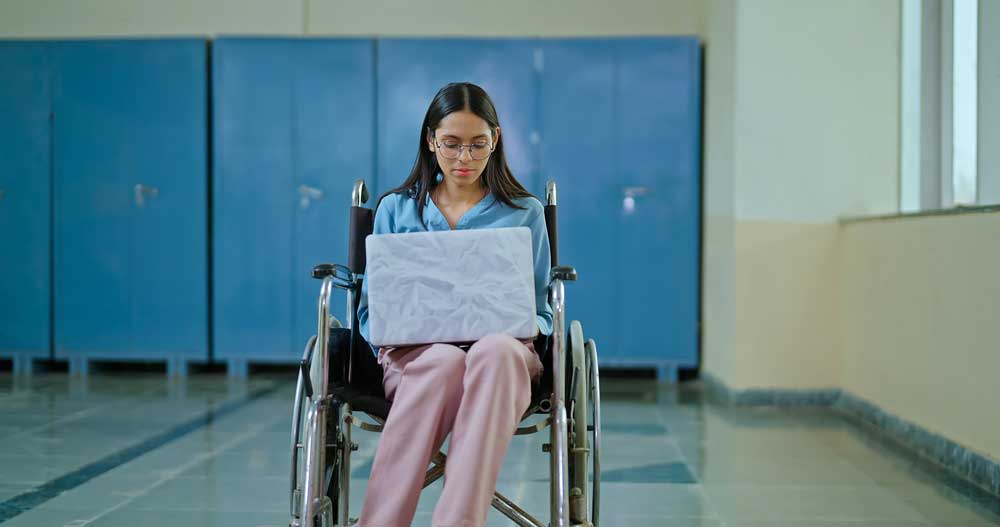
Women with disabilities face the lowest employment rate among all demographic groups. According to the NSSO, only 8 per cent of disabled women are employed, compared to 36 per cent of disabled men and 23 per cent of all women. Most are pushed into unpaid domestic work or informal labour. Inaccessible and hostile workplaces and discriminatory hiring practices make it harder for women to seek gainful employment and pursue a career. There is also limited access to skilling programs and lack of flexible work options.
But change is happening. Companies like TCS, ANZ, and Lemon Tree Hotels are taking accessibility seriously, reporting higher retention, stronger women-led teams, and better productivity. To further incentivise this, policy makers can provide tax incentives for inclusive hiring with remote work as a permanent option. There should also be mandatory workplace accessibility audits and skilling programs in digital literacy and remote-friendly job roles. Peer mentorship for disabled women entering the workforce greatly boosts morales. Women with disabilities bring problem-solving abilities, resilience, and a lived experience of navigating barriers, which are skills any workplace should value.
Digital Exclusion
Digital inclusion is touted as India’s big equaliser. But for many disabled women, it is yet another boundary line. There is a lack of access to smartphones with low digital literacy and unaffordable data plans. Some apps are not screen-reader friendly and there are online safety risks involved. Without digital access, disabled women are left out of telemedicine, online education, remote jobs, banking and UPI, safety apps and government schemes.
Subsidised smartphones for disabled women is one way to tackle this issue, along with training programs via community centres. There should be mandatory accessibility standards for all government apps, with helplines offering digital support in local languages. Digital safety training must be provided to women with intellectual or psychosocial disabilities
What Can We Do?
1. Listen to disabled women. Policies often fail because they don’t factor in real-time feedback and inputs from disabled people.
2. Build accessible cities as the norm, not a favour.
3. Invest in skilling and economic independence. Financial empowerment is the strongest antidote.
4. Challenge stigma at every level. Disability need not be a burden or flaw. Whether in schools, or the media, or even within families, narratives must shift.
5. Hold institutions such as hospitals, police stations and universities accountable. Accessibility is a legal right under the RPWD Act, not an option.
Disabled women are not recipients of charity. They are leaders, artists, athletes, founders, and changemakers. On December 3, and every other day, India must move beyond tokenism and find real solutions that ensure women with disabilities are not just included, but empowered.