When Avtar Group released its Top Cities for Women in India (TCWI) 2025 report, the results came as no surprise. Bengaluru retained its position as first on the list, reaffirming its reputation as the most women-friendly city in the country. What is more telling, however, is why Bengaluru continues to lead and what the rest of the rankings reveal about how Indian cities are supporting (or failing) women in their everyday lives.
Completing the top five are Chennai, Pune, Hyderabad and Mumbai, a mix of southern and western metros that together highlight a crucial truth. Women thrive in cities that strike a balance between social inclusion and economic opportunity. The TCWI 2025 report does not merely rank cities. It offers a mirror to India’s urban priorities, showing where progress has been made and where urgent change is still needed.
The TCWI 2025 report by Avtar Group is the fourth edition of this annual study and was shared publicly in early January 2026. The study covered 125 cities across India, expanding its reach compared with previous editions.
How The Rankings Were Determined
The TCWI rankings are based on a City Inclusion Score (CIS), a composite index that evaluates how welcoming and enabling a city is for women. This score is built on two equally important pillars.

The first is the Social Inclusion Score (SIS). This measures the quality of everyday life for women, including safety and security, access to healthcare and education, quality of public infrastructure, mobility, and overall liveability. In simple terms, SIS answers the question, ‘Can women live freely, safely and with dignity in this city?’
The second pillar is the Industrial Inclusion Score (IIS). This focuses on economic participation and workplace equity, women’s access to formal employment, the presence of women-friendly industries, career growth opportunities, skilling initiatives, and organisational policies that support retention and advancement.
The data used comes from a mix of secondary data (government and organisational sources) and primary research. These include publicly available data such as crime statistics, labour force surveys, and demographic and economic indicators, as well as firm-generated research, which may include questionnaires, structured assessments of workplaces and industries in each city.
Cities that perform well on both fronts emerge at the top, reinforcing the idea that women’s empowerment cannot be siloed into either safety or jobs alone. Both must exist together.
Why Bengaluru Continues To Lead
Bengaluru’s top ranking is driven by its strong industrial inclusion ecosystem. As India’s technology and innovation hub, the city offers a wide range of formal employment opportunities for women across sectors such as IT, startups, R&D, and global services. Corporate diversity and inclusion policies, return-to-work programmes, flexible work arrangements and skilling initiatives have helped women enter, and stay, in the workforce.
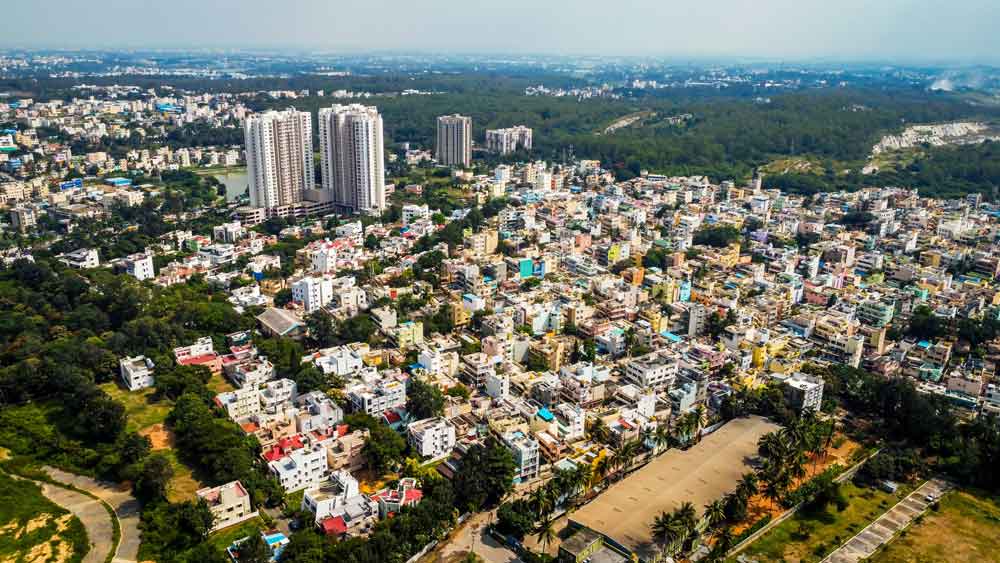
Equally important are improvements in social infrastructure. Tech-enabled policing, women’s helplines, better street lighting in key areas and growing awareness around safety have contributed to a relatively higher sense of security. While Bengaluru still struggles with congestion and infrastructure pressure, its ability to create a relatively balanced social-industrial ecosystem keeps it at the top.
Chennai’s Strength: Social Inclusion
Ranked second, Chennai stands out for its strong social inclusion performance. The city scores high on safety perceptions, public transport access, healthcare availability, and education. Government welfare schemes, women-centric public services, and a relatively conservative yet structured urban environment contribute to a sense of stability and security.
While Chennai’s industrial inclusion is improving steadily, its real strength lies in enabling women to navigate daily life with greater ease. This makes it especially attractive for women balancing work, family responsibilities and caregiving roles.
Pune And Hyderabad: Balanced Performers
Pune and Hyderabad, ranked third and fourth respectively, are examples of cities achieving balance. Both offer growing job markets, especially in IT, education, manufacturing and services, while also maintaining relatively good liveability. Pune benefits from its educational institutions, calmer pace of life, and expanding corporate ecosystem. Hyderabad, meanwhile, has emerged as a major technology and pharmaceutical hub, with proactive state policies encouraging investment and employment. For women, these cities represent environments where professional aspirations and personal well-being can coexist.
Mumbai: Opportunity At A Cost
At fifth place, Mumbai reflects a familiar paradox. It excels in industrial inclusion, offering unparalleled job diversity, financial independence and exposure. However, high living costs, housing shortages, long commute times and overcrowded infrastructure significantly affect women’s quality of life. Safety concerns persist, especially late at night and in densely populated areas, and affordability remains a major barrier. Mumbai’s ranking underscores a critical lesson: economic opportunity alone is not enough if social infrastructure does not keep pace.
Broader Trends Across India
One of the most striking insights from TCWI 2025 is the strong performance of southern cities. Consistent investment in education, healthcare, safety and workforce participation has paid off, making the region more conducive for women overall. Western cities perform well economically but often lag on social inclusion factors such as affordability and mobility. Meanwhile, many central and eastern cities show promise in social support systems but lack robust industrial ecosystems that can offer large-scale employment for women.
Encouragingly, Tier-2 cities are beginning to rise in the rankings. This signals that women-friendly ecosystems are no longer limited to the largest metros, opening up more geographic choices for education, work and life.

What Still Needs To Change
Despite progress, serious challenges remain. Safety is still uneven. Women’s sense of security varies widely within cities, particularly at night and in peripheral areas. High rents, inadequate housing and rising costs disproportionately affect women, especially single earners. Mobility gaps persist. Safe, reliable and affordable public transport remains a key concern. Access to quality childcare, eldercare and caregiving support continues to lag, limiting women’s workforce participation. Smaller cities need stronger job ecosystems. Social inclusion without economic opportunity restricts long-term empowerment.
What The Rankings Mean for Women
The TCWI 2025 report makes one thing clear. Women’s empowerment is deeply urban. Where a woman lives determines her safety, her career trajectory, her health, and her ability to make choices. Cities like Bengaluru, Chennai, Pune and Hyderabad demonstrate that when governments, industries and communities work together, women benefit in measurable ways. At the same time, the gaps highlighted in the rankings are a call to action for policymakers, employers and urban planners to rethink how cities are designed and governed.
Ultimately, the goal is not just to top a ranking, but to create cities where women do not have to choose between opportunity and dignity. The TCWI 2025 report shows that India is moving in that direction, but also reminds us how much further there is to go.