While women are increasingly visible in India’s workplaces, universities, and public life, the home remains the country’s most unequal institution. New research shows that equality is not simply about who earns more, but who cooks, who cares, who compromises, and who controls time.
Conversations about gender equality in India have focused on education, employment, political representation and wages. These are undoubtedly important indicators of progress. Yet, scholars increasingly argue that the true test of equality lies inside the home. Who wakes up first? Who remembers vaccination appointments? Who takes leave when a child falls ill? Who manages ageing parents? Who gets uninterrupted time to rest? These questions may appear mundane, but together they reveal power dynamics within families.
‘The household is one of the most important sites where gender inequality is produced and reproduced,’ economist Bina Agarwal has been quoted as saying. Her work on gender, property rights and intra-household bargaining has shaped feminist economics globally. Households, she argues, are not always harmonious units with shared interests. They are spaces where resources, responsibilities and decision-making are constantly negotiated and often unequally distributed.

Equality Is More Than Earning
For much of the 20th century, economic independence was viewed as the key to women’s empowerment. Paid employment is still one of the strongest predictors of women’s autonomy. Yet employment alone does not guarantee equality at home. A woman may earn as much as (or even more than) her spouse while continuing to shoulder the majority of cooking, cleaning, caregiving and emotional labour.
Sociologist Arlie Hochschild famously described this phenomenon as the ‘second shift’. After completing a day’s paid work, women begin another unpaid shift at home. Nearly four decades after her research, the concept continues to resonate globally and in India, where domestic labour remains deeply gendered. The result is what researchers increasingly call time poverty.
The Invisible Economy Of Unpaid Work
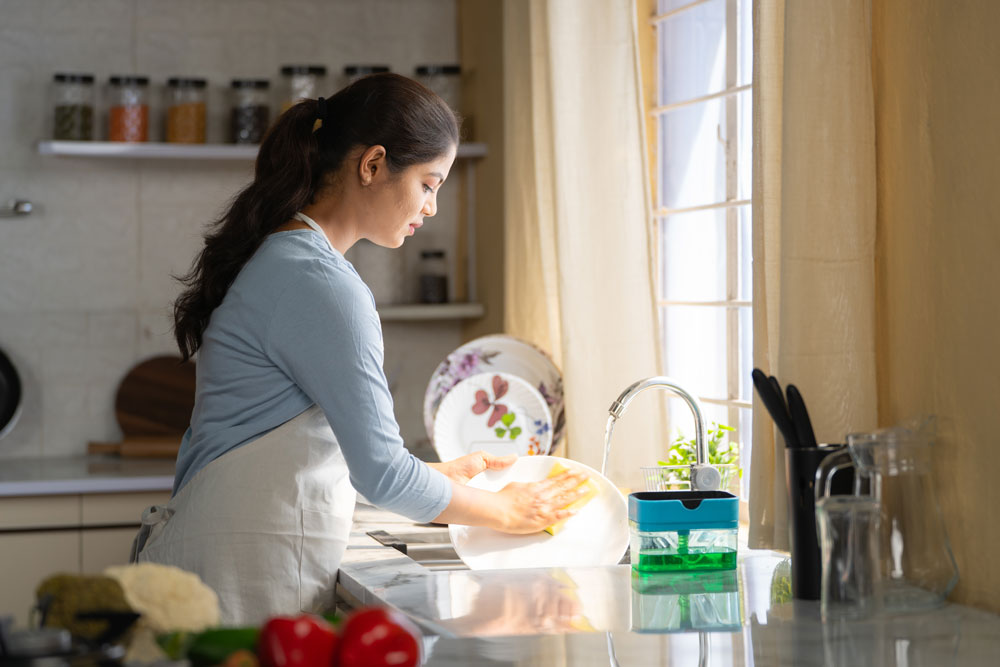
India's Time Use Survey (2019) offers perhaps the clearest picture of inequality inside households. On an average day, women spend about 299 minutes (nearly five hours) on unpaid domestic services such as cooking, cleaning and household management. Men spend around 97 minutes on the same work. Women devote 134 minutes daily to unpaid caregiving services for children, the elderly and other family members, in contrast to 76 minutes spent by men. Combined, Indian women perform roughly 7 to 8 hours of unpaid work every day, compared to about 3 hours for men.
These household chores replace lost opportunities for education, paid employment, entrepreneurship, leisure, political participation and rest.
Economist Diane Elson has described unpaid care work as the ‘hidden foundation’ upon which economies function. Without someone cooking meals, raising children or caring for older adults, paid work itself would become impossible. This labour remains largely invisible in economic statistics. India's Gross Domestic Product measures goods and services exchanged in markets, but not the billions of hours spent every year sustaining households.
Who Owns Women’s Time?
Time is finite. Every additional hour spent cooking or caregiving is an hour unavailable for studying, networking, exercising, pursuing hobbies or simply resting. Research by the Organisation for Economic Co-operation and Development (OECD) has consistently shown that women across countries enjoy less leisure time than men because unpaid work consumes a larger share of their day. India is among the countries with the widest gender gaps in unpaid care work. This creates a cycle of inequality.
Women may choose part-time jobs because household responsibilities leave little flexibility. They may decline promotions requiring travel. They may postpone higher education. Many eventually reduce working hours, or leave the workforce altogether.
The Motherhood Penalty, And The Fatherhood Premium
One of the clearest manifestations of inequality at home is what labour economists call the ‘motherhood penalty’. Across countries, women are significantly more likely than men to interrupt their careers following childbirth. Career breaks reduce lifetime earnings, pension savings, leadership opportunities and professional networks. Men, meanwhile, often experience the opposite effect. Researchers refer to this as the ‘fatherhood premium’, where fathers are frequently perceived as more stable and committed employees, while mothers are assumed to be less available because of caregiving responsibilities. These assumptions continue to influence hiring, promotions and pay, even when women and men possess similar qualifications. However, the roots of these workplace inequalities often lie in unequal divisions of care in the household.
The Mental Load
Psychologists increasingly distinguish between physical work and cognitive labour, the constant planning, remembering and organising that keeps families functioning. Someone remembers school projects, birthday gifts, vaccination schedules, grocery lists, utility bills and elderly parents' medical appointments. This ‘mental load’ is difficult to quantify but frequently falls disproportionately on women. Even in households where chores appear equally divided, women often remain the default managers. Equality means sharing responsibility, rather than just ‘helping’
What Does An Equal Home Look Like?
Researchers suggest that equality is best understood as a combination of several dimensions.
- Shared unpaid domestic work
- Shared caregiving responsibilities
- Equal participation in financial decisions
- Equal freedom to pursue careers
- Equal access to leisure and rest
- Respect for each partner's aspirations
- Joint ownership of assets where possible
- Freedom from violence, coercion and economic control
Equality does not require every task to be split exactly 50-50. Rather, it requires that responsibilities are negotiated fairly, recognised openly and adjusted across different stages of life.

A New Generation
Urban India is undoubtedly changing and dual-income households are more common. Younger fathers are increasingly visible in parenting, and conversations around paternity leave, flexible work and shared caregiving have entered public discourse. But behavioural change continues to lag behind changing attitudes. Many couples describe themselves as egalitarian while continuing to follow highly traditional divisions of labour. This disconnect highlights what sociologists call the gap between ‘gender ideology’ and ‘gender practice’. People may believe in equality, but living it every day is far more difficult.
The greatest challenge is that household equality remains difficult to measure. Unlike salaries or educational qualifications, fairness inside families is rarely captured by a single statistic. One has to ask everyday questions:
Who cooks when both partners return home tired?
Who sacrifices sleep after a sick child wakes repeatedly through the night?
Who gets uninterrupted weekends?
Who apologises for working late?
Who feels guilty for taking time off?
And perhaps the most important one, whose time is treated as valuable?