You don't have to know the rules of cricket to feel something when a woman lifts a trophy.
You don't have to own a pair of running shoes to understand the emotion of watching someone cross a finish line after years of being told she wasn't good enough.
And you certainly don't have to be an athlete to know what it feels like to watch a woman do something with the kind of confidence, strength and ambition that women have historically been discouraged from showing.
That may be why watching women win can feel strangely personal, even when the sport itself isn't.
For some women, it is a match they happen to catch on television. For others, it is a highlight that appears between Instagram stories. A gymnast landing something impossible. A boxer getting back up. A cricketer celebrating without restraint. And somewhere between ‘what just happened?’ and ‘I could never do that’, another thought can quietly emerge. ‘But maybe I could do something else.’
That, perhaps, is the thing about representation. It doesn't always make us want to become the person we are watching. Sometimes, it simply makes the idea of possibility feel a little less distant.
You Don't Have To Be Her To Be Moved By Her
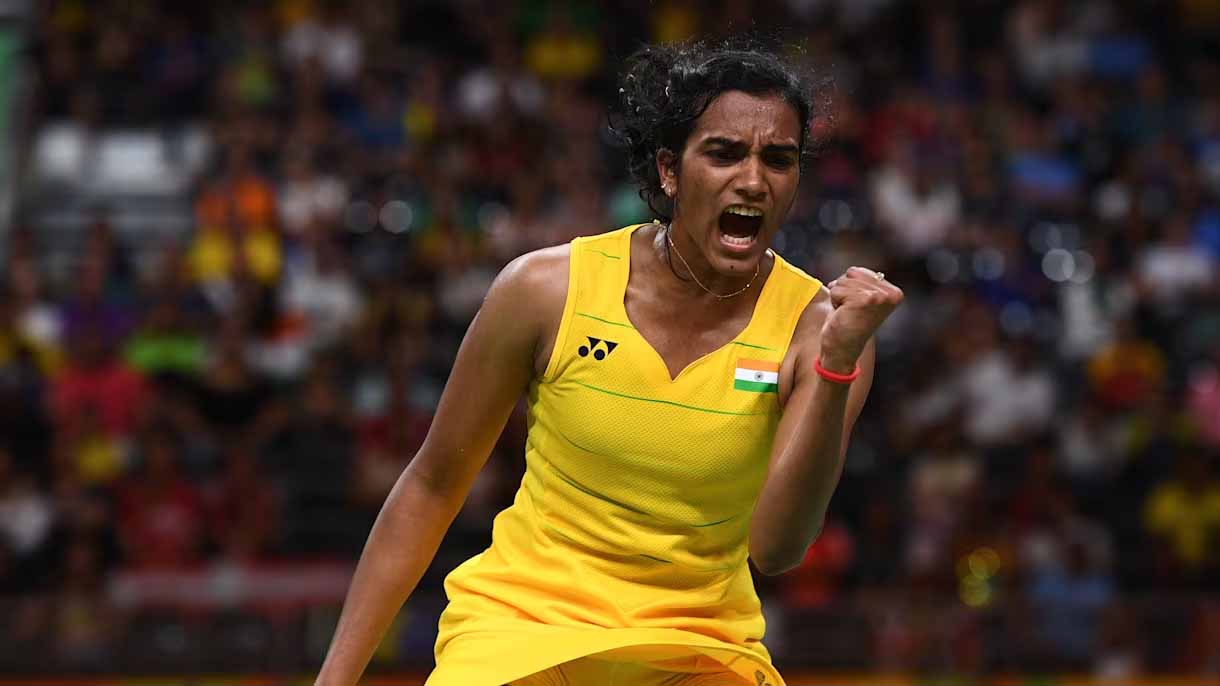
At 27, Trisha Agarwal no longer plays sports. She used to, but like many adults, sport gradually disappeared somewhere between work deadlines, long hours and the exhaustion of trying to fit a life around a demanding job. ‘There just isn't enough time,’ she says. ‘By the end of the day, you're tired and exercise or playing something becomes the first thing to go.’
She still watches though. And when she sees women compete, what stays with her isn't always the score. ‘It is more about watching someone be completely committed to something,’ she says. ‘Like, she's not trying to be good at everything. She's just really, really good at this one thing.’
For Trisha, that is part of the appeal. Women are often taught to divide themselves across multiple roles. Be ambitious, but don't let work take over your life. Be successful, but remain likeable. Be confident, but not intimidating. Be committed, but don't forget everyone else who might need you.
Watching an athlete can offer a completely different image of womanhood.
Here is a woman whose entire body, mind and life might be focused on one goal.
And she wants to win.
Not gently. Not apologetically.
She just does.
Psychologists have been interested in what that kind of visibility can do. A 2021 study by researchers Claire Midgley, Geneviève DeBues-Stafford and Penelope Lockwood, She Needs to See It to Be It: The Importance of Same-Gender Athletic Role Models, found that women could be particularly motivated by same-gender athletic role models. Seeing women succeed could make that success feel more attainable while also pushing back against stereotypes about gender and ability.
The point isn't necessarily that every woman watching will suddenly sign up for football practice.
Sometimes, the effect is more subtle. You see someone like you occupying a space you had unconsciously filed away as being for someone else. And suddenly, you look at the space differently.
‘I Didn't Think My Body Was Made For Sport’
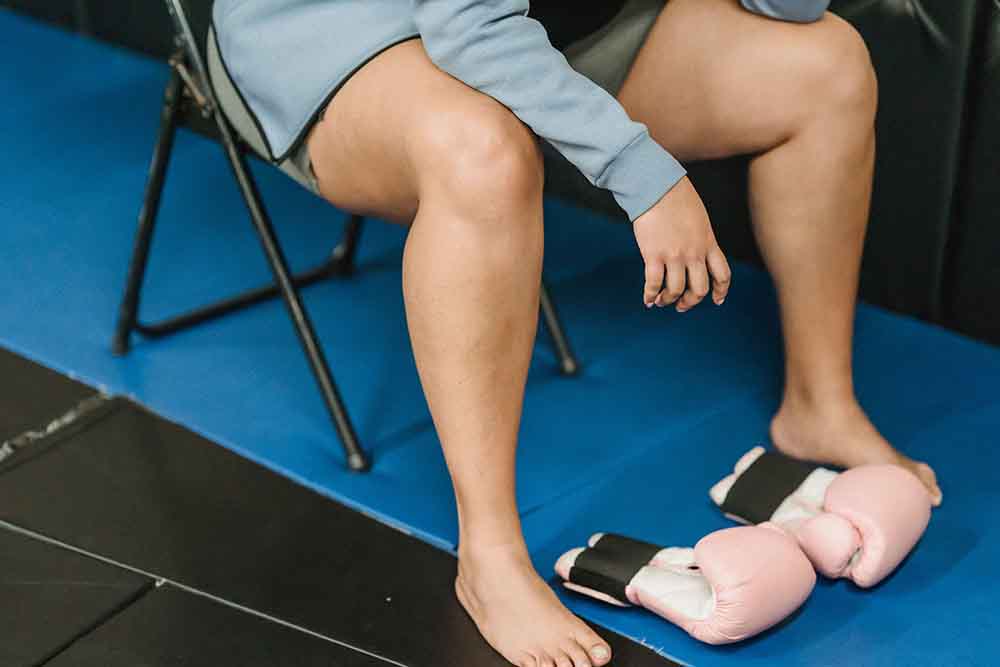
Amaira Sandhu is 16 and, for a long time, sport felt like something other people did. ‘I always felt conscious about my weight,’ she says. ‘I thought if you're playing a sport, you're supposed to already look athletic.’
That feeling is not unusual. Long before many girls decide whether they enjoy sport, they have already received years of opinions about what their bodies are supposed to look like.
Thin, but healthy.
Strong, but not too muscular.
Fit, but still feminine.
Visible, but not taking up too much space.
Sport can sometimes become another place where girls worry about being watched. But recently, Amaira has been watching more women athletes and women in fitness with different kinds of bodies. And something has begun to shift. ‘I think I just realised that you don't have to become fit before you start moving,’ she says. ‘You can start where you are.’
She has recently begun going to the gym. Not because all her insecurities have magically disappeared, but because movement has started to feel less like something she has to earn.
There is research that supports the importance of this shift. In her study Sexy Versus Strong: What Girls and Women Think of Female Athletes, psychologist Elizabeth A. Daniels found that exposure to images of female athletes could encourage girls and young women to focus more on what women's bodies could do, rather than simply how they looked. Female performance athletes were also seen as role models who could challenge traditional gender stereotypes. It is a small but meaningful reframing.
For girls who have spent years being taught to look at their bodies from the outside, female athletes can offer another perspective.
What if your body is not just something to be judged?
What if it is something that can carry you?
What if strength is not something you have to apologise for?
And what if you don't need to look like an athlete before you are allowed to move?
The Women Who Loved Sport But Never Got To Play
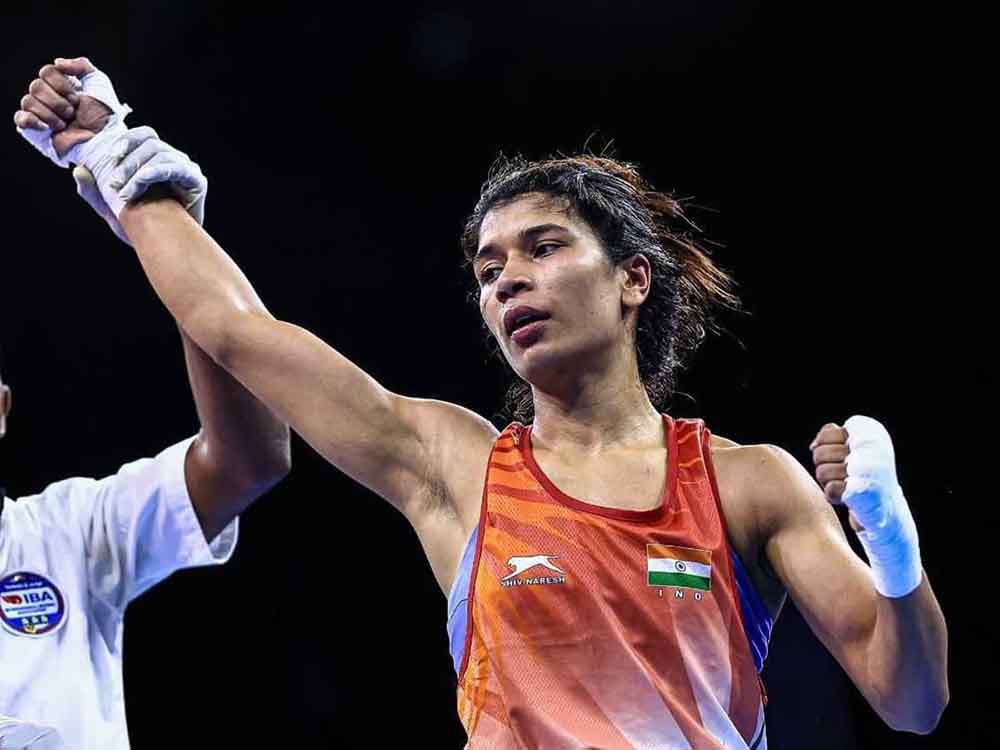
For Sushma Patel, 43, the story is different. She loved running when she was younger.
But loving something and being encouraged to pursue it were two very different things. ‘There were always other priorities for girls,’ she says. ‘Studies, helping at home, learning things that would be useful later in life. Sport was never taken that seriously.’
She became a teacher, got busy and, like many women, slowly lived with the idea that some interests simply belonged to an earlier version of herself.
But she still watches women compete. And sometimes, she finds herself thinking about the life she might have had if someone had simply taken her love for running seriously. That is where visibility becomes about more than inspiration. It can also expose what has been missing.
When we see women succeeding in spaces they were once actively excluded from, we are sometimes forced to confront the ways girls before them were told to stay small.
To be careful.
To sit properly.
To come home early.
To not wear that.
To not make a fuss.
To maybe leave the ‘serious’ sport to the boys.

A 2023 study by Midgley, Lockwood and Lisa Y. Hu on role models in male-dominated fields found that gender-matched role models could be particularly motivating for women in spaces where they remain underrepresented.
Again, the relevance of this may stretch far beyond sport. You don't necessarily look at a woman winning a boxing match and think, ‘I want to box’.
You might think, ‘Maybe I can apply for that role’.
Maybe I can be the first person in my family to do something.
Maybe I can walk into a room where I don't see many people like me and not immediately assume I don't belong.
Role models do not have to give us a blueprint. Sometimes, they simply make the blueprint we were handed feel less final.
When Women Win, We Get More Than A Winner
For decades, women's sport has received only a fraction of the media coverage given to men's sport. UNESCO has repeatedly highlighted the imbalance in how women athletes are represented and covered. The result is not just that women's achievements receive less attention. It also means girls grow up with fewer images of women being celebrated for their physical strength, skill, resilience and ambition. And that matters because we are shaped, in part, by what we repeatedly see.
If the most visible images of women are still largely about how they look, who they are dating, how well they balance everything or whether they are behaving appropriately, there is something quietly radical about watching a woman be known for one thing.
How well she plays.
How fast she runs.
How hard she trains.
How she performs under pressure.
And yes, whether she wins.
For women, ambition has often come with conditions.
Want success, but don't want it too badly.
Be competitive, but don't intimidate anyone.
Celebrate, but don't be arrogant.
Lose gracefully, because people are watching.
Women athletes disrupt some of these expectations simply by being visible.
They sweat.
They fall.
They lose.
They swear.
They come back.
They take up space.
And increasingly, they are allowed to be imperfect in public without disappearing from the story.
That visibility matters, particularly in a country like India, where many girls still drop out of sport because of social expectations, lack of access and the belief that sport eventually has to make way for more ‘serious’ responsibilities.
A 2026 experimental study, The Game Changer: An Experimental Study on Motivation and Retention of Girls in Indian Sports, examined 508 girls across five Indian states in the context of exactly these kinds of challenges: gendered expectations, limited visibility and the struggle to retain girls in sport.
The study speaks to a bigger question. What happens when a girl grows up seeing women in sport not as exceptions, but as a normal part of the world?
Maybe she joins a team.
Maybe she doesn't.
But perhaps she grows up with a slightly wider idea of what women are allowed to be.
Maybe That's Why Watching Feels Personal
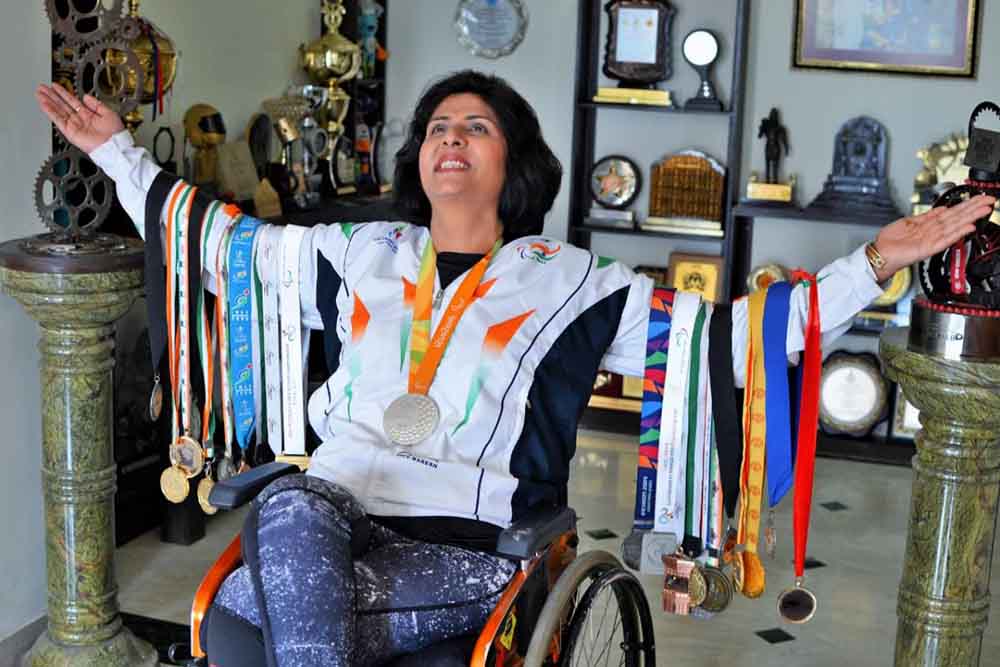
Not every woman watching women's sport wants to play.
Some are watching between meetings.
Some are watching while feeding their children.
Some are teenage girls who are still too embarrassed to join a team.
Some used to play but stopped.
Some never got the chance.
And some are simply watching because there is something deeply satisfying about seeing a woman be excellent at something in public.
Perhaps that is the real power of watching women win.
It is not that every victory turns into a movement.
It doesn't.
One match will not undo years of sexism. One athlete cannot carry the dreams of every girl watching. And representation, on its own, cannot fix the lack of playgrounds, funding, safety or support that still keeps many women and girls away from sport.
But representation can do something quieter. It can give us more reference points.
More versions of strength.
More ways to imagine ambition.
More evidence that women can be competitive without being cruel, powerful without being unfeminine and deeply invested in their own success without having to justify it.
Maybe you never play a single sport in your life.
But one day, you watch a woman win something you know she had to fight to even be allowed to compete for. And for a brief moment, her victory does not feel entirely separate from your own life.
It makes you think about the things you were told were not for you.
The things you gave up.
The things you never started.
The room you assumed you couldn't enter.
And maybe, just maybe, it makes you wonder:
‘What else have I been watching from the sidelines?’