My favourite thing to do on vacation is to collect fashion souvenirs. A hand-beaded purse from Bali, Khes from Punjab, customised shoes from Thailand, the list can go on. But as 2026 began, I made a quiet promise to myself: if I was going to keep souvenir-hunting, it had to feel more intentional. My buys were usually rooted in craft or local fashion, but I wanted to explore crafts and processes. It sounded almost noble in theory, but in practice, it felt almost impossible. How do you move beyond the charming market or cute boutique to find something more meaningful when you’re only passing through? I didn’t know then that this resolution would lead me to one of the most serotonin-boosting experiences I’ve ever had on a trip.
While mapping out my Sri Lanka itinerary, I came across a batik workshop. The textile craft of Batik was definitely not new to me. We see versions of it across India all the time. I even own an Indonesian batik I picked up in Lombok some time ago. But the more I read, the more I realised I didn’t actually know the craft that well. Indonesia’s batik tradition, for instance, involves intricate hand-painting or block-printing using wooden stamps and copper tools. It’s an incredibly detailed, labour-intensive process. Sri Lanka, on the other hand, seemed to sit at an interesting intersection of the Indonesian technique and elements of the Indian resist-dye method.
Naturally, I was curious and signed up as soon as I found a slot, even though it meant stepping out alone while my husband decided to take a sunbed nap. There’s something mildly intimidating as an introvert about showing up to a workshop by yourself in a new country. But I let my curiosity of craft take over.
So there I was, in the hippest Sri Lankan beach town of Ahangama, amongst seven other like-minded women, about to draw, wax and print my own scarf! As we sat around our table, waiting for our workshop to begin, I saw the sample Batiks on display- vivid, creative, and simply beautiful.
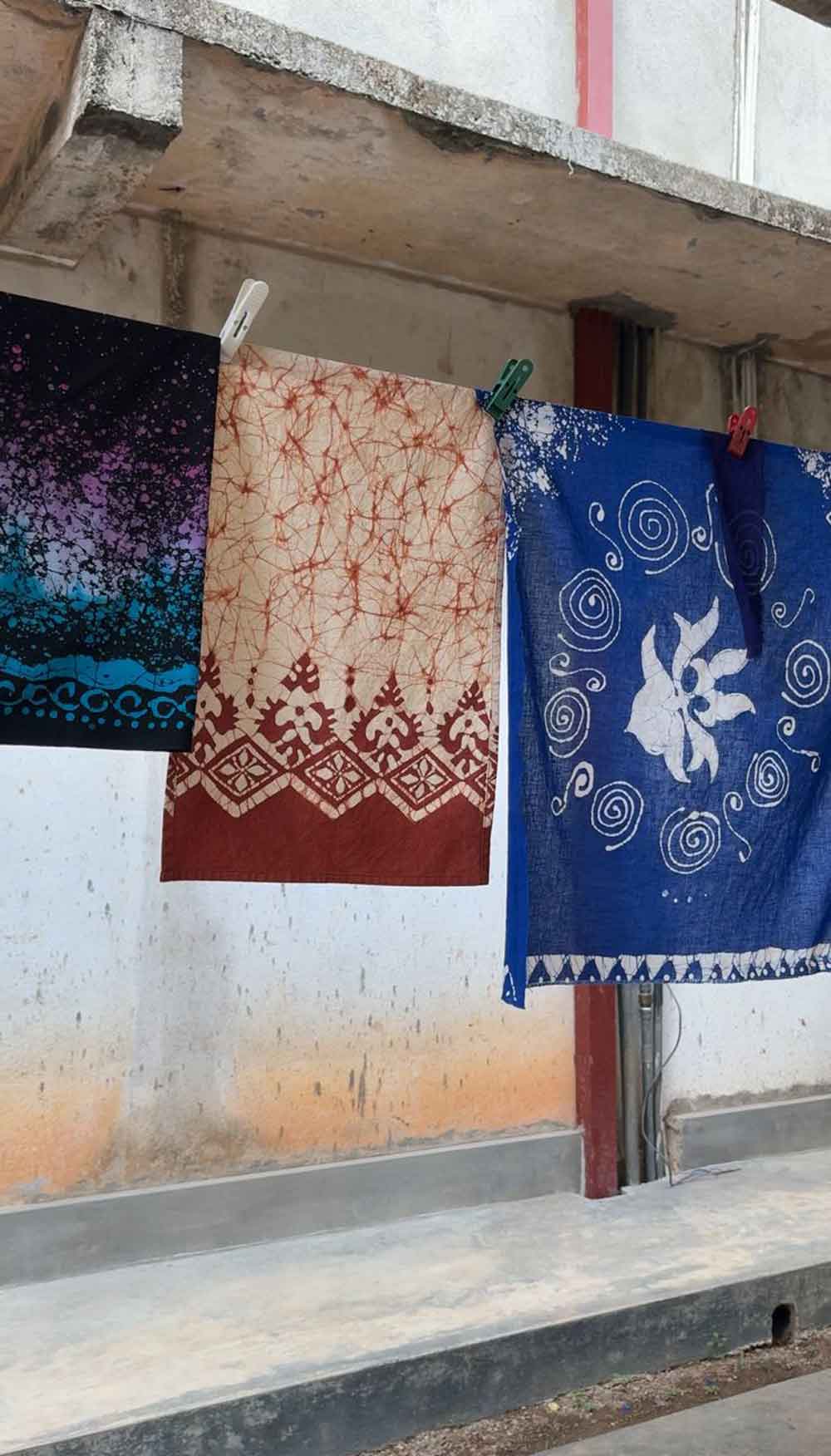
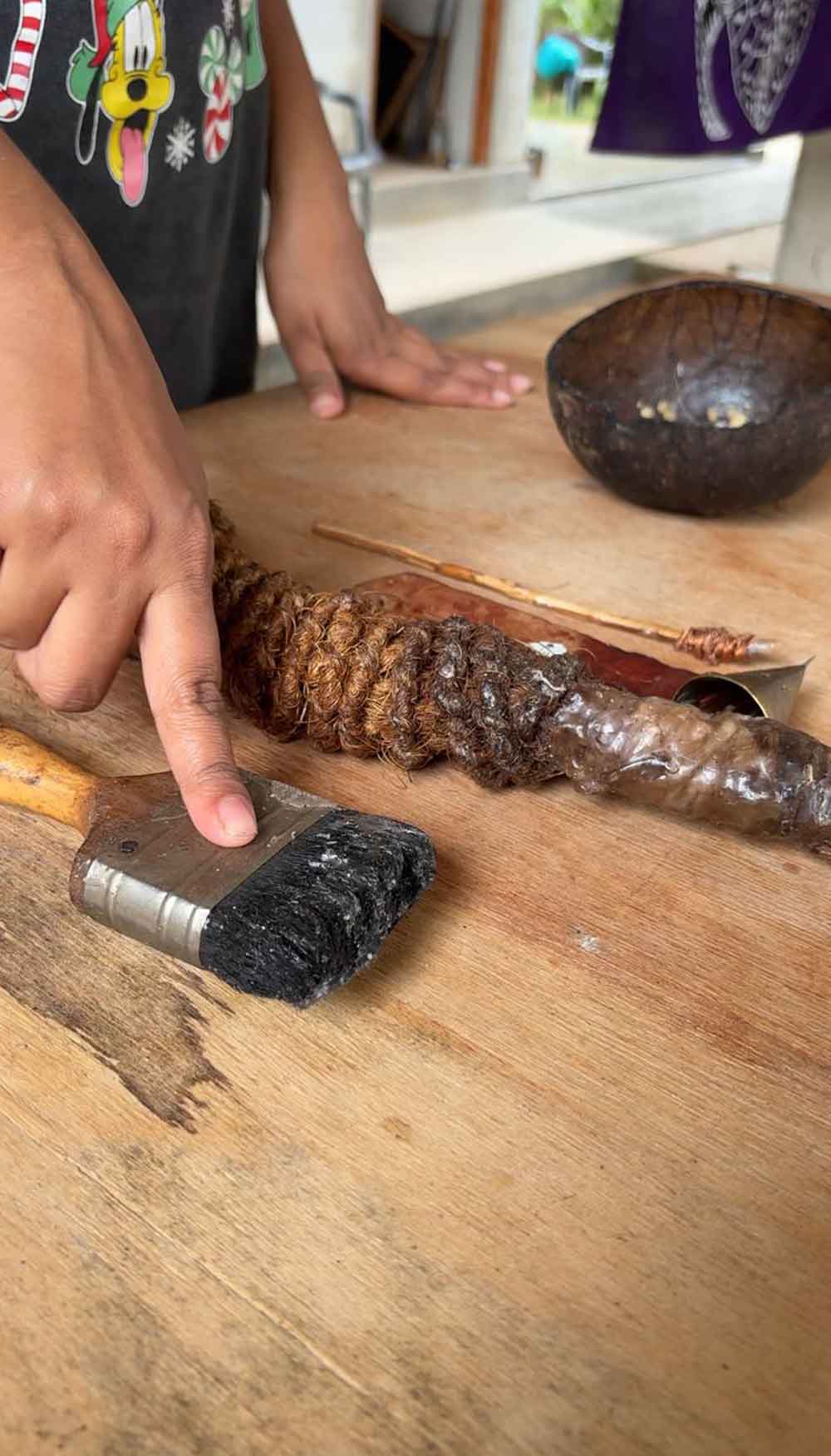
Our teacher, Shermila, first took us through the process and the tools. It seemed straightforward- trace your design onto the cotton fabric, cover the parts you don’t want coloured with hot wax (usually a mixture of paraffin wax, bees wax and gum resin), and then dip it in colour once the wax dries.
As everyone around me began tracing pre-drawn motifs, I realised the shell shapes I had imagined for my Batik weren’t part of the ready-to-use designs. For a brief moment, I felt my self-doubt kicking in because I am, by no stretch of the imagination, good at drawing. The temptation to abandon my idea and pick something safer was strong. But since I was determined to make this experience count, I decided to try.
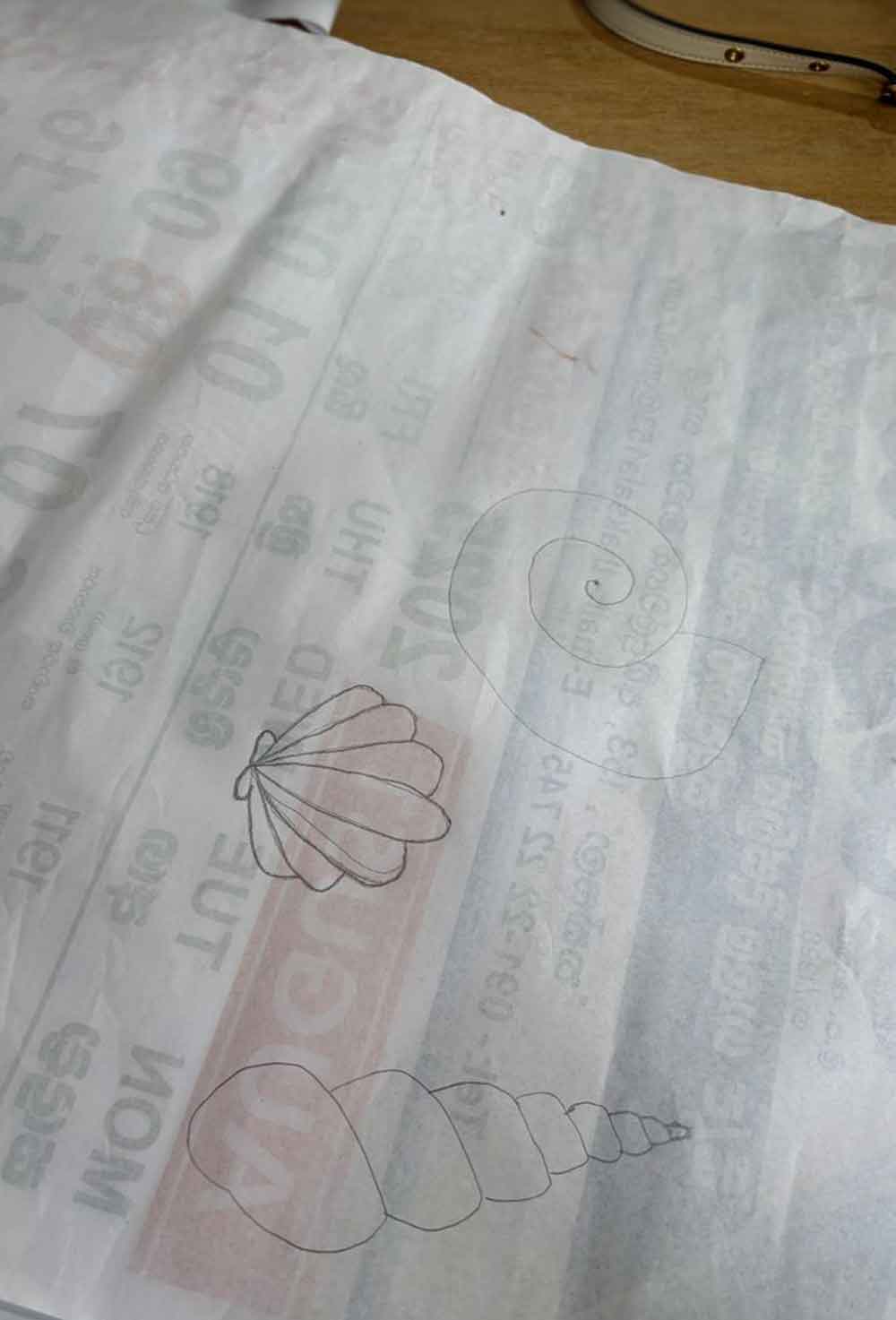
As I sketched three shell forms, everyone around me assured me they weren’t half as bad as I had imagined. And once I added a few coral-like shapes from the existing templates, the composition began to make sense. I was the last one to finish tracing, but for a change, impatience didn’t bother me. For once, I wasn’t rushing to keep up.
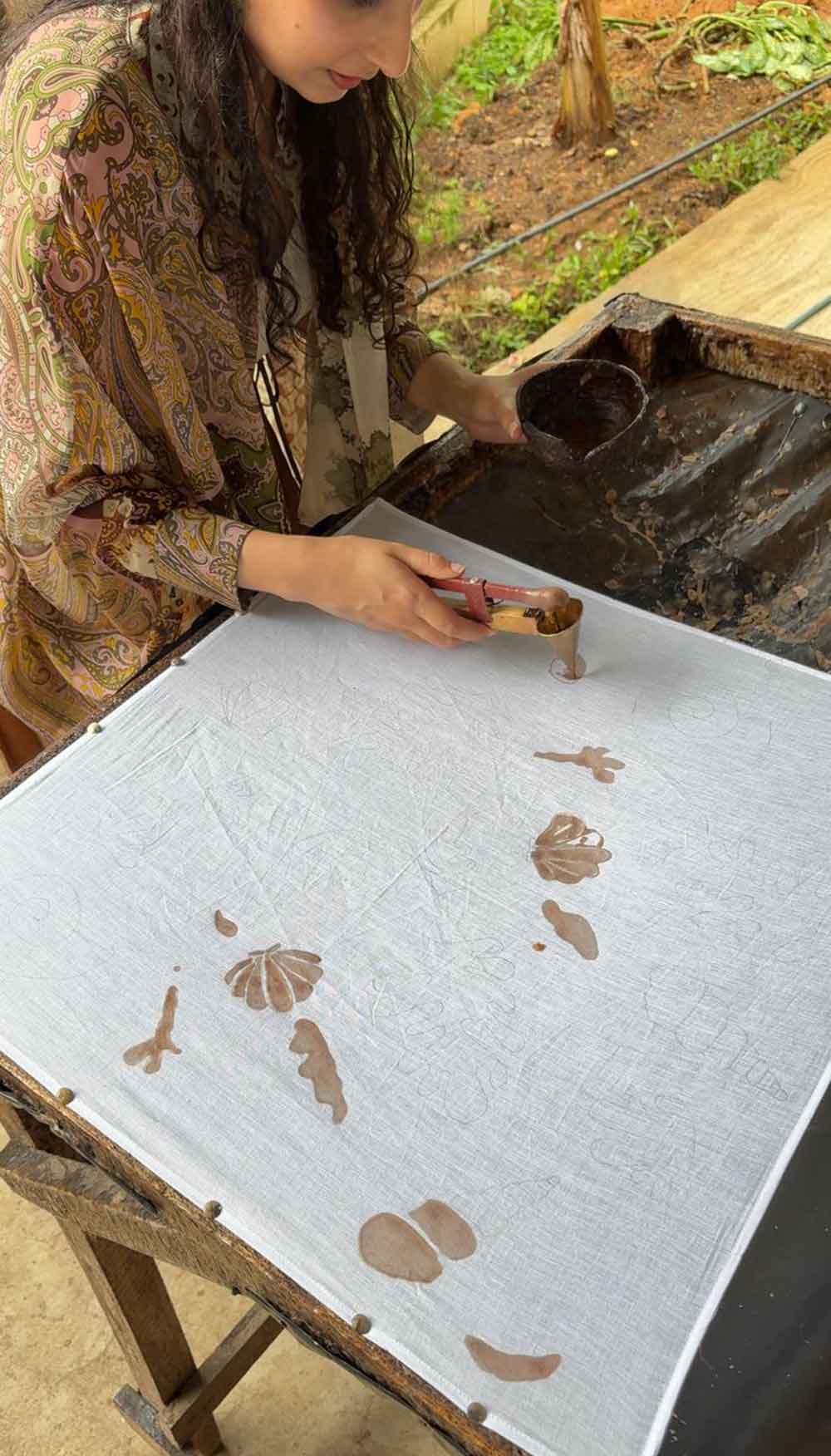
And then the real test began- wax! After a quick demonstration, I started covering the parts I wanted to remain white with hot wax, trying to work fast enough before it cooled and stopped gliding smoothly onto the fabric. This delicate rhythm of dipping, tracing and refilling surprisingly became my favourite part. There was something deeply therapeutic and calming about it. I haven’t felt my mind being so quiet and unwired in a long time.
As we waited for the wax to dry, we sat around and chatted about alternate designs we could have attempted and how the small mistakes suddenly felt charming. Before long, we moved to the dye vats where Shermila began preparing the colour. We had to agree on one shade for all our scarves and settled on a very Sri Lankan, earthy reddish-brown. Because it was a chemical dye, Shermila handled the immersion herself, ensuring an even soak for each piece. We watched as the colour bloomed across the fabric, leaving out the parts we had covered with wax.
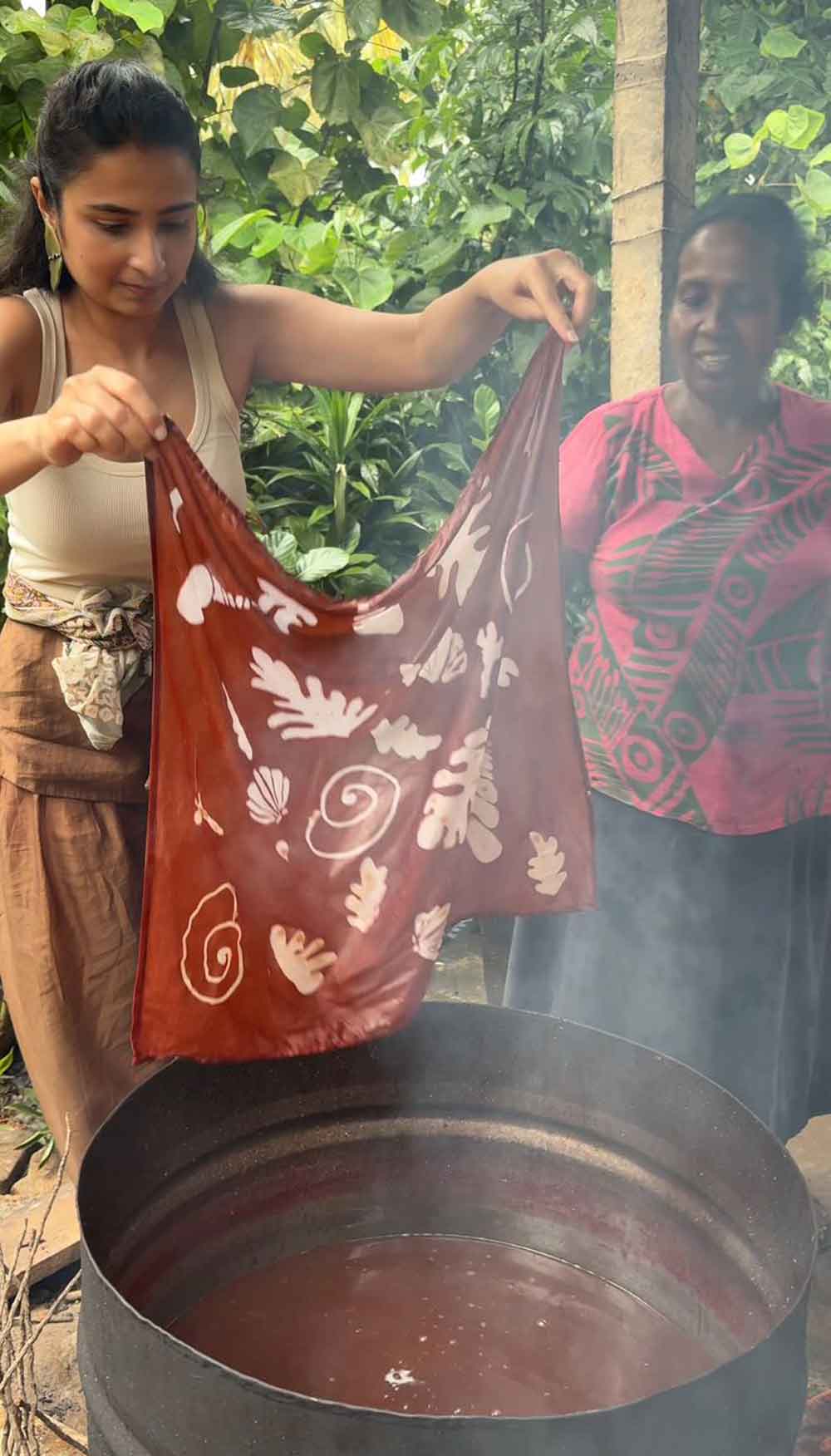
The final step was washing off the wax in boiling water over a wood fire. While we did it cautiously, wary of the smoke and the heat, Shermila seemed unfazed by either. There was something awe-inspiring about her ease. I guess it came from having done this hundreds of times.
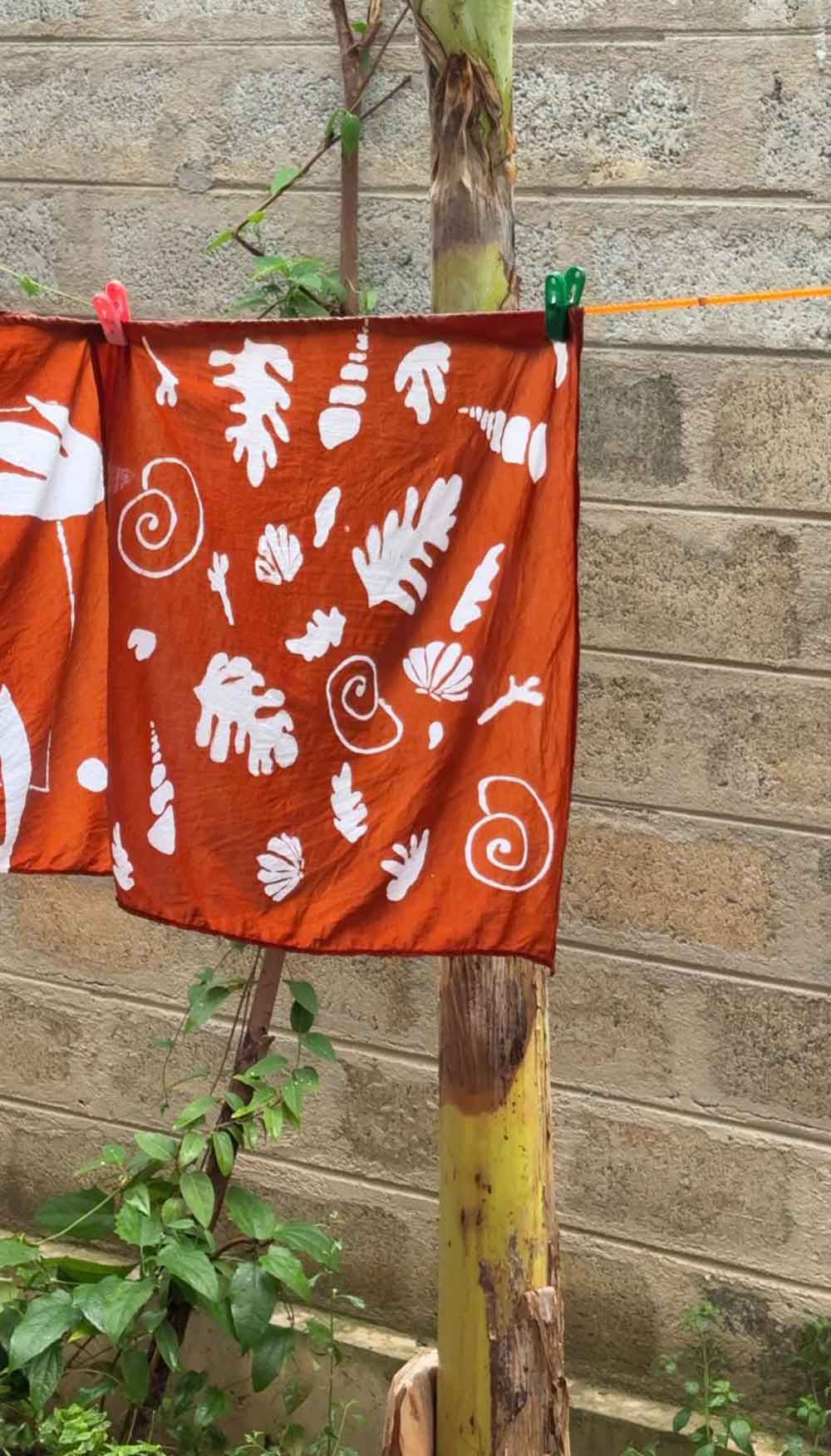
As we waited for our pieces to dry, we took our pictures, discussed what we’d do with our pieces, head scarves, bandana tops, framed for wall decoration- the ideas were endless. We were a happy, content bunch, it’s safe to say.
My piece wasn’t perfect, with some wax cracked in places, creating those characteristic batik veins. I always knew minor imperfections were a part and parcel of textile craft, but somehow, I became a lot more forgiving about them in that moment.
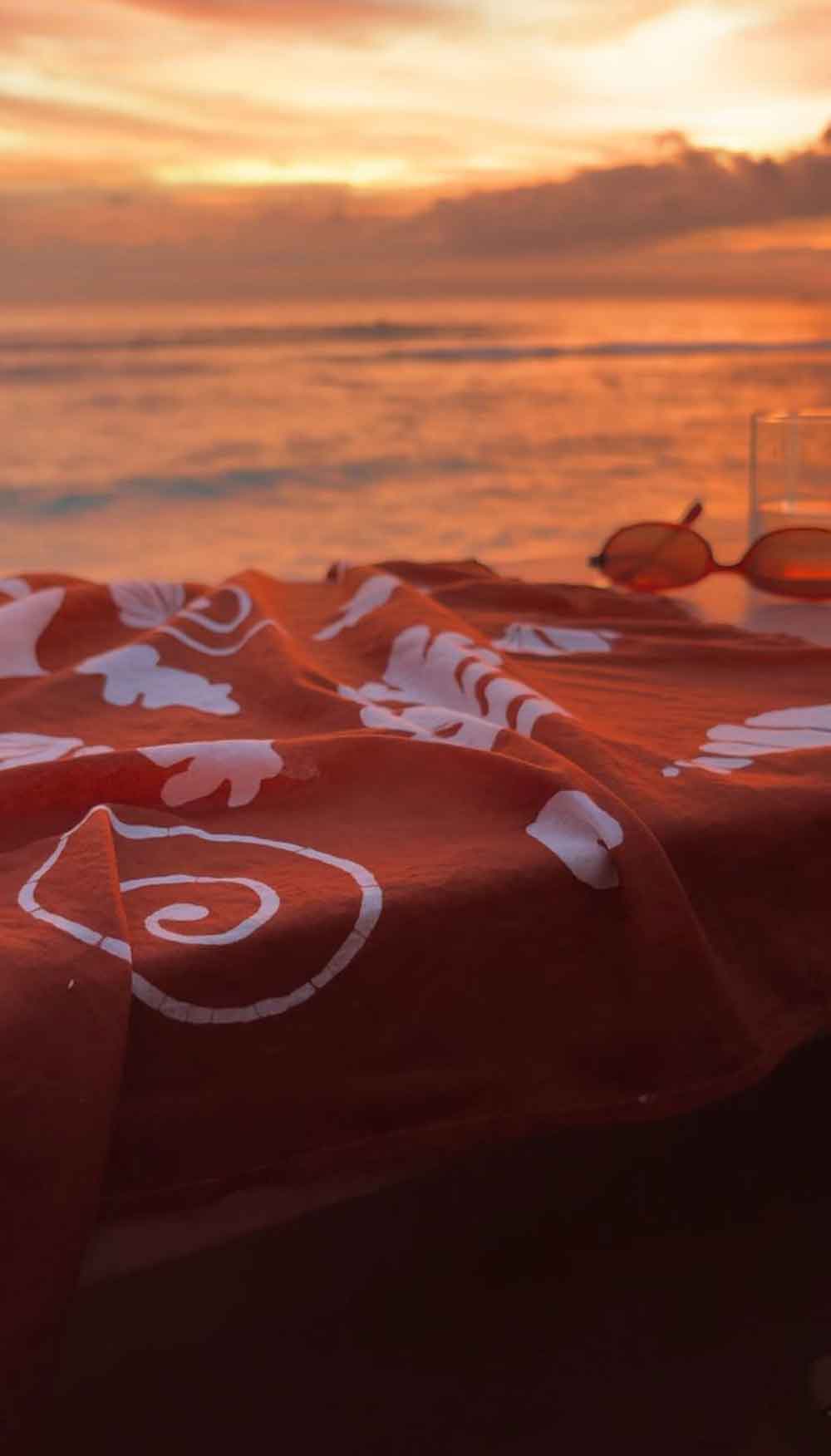
On most holidays, I buy something finished, often a beautifully crafted object that carries the imprint of someone else’s skill. This time, as I carried home something that held my moments of calm and therapy.