For decades, politics in India was often seen as a male-dominated space, discussed by men, contested by men, and, in many ways, designed around male priorities. Women certainly voted, but their participation was often constrained by social norms, limited mobility, lack of awareness, or simply the assumption that their political choices would mirror those of the men in their families. That picture has changed dramatically.
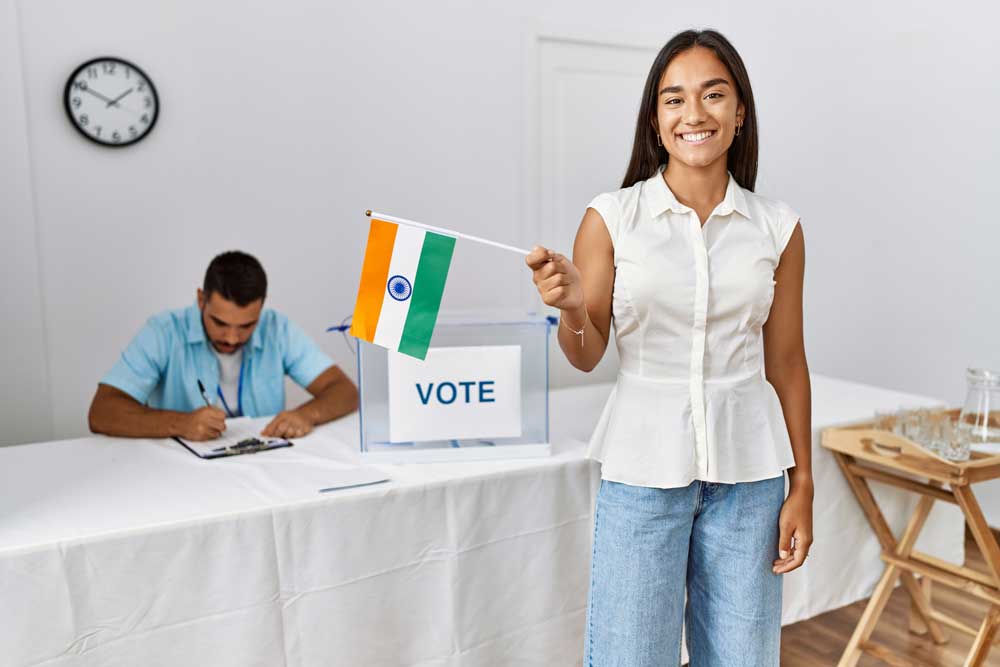
Across India, women are not only voting in larger numbers, but are increasingly matching or even surpassing men at the ballot box. This is more than an encouraging statistic. It represents one of the most significant social and democratic transformations of our time. In the recent Tamil Nadu Assembly election held on April 23, 2026, women recorded a voter turnout of 85.76 per cent, compared to 83.57 per cent for men. In absolute numbers, too, women outnumbered male voters. 29.3 million women cast their ballots, compared to 28.3 million men. Similar patterns have emerged elsewhere. In West Bengal, women’s turnout has reached an extraordinary 91 to 92 per cent in recent elections. Gujarat, too, has seen the gender gap steadily narrow. These numbers indicate that Indian women are no longer passive observers of democracy, but influential participants.
More Than Just Voting
Casting a vote is about far more than choosing a candidate. It is an act of agency which signals that women are claiming their place in public life and asserting their right to shape the future of their families, communities, and the nation. For many women, especially those in rural India, voting can be deeply empowering. It may be one of the few moments when their voice carries equal weight, regardless of income, education, or social status.
This growing participation also reflects broader social changes such as increased literacy and education among women, greater financial independence, improved mobility and access to information along with rising awareness of rights and civic responsibilities. Women today are evaluating policies, weighing choices, and making decisions based on their own priorities and lived experiences.
Why Political Parties Are Paying Attention
One of the most significant aspects of this shift is that women are increasingly voting independently. Research over the past decade suggests that many women are no longer automatically aligning their political preferences with those of male family members. They are making choices based on issues that directly affect their lives such as healthcare, education, safety, employment, inflation, and welfare. Voting is becoming not just a family duty, but a personal decision.
As women emerge as a decisive voting bloc, their priorities are becoming harder to ignore. Political leaders and policymakers are increasingly recognising that women voters can influence electoral outcomes. This has led to greater focus on issues that matter to women, including maternal and reproductive healthcare, education for girls, women’s safety and public transport, access to clean cooking fuel and sanitation, financial inclusion and entrepreneurship support, and welfare schemes aimed at households and caregivers. When women vote in large numbers, their concerns move from the margins to the mainstream.
Better Representation
Higher voter turnout among women also strengthens the case for greater representation in leadership. When women demonstrate their political engagement so clearly, it becomes increasingly difficult to justify their underrepresentation in elected office. India has made progress, but women still remain significantly underrepresented in legislatures compared to their share of the population. The more women participate as voters, the stronger the demand for women candidates, women leaders, and women policymakers. Representation matters, not simply because women should occupy seats, but because diverse leadership often results in more inclusive decision-making.
A Ripple Effect Beyond Politics
The impact of women’s voting extends far beyond election results. Political participation often fosters greater confidence and civic engagement in other areas of life. Women who vote are more likely to participate in community decision-making and seek information about government schemes. They engage in discussions about policy and governance, which creates a cycle. As mothers, daughters, and community leaders become more politically aware, they help build a culture of informed citizenship. Young girls growing up today are seeing women exercise their democratic rights with confidence.
Women’s political participation also has significant economic implications. Policies shaped by women’s priorities often focus on areas that improve household well-being, such as healthcare, education, nutrition, and financial security. These investments strengthen families and communities, creating long-term social and economic benefits. When women influence policymaking, the outcomes often extend beyond gender-specific issues. Entire societies benefit from more balanced and inclusive governance.
Challenges Still Remain
While the rise in women’s voter turnout is encouraging, challenges persist. Women continue to face barriers in political representation, leadership opportunities, and decision-making roles. Social norms, safety concerns, and unequal access to resources can still limit participation in many parts of the country. Moreover, voting is only one step. True political empowerment also requires greater representation in elected office, more women in policymaking roles and stronger support for women leaders at all levels.
The rising turnout of women’s voters is a sign of deeper social change that signals greater independence, stronger civic awareness, and a growing determination to shape the country’s future. As women continue to vote in record numbers, they are also shaping the priorities of governance and paving the way for more inclusive policymaking.