Across India, women are leading powerful, on-ground movements that are quietly transforming communities, livelihoods, and ecosystems. From restoring mangrove forests to protecting elusive mountain predators, these efforts prove that sustainable change rarely begins in conference rooms. It begins locally, often with women at the centre.
Women in rural India are often the first to feel the impact of climate change. They collect water when wells run dry. They tend to the farms when the soil turns saline. They manage households when men migrate for work after crop failure or disaster. When supported, they create models of women-led sustainability that link ecology with economy, and conservation with dignity. Across villages and small towns, these grassroots movements in India are reshaping what environmental leadership looks like.
Here are seven initiatives that show how community change begins at the ground level.
1. Mangrove Guardians of the Sundarbans
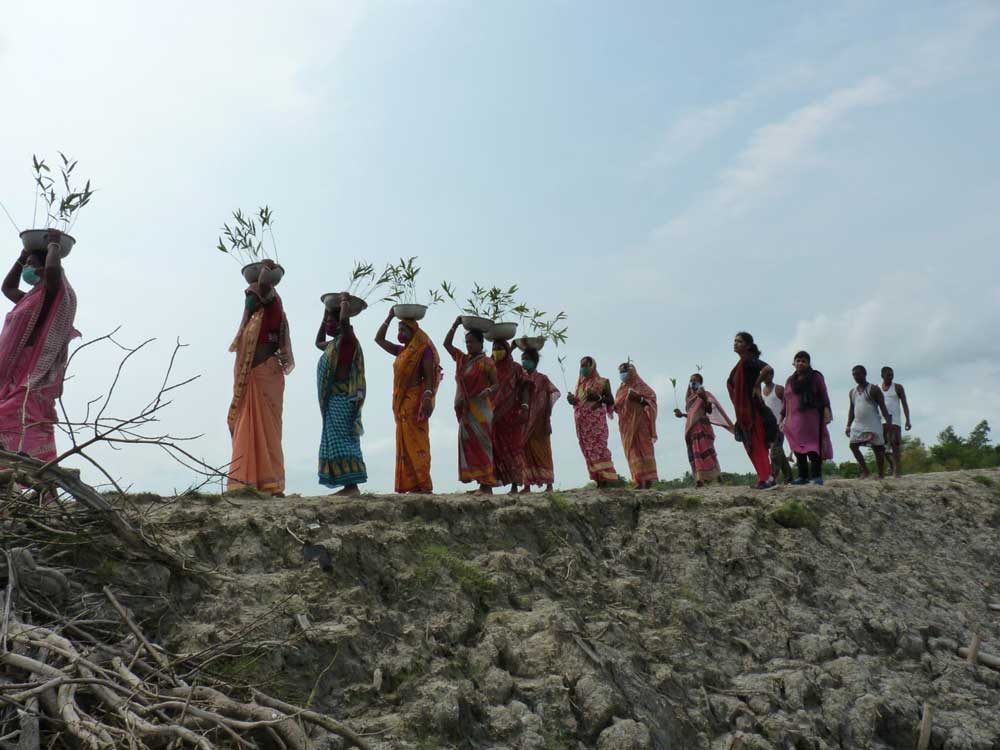
Image Source: seedin.org
In the fragile delta of the Sundarbans, where rising seas, salinity and cyclones threaten both land and livelihood, women’s self-help groups are rebuilding resilience one sapling at a time.
After Cyclone Amphan in 2020, the NGO SEEDS shifted its recovery strategy from relief to restoration. Instead of only repairing homes, they began planting mangroves along embankments as natural buffers against storm surges. Crucially, they enlisted local women’s SHGs to lead the effort.
Women here now collect mangrove fruit, run nurseries, intercrop species suited to tidal cycles, and plant thousands of saplings annually. The model, described as ‘ecology as economy,’ ensures that protecting mangroves also creates sustainable livelihoods. Since 2020, over 415,000 saplings have been planted across 42 hectares. The embankments they fortified have shown greater resilience during recent cyclones.
2. The Shenmo of Spiti Valley

Image used for representational purposes only.
High in the Himalayan cold desert, nearly a dozen local women are redefining wildlife conservation.
In Kibber village, snow leopards were once seen primarily as threats to livestock. Today, women known as the ‘Shenmo’ (meaning women of the snow leopard) work with the forest department and conservationists to track and protect the species.
Trained to install and monitor camera traps at altitudes above 14,000 feet, they trek across harsh terrain in winter, identifying pugmarks, retrieving data, and analysing images. Their efforts contributed to Himachal Pradesh’s recent snow leopard survey, which documented an increase in numbers from 51 in 2021 to 83 in 2024.
3. Climate-Resilient Farming in Maharashtra
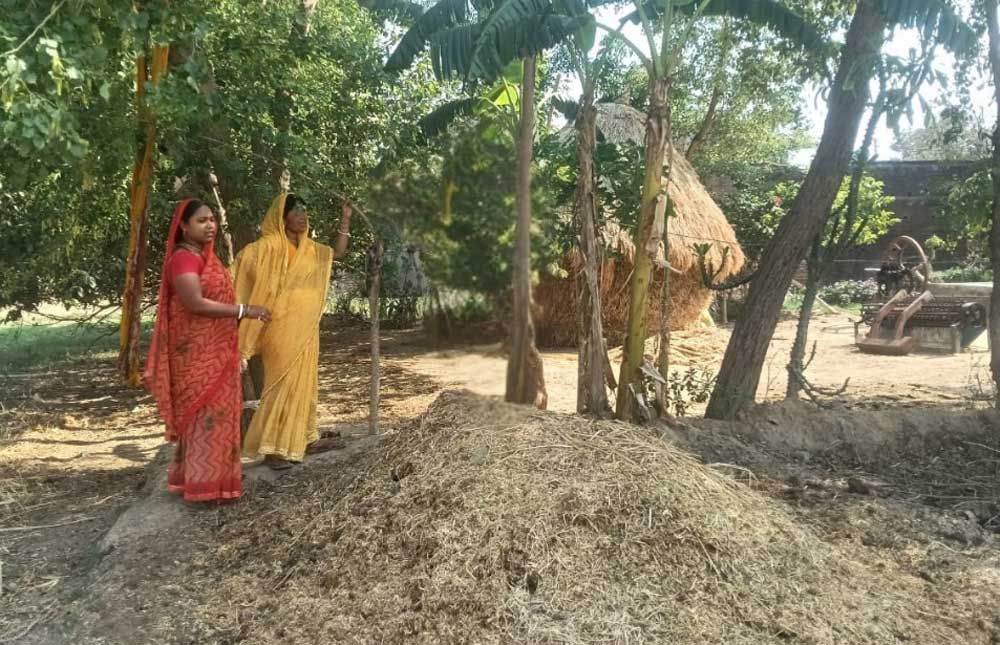
Image Source: Instagram/swayamshikshanprayog
Through Swayam Shikshan Prayog (SSP), tens of thousands of women farmers across drought-prone Maharashtra have adopted climate-resilient agriculture. Women leaders promote multi-cropping, organic inputs, seed banks, and micro-irrigation. The results are measurable: improved soil health, increased productivity, and diversified incomes. Women move from labourers to decision-makers, running farm-based enterprises and accessing government irrigation schemes. The initiative demonstrates how climate action in India can align directly with women’s economic independence.
4. Waste Warriors’ Paryavaran Sakhis
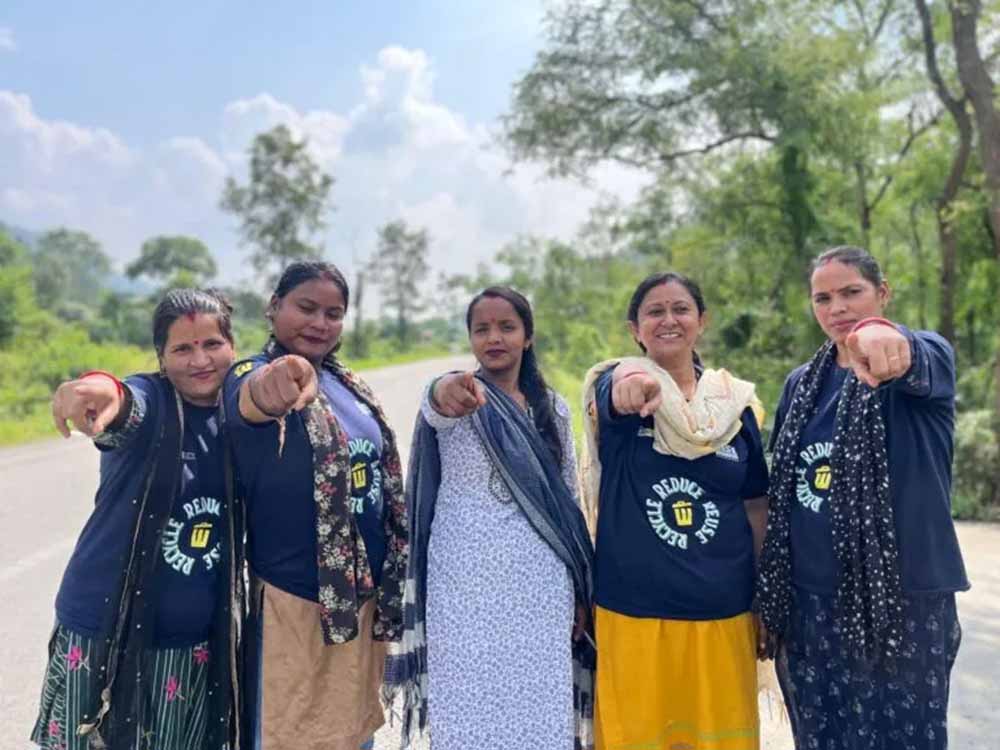
Image Source: wastewarrirors.org
In the Himalayan foothills, women volunteers known as Paryavaran Sakhis are tackling waste head-on. They collect, segregate, and channel dry waste into formal recycling systems, cleaning up villages and preventing plastic from entering rivers. Beyond sanitation, they conduct workshops on menstrual health and waste reduction. Their work has diverted hundreds of tonnes of waste while creating dignified income opportunities, a powerful example of community-driven waste management.
5. Hargila Army
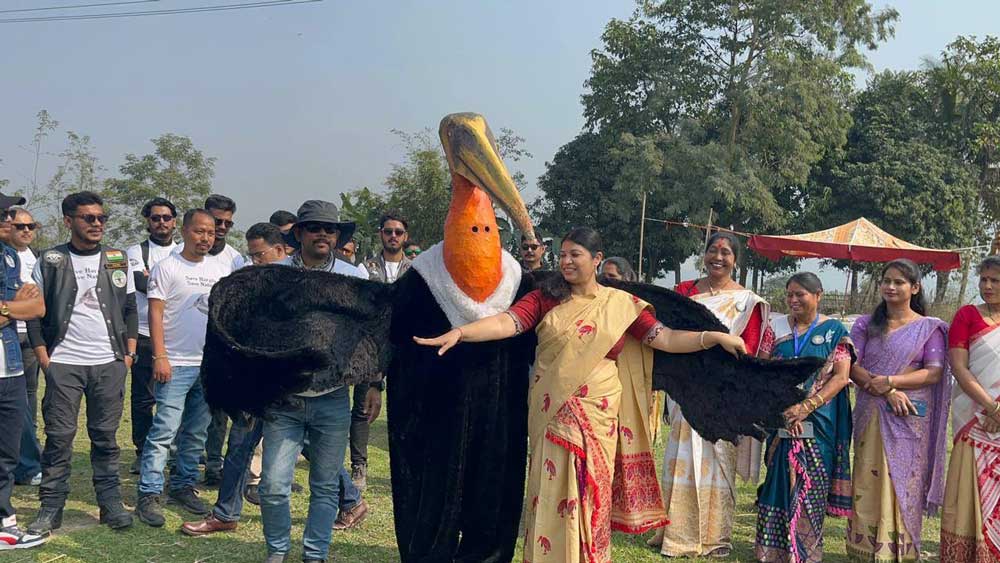
Image Source: Instagram/storksister
In Assam, wildlife biologist Dr. Purnima Devi Barman turned a conservation crisis into a women-led community movement. The greater adjutant stork, locally called hargila, was once considered a bad omen, and its nesting trees were routinely cut down. Instead of fighting communities, Dr. Barman worked with them, mobilising local women into what is now known as the Hargila Army, or the ‘Stork Sisters.’
What began as a small collective has grown into a network of over 10,000 rural women who protect nesting sites, rescue fallen chicks, and celebrate the bird through local festivals, weaving, and storytelling. By integrating conservation with livelihood opportunities such as weaving traditional textiles featuring the stork motif, the movement reframed the bird from nuisance to pride symbol.