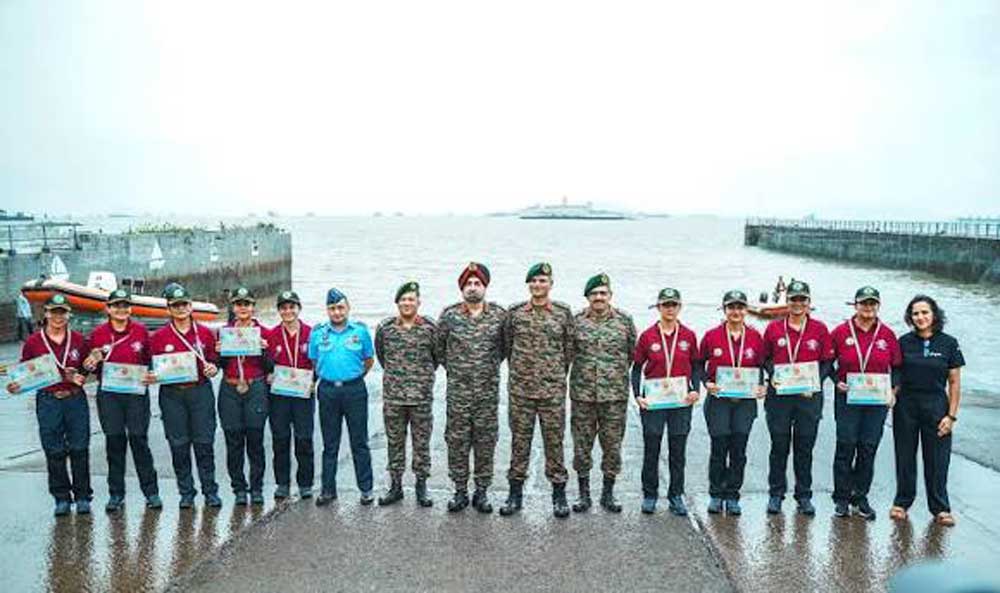
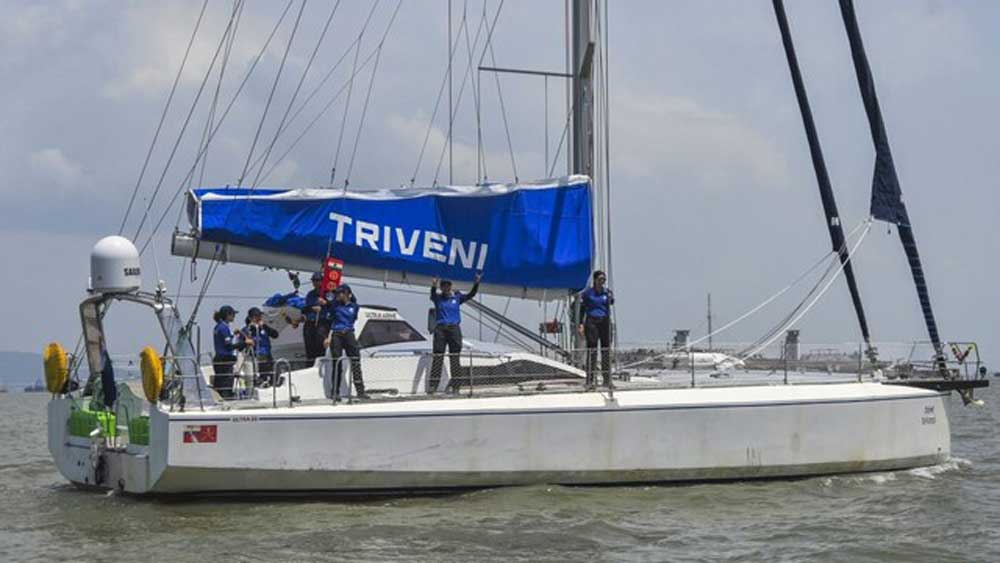
Last week, Defence Minister Rajnath Singh felicitated the nine women officers who completed Samudra Pradakshina, celebrating a remarkable feat. Samudra Pradakshina was the world's first all-women tri-service (with crew from the Indian Army, Navy, and Air Force) circumnavigation sailing expedition, bringing together women officers from the Indian Army, Navy and Air Force aboard the Indian Army Sailing Vessel (IASV) Triveni. The expedition was flagged off from Mumbai in September 2025 and returned in July 2026 after a 314-day voyage covering nearly 25,500 nautical miles across four oceans.
The Expedition Highlights
Unlike previous military sailing expeditions, which were led by a single service (primarily the Navy), Samudra Pradakshina mixed officers from all three services, an experiment in joint military operations. The expedition sailed on IASV Triveni, an indigenous sailing vessel operated by the Indian Army. The name Triveni, meaning the confluence of three rivers, is symbolic in itself, representing the coming together of the Army, Navy and Air Force. Defence Minister Rajnath Singh described it as an example of both Nari Shakti and tri-service jointness.
Samudra Pradakshina, which means a circumambulation of the seas, was an endurance test demanding seamanship, navigation, engineering skills, physical resilience and psychological stamina. Women are no longer being showcased merely as pioneers entering the armed forces, but are increasingly being entrusted with missions that demand operational competence and seamless cooperation across services. Even 10 years ago, such an expedition would have been difficult to imagine.
In addition to circumventing the globe, the route met other strict international circumnavigation criteria by crossing the Equator twice, traversing all meridians, and rounding the three Great Capes: Cape of Good Hope (South Africa), Cape Leeuwin (Australia), Cape Horn (South America). For sailors, rounding these capes is a badge of honour because they are notorious for fierce winds, towering waves and unpredictable weather.
Through the expedition, the crew encountered storms with winds reaching 60 knots (over 110 km/h), waves up to five metres high, prolonged isolation, mechanical repairs while at sea, long periods of sleep deprivation, and demanding watchkeeping schedules. They also experienced some extraordinary natural phenomena, including bioluminescence and sightings of humpback whales.
What Changed The Conversation?
The past decade has transformed opportunities for women in India’s armed forces more dramatically than any previous period. In 2015, the Indian Air Force announced that women would be inducted into the fighter stream on an experimental basis. The decision produced the country's first women fighter pilots. The Indian Navy expanded women's roles beyond shore establishments to warships, aviation squadrons and increasingly complex operational deployments. Women officers today serve aboard frontline naval vessels and command aviation units.
The Indian Army, traditionally the most conservative of the three services in opening combat-linked opportunities, also underwent significant change. Following a landmark Supreme Court judgment in 2020 granting women officers Permanent Commission in multiple branches, women gained greater access to long-term careers, leadership appointments and command opportunities. Subsequent decisions paved the way for women to enter the National Defence Academy (NDA), ensuring that male and female cadets begin their military careers through the same premier institution.
Why Samudra Pradakshina Matters
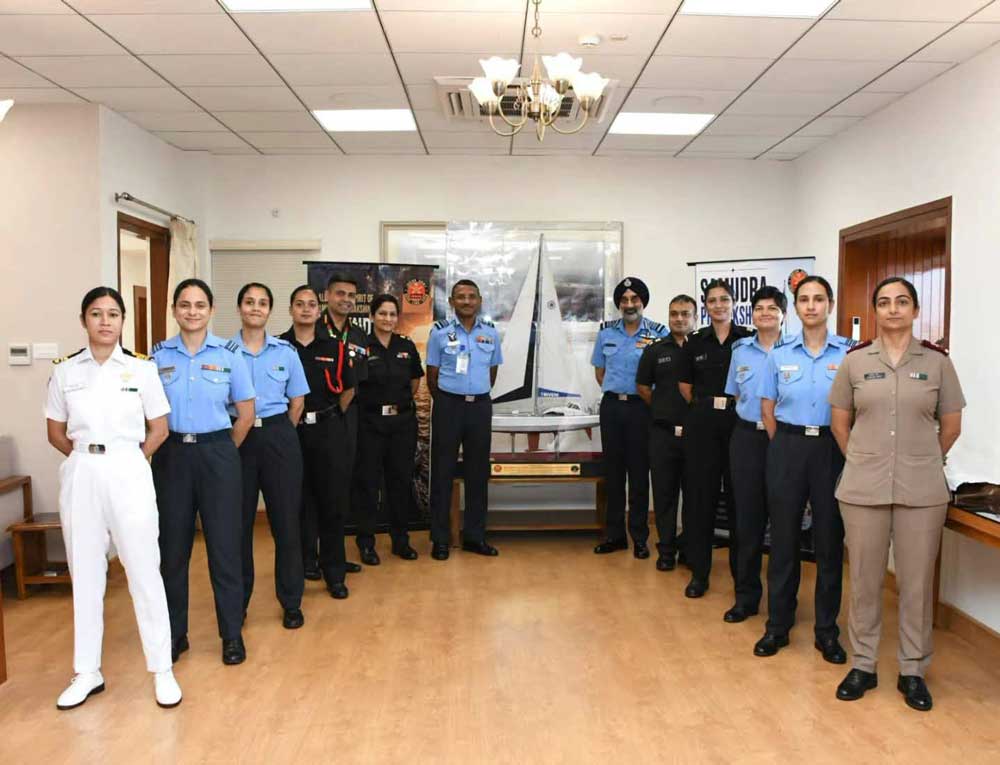
Unlike earlier milestones that focused on opening individual career pathways, Samudra Pradakshina also showcased integration. The nine officers came from three distinct services, each with its own traditions, culture, operational language, and training methods. During the voyage, those distinctions became secondary to a common mission. This is what military planners describe as ‘jointness.’
For civilians, the term can sound like bureaucratic jargon. In reality, it is becoming one of the defining concepts shaping India's modern military. ‘Jointness’ means that the Army, Navy, and Air Force increasingly train, plan, and operate together rather than functioning as isolated organisations. Instead of each service focusing solely on its own capabilities, they learn to combine their strengths to achieve common objectives.
The emphasis on jointness has gathered momentum with reforms such as the appointment of the Chief of Defence Staff (CDS), the creation of the Department of Military Affairs and plans for integrated theatre commands. At the human level, jointness means officers learning to understand each other's operating environments, communication styles and decision-making processes.
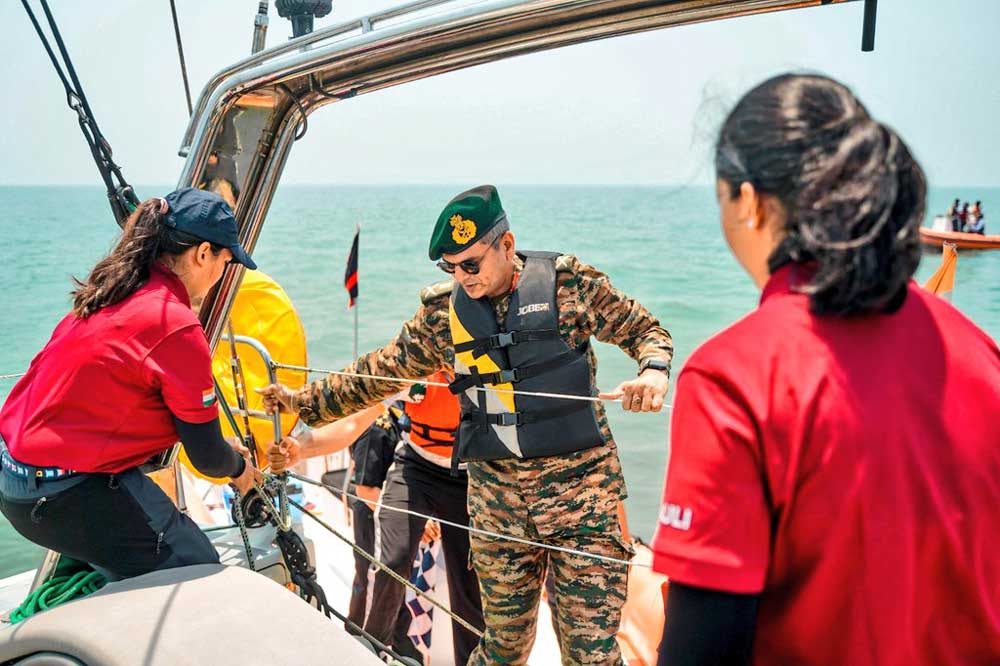
On a long ocean passage, there is no room for rigid military hierarchies. Every crew member rotates through multiple duties, including helming the yacht, trimming sails, maintaining communications, repairing equipment, cooking, cleaning, standing night watches, and monitoring weather systems. The routine is often organised into watches, with crew members working and resting in shifts around the clock. Everyone becomes responsible for everyone's safety.
The Voyage Ahead
Do these high-profile achievements actually encourage more women to join the armed forces? Yes, but with certain caveats. Women's representation across India's military has steadily increased over the past decade, although it remains relatively modest compared with many other countries. When young girls see women flying fighter aircraft, commanding naval missions, or completing a global circumnavigation, military careers become easier to imagine. This representation helps dismantle the notion that certain professions belong exclusively to men.
Career stability, promotion opportunities, family support policies, infrastructure, mentoring, and workplace culture all influence whether talented women choose military careers. The military's message is also evolving. Instead of highlighting women as exceptions breaking barriers, it now presents them simply as officers carrying out demanding assignments.
None of this suggests that gender equality in the armed forces has been fully achieved. Women remain underrepresented in several branches, particularly in combat arms within the Army. But Samudra Pradakshina indicates that we’ve come a long way.