On most afternoons at the women’s police station under the jurisdiction of Howrah City Police, the balcony fills with the sing-song rhythm of Bengali alphabets. This is ‘Barandaye Roddur’, which translates to ‘sunshine on the veranda’ in Bengali. It is a quiet community policing initiative that is reimagining what a police station can mean to the most vulnerable children in Howrah.
This ordinary veranda has turned into a bright, welcoming learning space for underprivileged street children. Many of them are first-generation learners who had never before held a schoolbook or pencil. The initiative, launched by the Women’s Police Station, was born when officers on patrol spotted the same children again and again, loitering near railway tracks, markets, and traffic junctions. These children were increasingly vulnerable to child labour, petty crime, and exploitation. Instead of only responding after problems emerged, the station chose prevention.
A Classroom Setup
‘Barandaye Roddur’ is built on a simple but powerful idea. If children cannot reach school, bring school to them. The police station’s balcony was safe, centrally located, and underutilised, becoming the perfect site.
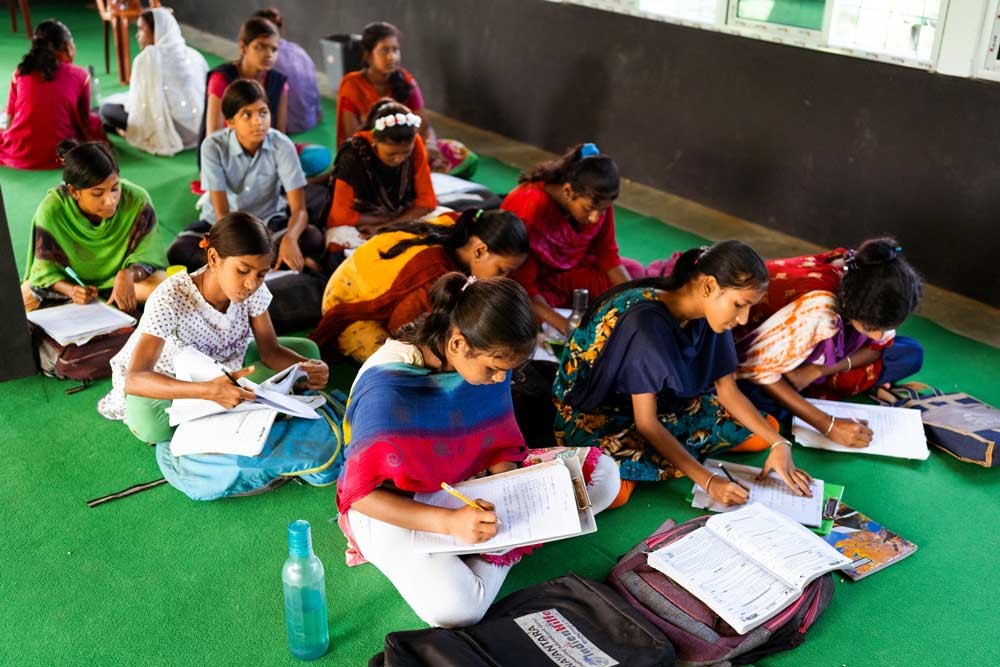
Today, colourful charts line the walls and floor mats have replaced formal desks. Volunteers and police personnel take turns teaching basic literacy, numeracy, hygiene, and life skills. The atmosphere is informal and nurturing, designed to ease children who may associate police spaces with fear. Many of the enrolled children come from families of daily wage workers, ragpickers, or migrant labourers. For several, this veranda is their very first structured learning environment.
Officers say the shift in the children is visible within weeks. Initially shy and restless, many begin to show curiosity, discipline and confidence.
A Holistic Approach
Education is only one pillar at Barandaye Roddur. Children enrolled in the programme receive basic academic instruction, nutritious meals and snacks, health and hygiene awareness, emotional support and mentoring, and help with mainstream school enrolment. The meal component, in particular, has proved crucial. For families living hand-to-mouth, the assurance that their child will receive food often becomes the turning point that keeps attendance steady. Police personnel involved in the initiative note that hunger and irregular routines are among the biggest barriers to learning. Addressing these basics first makes education possible.
Policing With A Human Touch
Community policing in India has often focused on outreach meetings or awareness drives. Barandaye Roddur embeds care work directly into the daily functioning of a police station. Women officers at the station have played a central role, balancing their law-and-order duties with mentorship. Their presence has helped build trust with both children and parents, many of whom were initially hesitant to send their children to a police premises.
Parents who once avoided the station now drop in to check on their children’s progress. Some mothers have even begun seeking help on issues like domestic violence or documentation, suggesting the programme is quietly strengthening community trust in law enforcement.
Breaking The Child Labour Pipeline
The initiative was conceived with a clear preventive goal to interrupt vulnerable children from entering into labour and petty crime. In areas around Howrah’s busy transport hubs, children out of school are often pulled into rag-picking, vending, or informal work at a very young age. Without intervention, many risk long-term educational exclusion.
By creating a safe daily routine anchored in learning and care, Barandaye Roddur offers an alternative pathway. Officers report that several children who once spent their days on the streets have now been successfully mainstreamed into formal schools. For first-generation learners, this transition is significant because it changes the trajectory for an entire family.
The Ripple Effect
In a country where police stations can feel intimidating, especially to the poor, this initiative reframes the institution as a site of protection and possibility. It also highlights the often under-recognised role of women police personnel in community care work. Educationists observing the programme say its strength lies in its replicability. It requires minimal infrastructure, strong local leadership, and volunteer support alongside coordination with schools. In other words, it is a model many urban police units could adopt.
Challenges On The Ground
Like most grassroots initiatives, Barandaye Roddur faces practical hurdles. Attendance can fluctuate when families migrate for work. Space is limited. Sustaining volunteer involvement requires continuous effort. There is also the longer-term challenge of ensuring that children who transition to formal schools stay there. First-generation learners often need sustained academic and emotional support beyond initial enrolment. Police officials acknowledge these realities but remain cautiously optimistic. Partnerships with local educators and community groups are being explored to strengthen continuity.
Barandaye Roddur may not look like a conventional reform programme because it is small, local, and deeply human in scale. But in the lives of the children who gather under this patch of sunlight, the impact is profound.