Ever heard of the saying ‘the most sustainable thing is what already exists in your wardrobe’? Now imagine fashion entrepreneurs building their brand with that as the central premise. While fashion has somewhat of an ‘adding problem’, where it seems impossible to exist without new collections, new fabrics and new trends, the thought that pre-existing materials can create something new too, can be the fresh take that shakes things up.
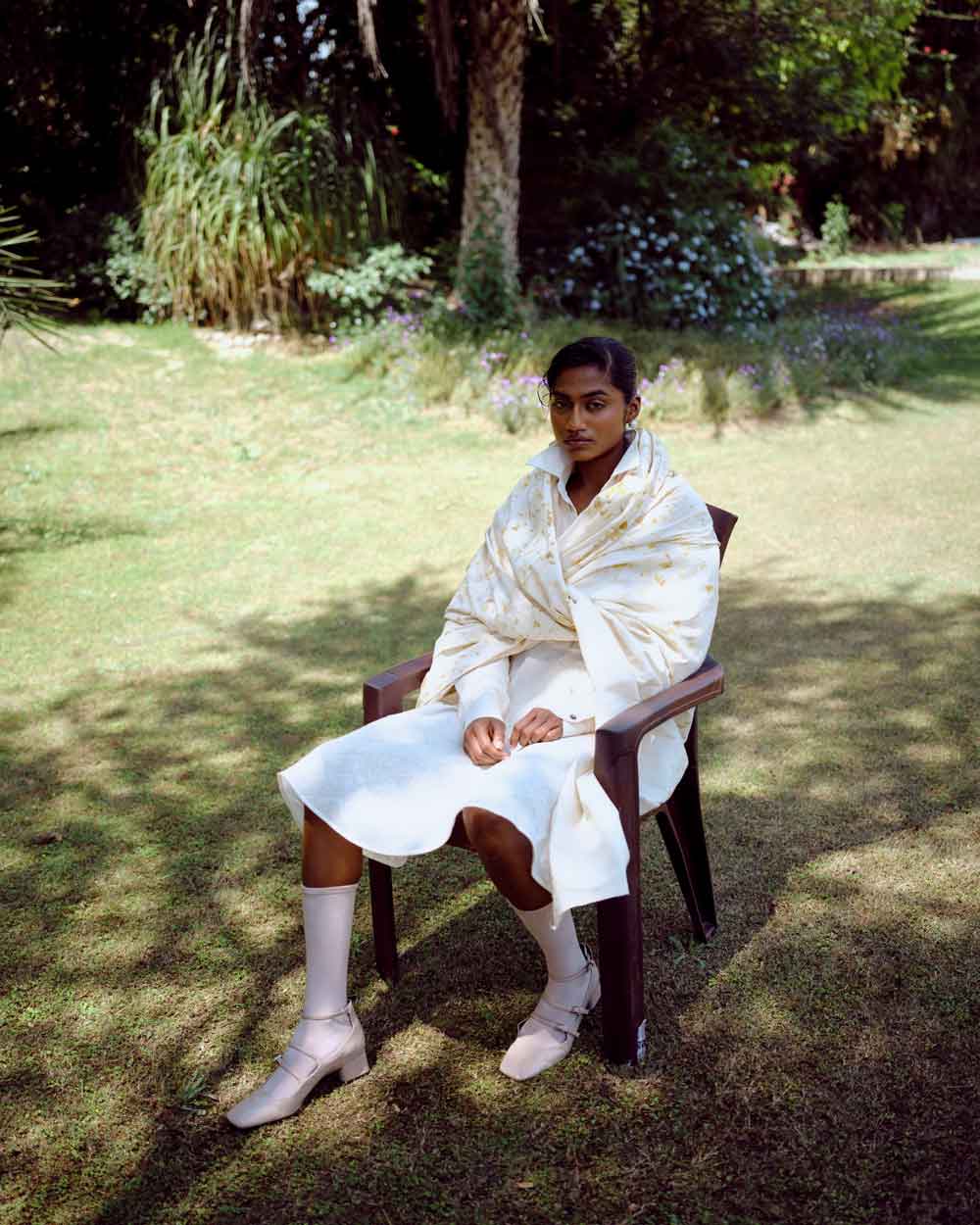
This fresh take is what mother-son duo Asha and Gautam Gupta applied when they created their new label, Avartan. Described by them as a circular design initiative, Avartan treats waste as raw material and craft as a contemporary language. Its debut collection, One World, is built entirely from recycled cotton and linen, avoids new dyes altogether, and integrates fragments of traditional textiles like Ikat, Patola and Bandhani. These materials are reconstructed and reworked rather than replicated. The palette is what the fabric already was: soft ivories, muted browns, weathered neutrals. ‘From sourcing certified recycled fabrics and undyed yarns to incorporating botanical waste applications, every stage demanded careful research and development to ensure no chemicals were introduced into the process,’ says co-founder Gautam Gupta.

The decision to avoid synthetics entirely was non-negotiable from the start, one that made everything harder. But Gautam sees those constraints as generative. ‘Working within sustainable limitations encouraged deeper innovation in materiality, craft, and construction,’ he says. ‘While working on it, we discovered so many unexplored possibilities in circular design and in Avartan will continue to evolve through experimentation, responsibility, and craftsmanship.’ After more than 23 years working with handmade crafts, he felt that a truly natural, circular alternative rooted in artisanal craftsmanship simply did not exist, and Avartan was built to fill that gap.
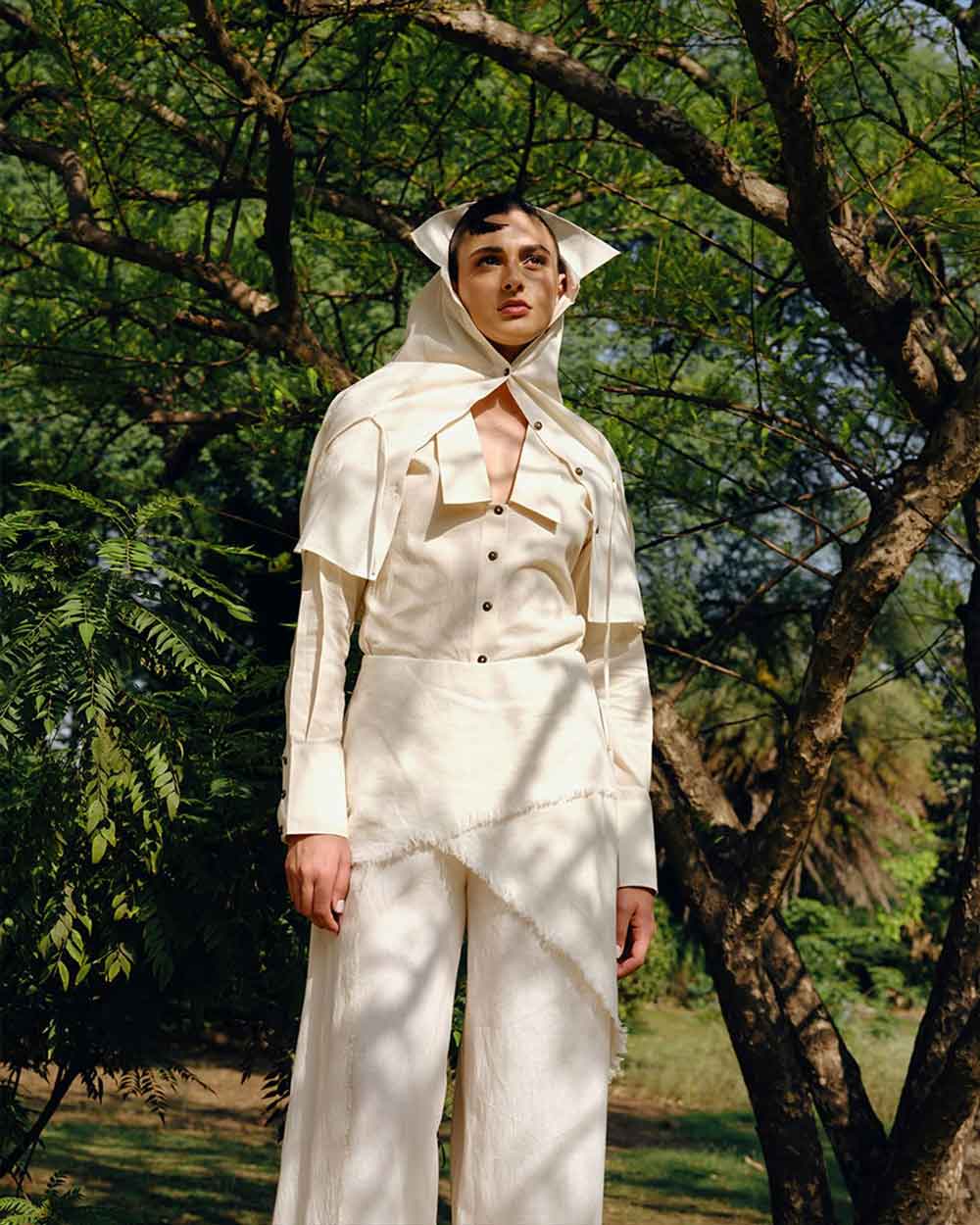
The collection reflects that intent at every level. Silhouettes move between structure and fluidity with tailored jackets, layered shirts, wrapped forms, and wide trousers. Hand embroidery traces patterns drawn from roots, wind and water, used not as decoration but as quiet observation. Select pieces feature eco-printing, where fallen leaves are pressed directly onto fabric, leaving impressions that are, by definition, unrepeatable.
The brand also draws on its relationship with Asha and Gautam Gupta’s existing label, using handwoven textile scraps from its archive as raw material for appliqué work. Indigenous hand embroidery techniques, including French knots, Kantha and chain stitch using natural yarns, complete the picture. ‘For us, traditional textiles are not limited to occasion wear or heritage dressing; they can seamlessly become part of a modern wardrobe when approached with thoughtful design and innovation,’ adds Asha Gupta.
For her, the thought behind Avartan connects to something much more cultural. Indian women, she points out, practised repair, reuse and recycling long before these ideas acquired the language they have today. ‘Practices like raffu, the traditional art of mending was once very common, but today we rarely see them being valued or applied in modern lifestyles. There is a deep sense of care, preservation, and emotional connection that women have historically brought to clothing, and I believe that perspective naturally contributes to more mindful and conscious approaches to fashion,’ she explains. As she rightly points out, generations of women in India have grown up witnessing sustainable habits in everyday life, whether through their mothers, grandmothers, or their own lived experiences.
'Avartan is not about adding more,' concludes Gautam. 'It is about working with less and working with it honestly.' In an industry that has long mistaken newness for progress, that may be the most radical design decision of all.