Moi Fine Jewellery, in collaboration with Princess Gauravi Kumari’s PDKF’s Artisan Collective, an initiative by the Princess Diya Kumari Foundation is presenting ‘Unbound by Beads: Migration, Memory & Material’, a research-led exhibition exploring the cultural, historical, and material significance of glass beadwork within the pastoral desert communities of western India. On view at The Lavery in South Kensington from May 13 – 16 as part of London Craft Week 2026, the exhibition marks the unveiling of ‘Serai’, a contemporary jewellery capsule. The exhibition has been designed by Armaan Bansal (Founder, anda_ba design studio) and Meneesha Kaur Kelly (Lead Curator, Victoria & Albert Museum).
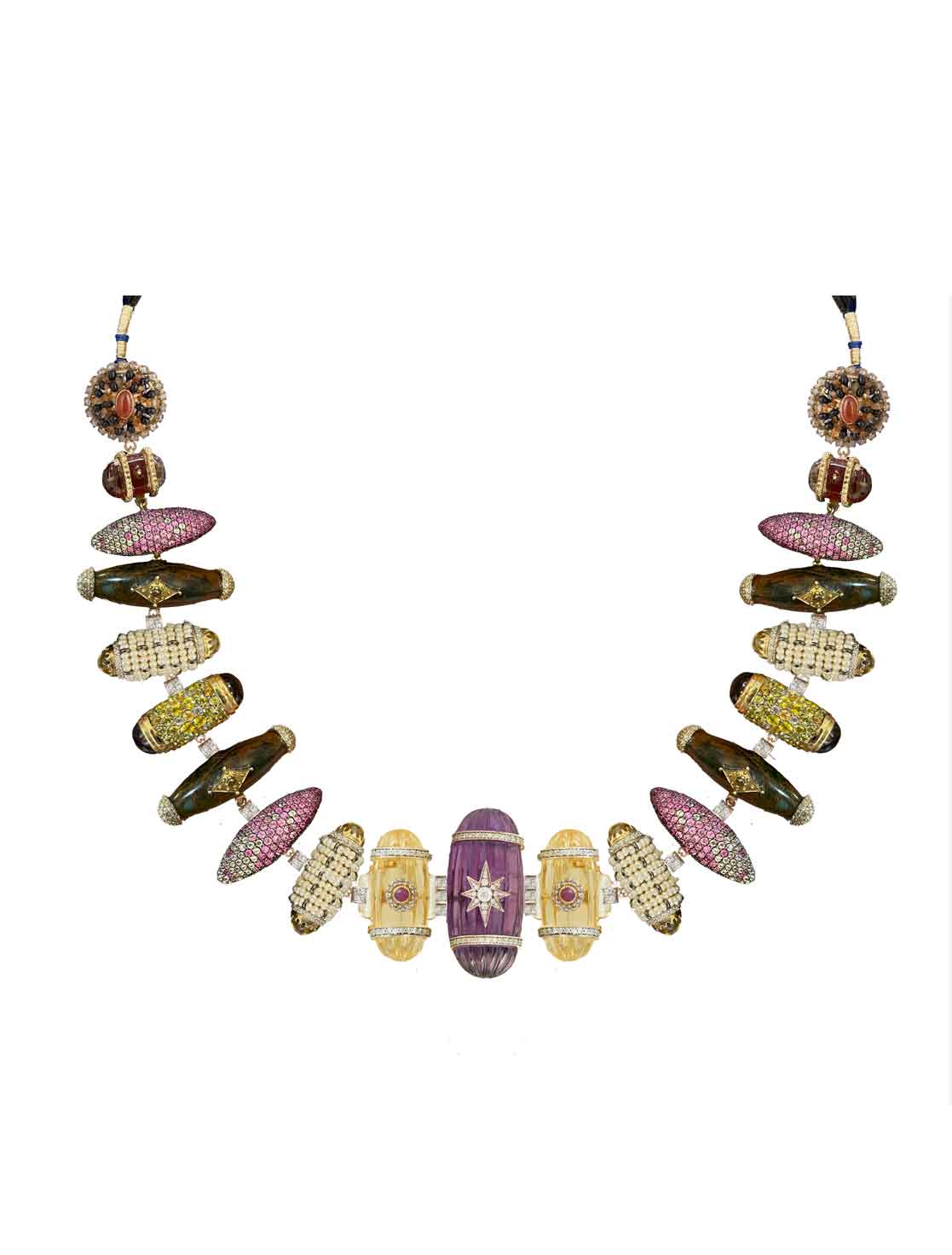
While researching traditional jewellery-making practices native to Western India, Puja Shah, co-founder and primary designer of Moi came across glass beads from the region that revealed a lesser-known history of trade and global exchange dating back to the 19th century. Produced in Venetian workshops and transported through maritime trade routes, these beads had reached India’s western coastline and become embedded in the lives of the region’s pastoral communities. For the women artisans of Meghwal who work with them today in Western Rajasthan, the practice of beadwork remains shaped by inherited craft skills while also offering space for autonomous expression and economic independence.
PDKF's Artisan Collective (PAC) introduced Moi to the women artisans of the Barmer region, whose craft traditions have been passed down from mothers to their daughters over the years. The Collective is a curated platform that brings together women artisans, craft practitioners, and creative voices from across India. Through exhibitions, conversations, workshops, and performances, it highlights heritage craft practices while creating visibility, dialogue, and sustainable livelihood opportunities for the women who practise them. To date, the Collective has hosted two editions, one in 2025 and another in January 2026, bringing together over 70 women artisans and more than 40 craft traditions.
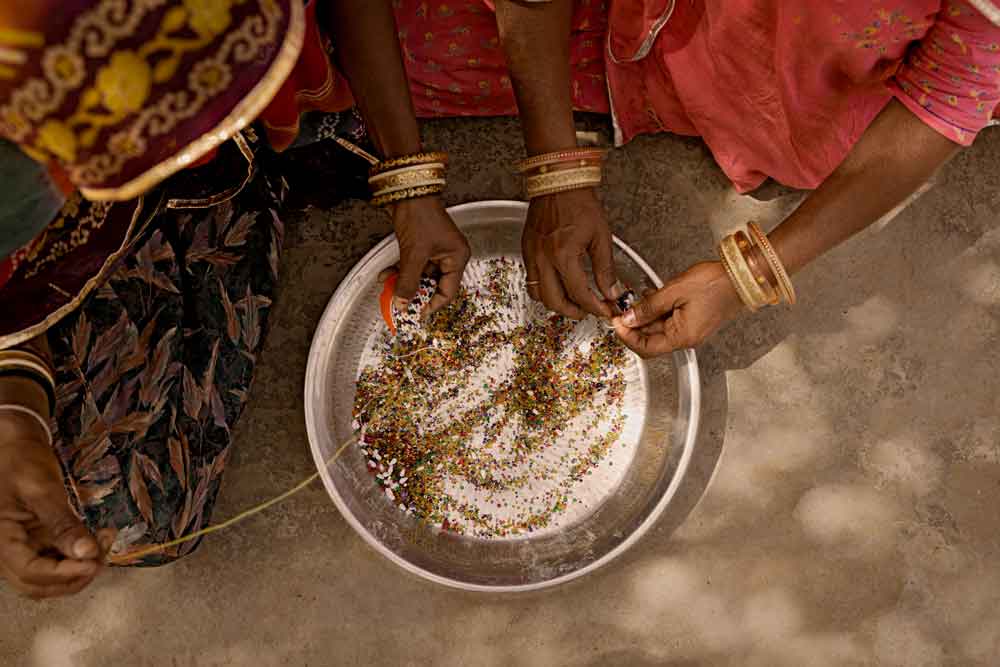
Established relationships within these communities allowed Moi to experience on-site visits to the region, to document an audio-visual archive of local beadwork traditions. Drawing from extensive fieldwork and material research, the project centres glass beadwork as a symbol of migration, memory, and identity, and positions these women artisans as a living communal archive of a craft tradition inherited through generations.
Princess Gauravi Kumari: Preserving Craft Traditions
From as early as she can remember, the women around Princess Gauravi Kumari have been strong, purposeful figures, particularly her grandmother Rajmata Padmini Devi, and mother, Princess Diya Kumari. ’My grandmother has spent years carrying forward Jaipur’s cultural and religious heritage with immense care and responsibility, while balancing so many different roles over the years with remarkable grace and consistency. And my mother, through both public life and the Princess Diya Kumari Foundation, has continuously worked towards creating opportunities, strengthening livelihoods, and building support systems for women across Rajasthan, all while balancing governance, heritage, education, and community work side by side. So I think I grew up with a very clear sense that women don’t just participate, they lead, they build, and they take others along with them.’
In many ways, that is also what Princess Gauravi Kumari has experienced through her work with women artisans across Rajasthan through the PDKF and the PDKF’s Artisan Collective. She has led initiatives that have supported and empowered thousands of marginalised women and girls across Rajasthan. Under her leadership, various programmes and projects have been launched like the establishment of new skill-building centres, raising awareness about menstrual health, imparting self-defense training, promoting girls’ participation in sports, and addressing other community needs. In 2021, she co-founded The PDKF Store with the aim of promoting traditional crafts through contemporary adaptations, enabling women artisans to gain financial independence by helping market and sell their work to a global audience through a craft-led retail approach. She also founded the PDKF’s Artisan Collective, a platform that celebrates women entrepreneurs and heritage crafts.

‘I have seen how, when there is access, support, and trust, their work doesn’t just improve, it expands in ways that are very self-driven,’ she says. ‘So I don't see myself as redefining them. I see myself as a bridge, creating access and visibility where it is needed. But the work, the growth, the leadership, that has always been theirs.’
Craft was something Princess Gauravi Kumari grew up around and saw constantly. ‘Jaipur has always been shaped by craft and folk art. Since its foundation, art, trade, and creative industries were central to how the city was built and how it functioned. You see that even in the architecture, in the details of the City Palace itself. That proximity gave me an early understanding of how much of the city actually runs through these traditions, and how many communities are behind them. The approach has always been the same: to support what already exists, help it find visibility and continuity, and ensure that Jaipur's crafts are presented in ways that stay connected to the present without losing what makes them significant.’
She adds, ‘Many traditional crafts rely heavily on women’s labour, but the gap today is not in the skill, it is in recognition and access. The work itself is extraordinary; the time, precision, and knowledge that goes into it is very often not matched by the visibility or the value it receives in wider markets. That imbalance is something that needs to be addressed more directly. For me, the response has always been about creating visibility and access together. Through PDKF’s Artisan Collective, and now through our collaboration with Moi Fine Jewelry for London Craft Week, the intention has been very clear: to bring the women who are at the centre of this work into the foreground of a much larger conversation. Because when that happens, you immediately see the shift. Their work is seen in a different context, their value is better understood, and their presence in these spaces becomes more direct rather than mediated. So I don’t think this is about one intervention. It is about ensuring that recognition and opportunity move together. And that the women who have always been carrying this craft are also the ones shaping how it is seen today.’
Through the PDKF, Princess Gauravi has worked closely with grassroots communities, discovering that women are central to building sustainable crafts futures. ‘What has become clear to me is that the knowledge keeping these traditions alive was never stored in institutions or written down in manuals. It has always lived with women, passed from mother to daughter, held in practice and in patience. What formal systems fail to account for is time. The years it takes to build real skill, and the consistent labour of transmission. That has never been measured or valued by policy or market, and yet without it, none of these crafts would exist today. My work has simply been to make that visible.’
However, she believes that younger audiences are engaging with craft differently today. There is more curiosity, and a stronger desire to understand where things come from, not just consume the final product. ‘People want to know the story, the process, and the person behind what they are buying or wearing. That shift matters because it creates visibility in a very direct way. It allows women-led craft enterprises to move beyond local markets and enter conversations that are more contemporary and global. But the opportunity lies in how we bridge that interest with real access. Platforms, collaborations, and storytelling all need to ensure that women artisans are not just part of the background, but recognised as the source of the value itself. That is where the enterprise becomes sustainable, and where the recognition is long overdue.’
Puja Shah: Emotional & Cultural Value In Craft
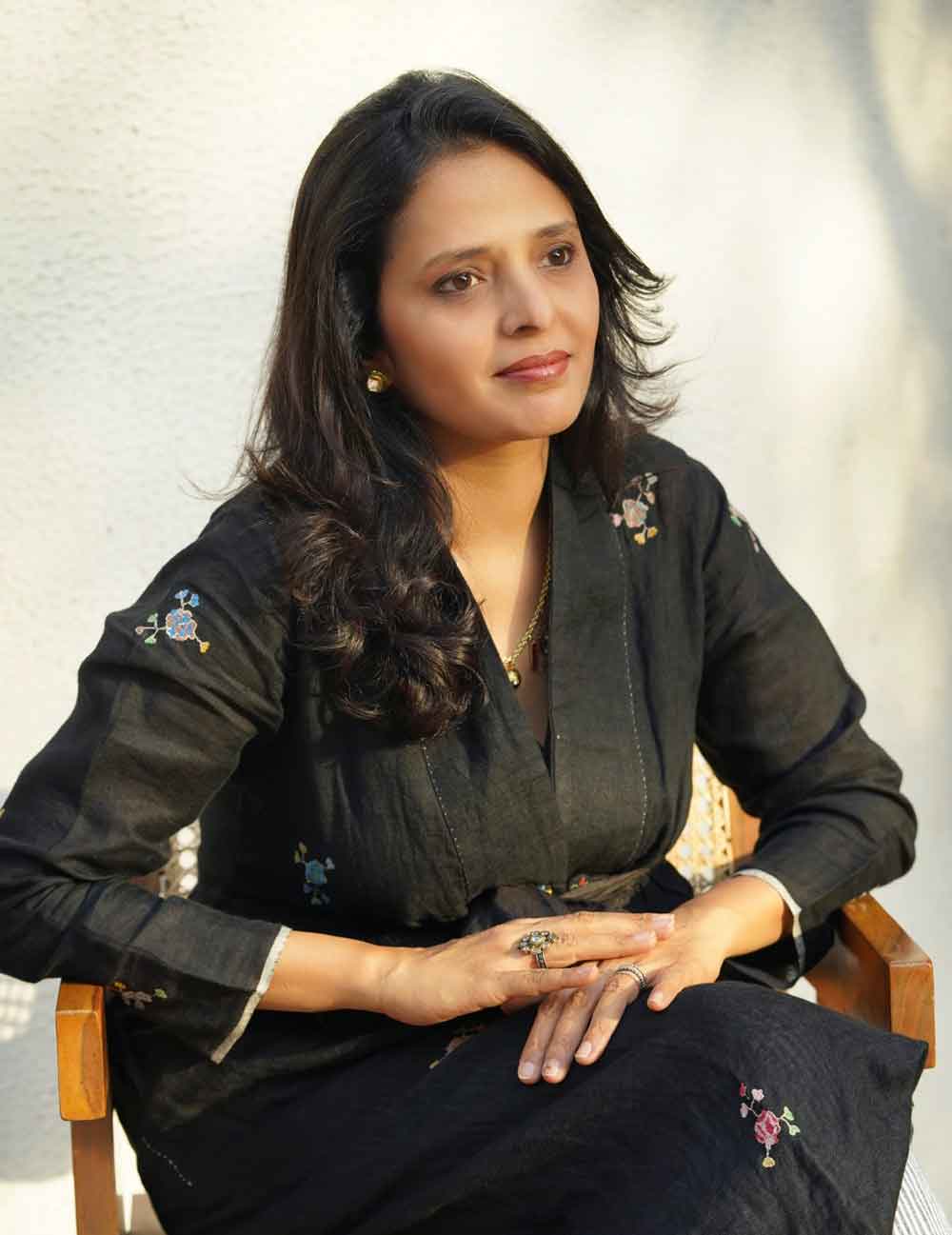
Puja Shah, co-founder of Moi Fine Jewellery shared that this project began as a deeply personal inquiry into how material holds memory. She emphasises, ‘For me, the starting point was understanding that this tradition did not belong to us. We were entering a living cultural space that already carried memory, lineage, and identity for the women who practise it. So the process was never about borrowing from craft and translating it into luxury. It was about listening first. A large part of this project involved field research, conversations, documentation, and spending time with the women artisans in Barmer and Kutch. What stayed with me most was that beadwork was never originally created for commerce. Women made these objects for themselves, for their homes, for rituals, and for their daughters. That emotional context was very important for us to preserve. Even when we reinterpreted certain motifs or techniques within fine jewellery, we tried to ensure the original vocabulary remained visible. Ethical collaboration also means acknowledging contribution transparently, creating dignified economic opportunities, and recognising that preservation cannot happen unless value and visibility are attached to the people carrying these traditions forward.
She adds, ‘I think craft is often reduced to labour or ornamentation, when in reality it carries entire social histories within it. In the case of beadwork traditions from Western India, these objects were deeply tied to womanhood, migration, dowry, community identity, and maternal inheritance. So for me, it was impossible to look at the craft only aesthetically. Commercial ecosystems usually prioritise material value, gold, diamonds, rarity. But this project was asking a slightly different question: can emotional and cultural memory also hold value? That became very important to me.’
Puja doesn’t believe that preservation means freezing a tradition in time. ‘If a craft cannot evolve alongside contemporary life, it eventually risks becoming archival instead of living. At the same time, reinvention has to come from understanding and respect. You cannot meaningfully reinterpret something without first studying its original context, purpose, and symbolism. That research process is extremely important to me. The intention was never to modernise these techniques simply for trend or novelty. It was to ask how they could continue existing meaningfully within a contemporary design vocabulary while still retaining their essence. Dilution happens when craft becomes surface decoration detached from its roots. But when the history, makers, and meaning remain acknowledged, reinvention can actually become a form of continuity.’
Although there is definitely more visibility today than before, which is encouraging, Puja still believes that many women artisans remain invisible within larger craft narratives. ‘Often the craft is celebrated, but the women behind it are not fully acknowledged as knowledge bearers, designers, and cultural custodians in their own right. What moved me deeply during this project was understanding how much of this knowledge survives through maternal transmission. These practices were carried quietly through generations inside homes and communities, often without institutional recognition. I think the future of indigenous craftswomen depends on visibility, dignity, and economic sustainability. Younger generations will continue practising these traditions only if they feel there is both value and respect attached to the work. That does not only mean financial support, but also representation within museums, global design conversations, education, and contemporary culture. What gives me hope is that many women artisans today are not just preserving traditions, but adapting them with remarkable intelligence and resilience.’
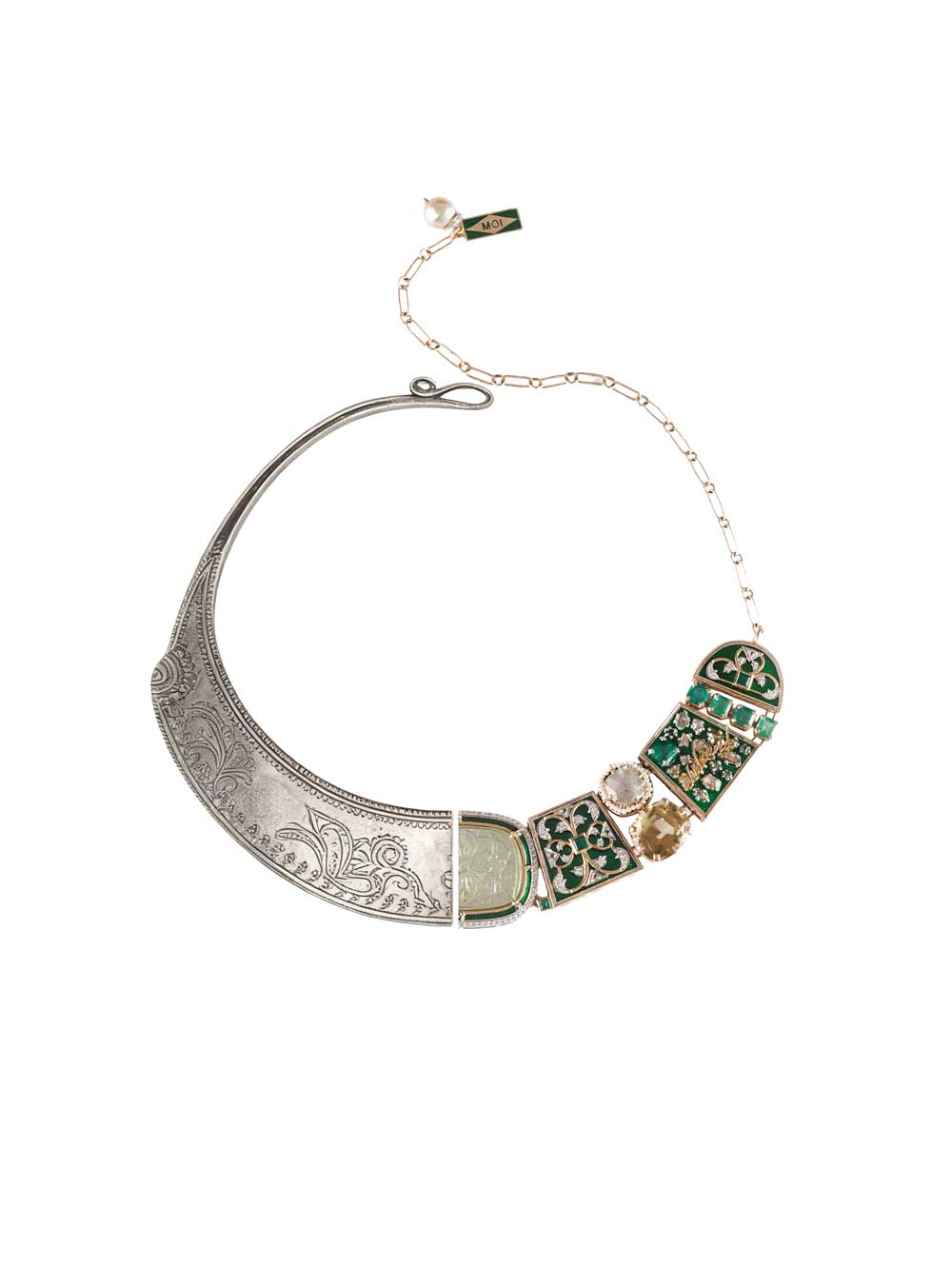
This is where she believes platforms like the LCW become meaningful, when they move beyond presenting Indian craft as something decorative or exotic. ‘What fascinated me during this research was discovering how Venetian glass beads travelled through maritime trade routes into Western India and eventually became embedded within local pastoral communities. It immediately challenged the idea that cultures develop in isolation. So presenting this project internationally was not about exporting Indian craft. It was about showing how material histories travel, transform, and become part of larger human narratives. I think global platforms can play an important role when they allow Indian craftspeople and designers to be seen not only as preservers of heritage, but also as contributors to contemporary global cultural conversations.’