After two years of travelling to museums across India, Hamari Virasat, an exhibition of 75 handmade textile artworks, has now arrived in Mumbai. Here, each square metre is contributed by artisans from all over India. Every piece draws from the visual language of the Preamble to the Constitution of India, interpreting its values through craft, technique and material. The result is a collective portrait of what liberty, equality, justice and fraternity look like when they pass through the hands of the people who live them.
The show has been a long time in the making. Conceptualised by the Hand for Handmade Foundation, Hamari Virasat first travelled to various museums in India as a tribute to the 75th year of the Constitution coming into force. The works were contributed by artisan members of the Foundation from across the country, each drawing from the visual language of the Preamble and each arriving at something entirely their own. Now, two years on, the artworks are being made available for sale, with proceeds going directly back to the artists.
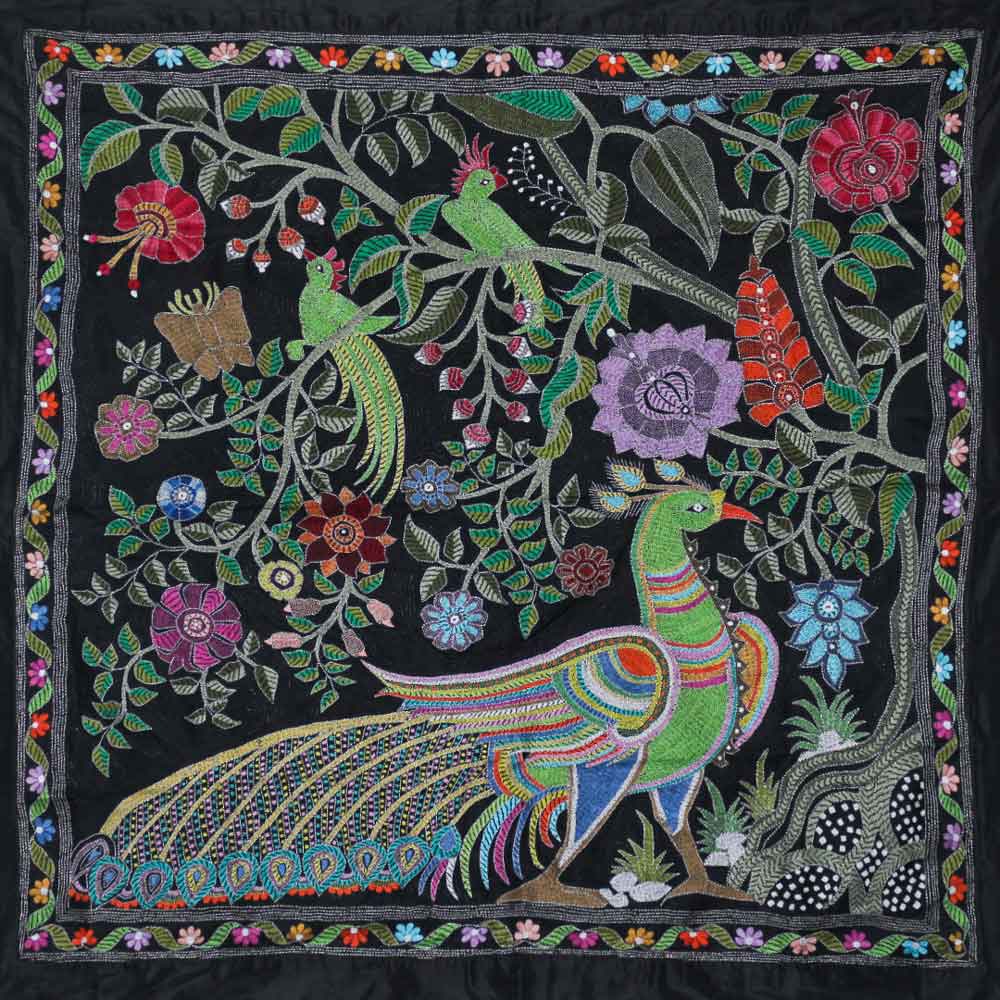
Image Source: Hamari Virasat
‘This is a fitting finale to the Hamari Virasat show,’ says Shibani Dasgupta Jain, Founder and Director of Hand for Handmade Foundation. ‘The idea is to offer these artworks that were also part of a historic milestone for citizens of India, the 75th year of our Constitution being adopted. It is a visual tribute to our national identity.’
The symbols embedded in the Preamble, like the horse, elephant, bull, lion, peacock, lotus vines became the raw material for interpretation. ‘Some clusters worked on evocative ideas depicting fraternity and equality through their art,’ the founder explains. What emerges across the 75 works is less an illustration of constitutional ideals and more a lived reckoning with them.
Some interpretations cut closer than others. Among the works that moved Dasgupta Jain most deeply was a piece by Porgai Artisans, a collective of women from the Lambadi tribe. ‘They took up a strong theme – liberation of their Lambadi tribe’s women,’ she says. ‘The bird being freed is symbolic of the empowerment that these women artisans feel.’ It is the kind of detail that reminds you that for many of the nearly 200 million artisans working across India's handmade and craft sector, constitutional values are not abstract; they are the terms on which daily life is negotiated.
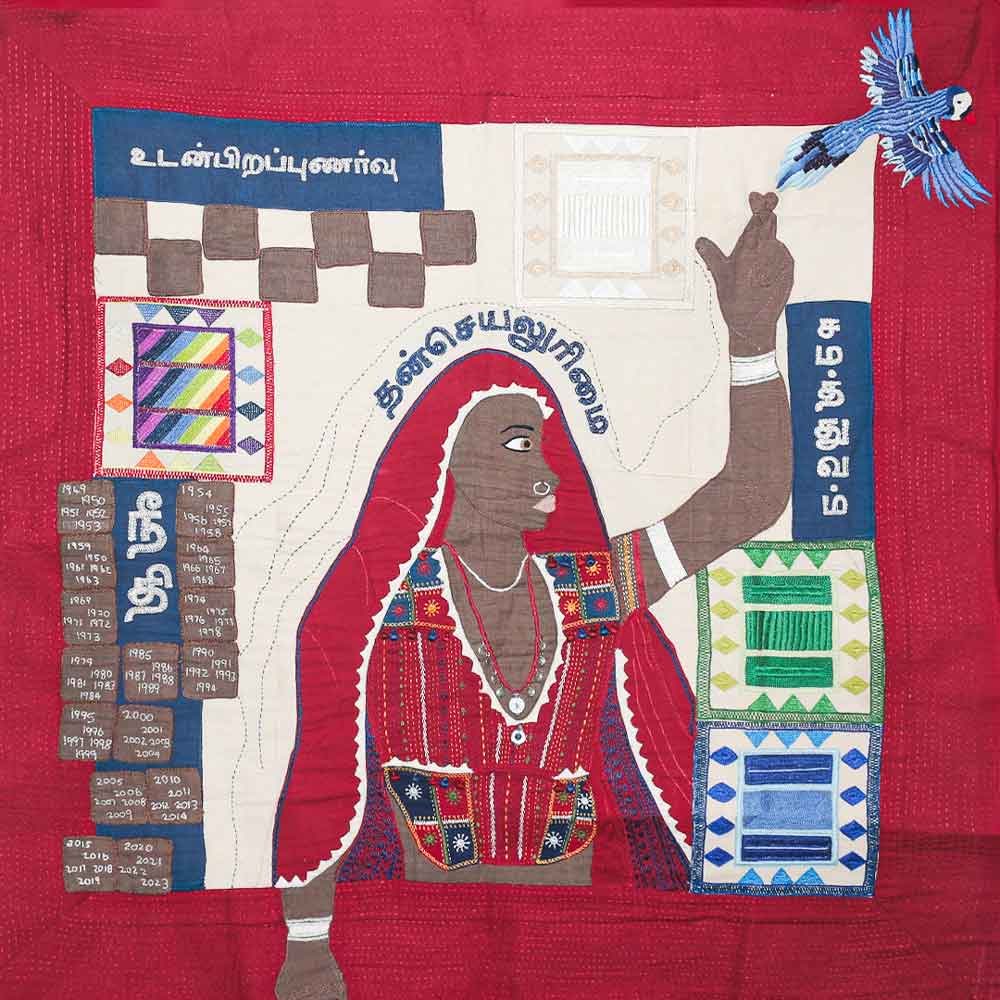
The artwork by Porgai Artisans Association. | Image Source: Hamari Virasat
Women are at the centre of Hamari Virasat in more ways than one. The majority of the works on display have been created by women artisans or producer groups that support women. ‘This exhibition showcases the innate creativity of the women artisans, and their contribution towards nation building,’ says Dasgupta Jain.
What Dasgupta Jain hopes viewers carry with them is precisely that sense of connection between the artisan and the audience, between craft and nationhood. ‘The viewers will appreciate the concept of how diverse our arts and crafts are, yet feel moved by how the artisans feel a common sense of identity and pride in their nation,’ she says. ‘Their contribution towards building national identity cannot be emphasised enough.’
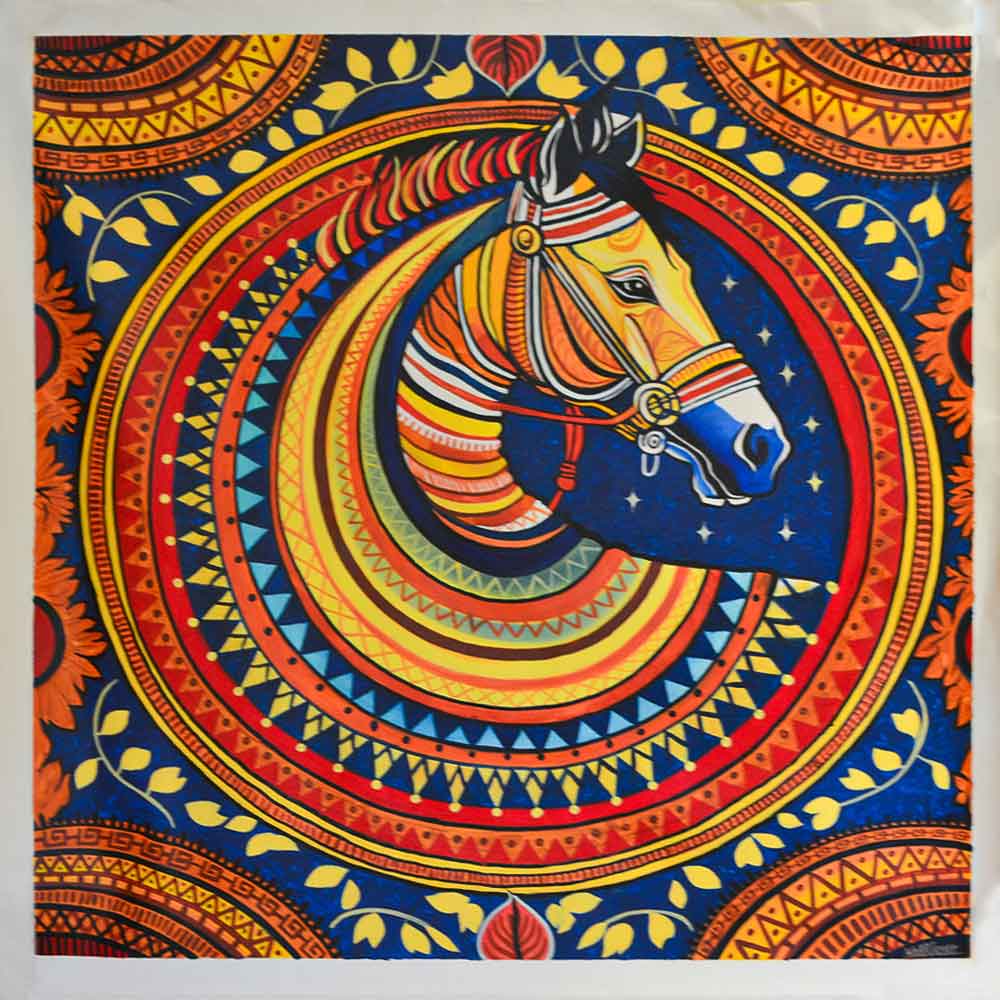
Image Source: Hamari Virasat
The broader ask, though, is for something more sustained. 'The more we recognise and appreciate the arts and crafts of India, the more we advance as people,’ says Dasgupta Jain. ‘The Arts of India are deeply varied and a rich legacy that needs to be preserved.’ Hamari Virasat, in bringing 75 distinct hands to a single idea, makes a compelling case for why that preservation is not nostalgia, but necessity.
Hamari Virasat is on view and available for sale at 47-A, Mumbai, till May 10, 2026, and proceeds go directly to the participating artisans.