
 home
home HERoes
 StrongHER
 exclusive
 bizruptors
 connect
 showcase
 engage
 grow
grow goals
goals period goals
 fertility and pregnancy goals
 diet and fitness goals
 finance goals
 help
help contest
 about us


The Promise Of Equality: Tribal Women’s Inheritance Rights In India
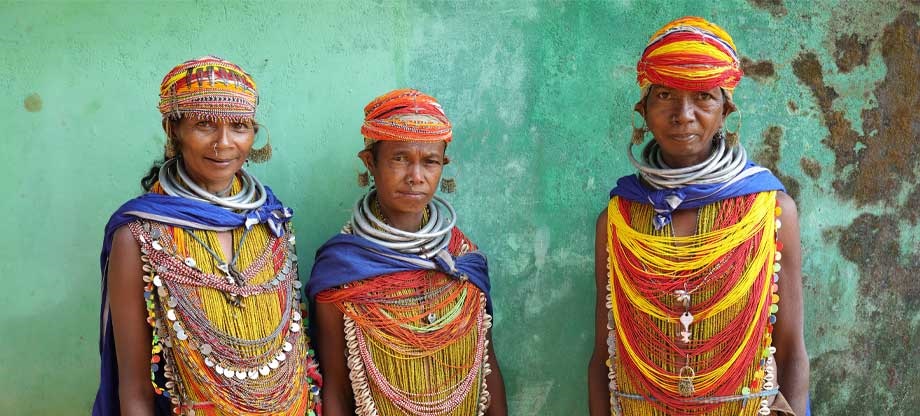
Across India’s diverse tribal communities, women have long been central to economic and social life as cultivators, forest gatherers, and knowledge keepers. Yet when it comes to inheritance and property rights, many tribal women have historically stood on fragile ground. A major Supreme Court ruling in July 2025 has reignited national attention on this issue.
The Legal Landscape For Tribal Women
Unlike most other Indian women, tribal women do not fall under the Hindu Succession Act, 1956, or the Indian Succession Act, 1925. Section 2(2) of the Hindu Succession Act explicitly excludes Scheduled Tribes unless the Central Government chooses to extend the law to them.
Instead, matters of inheritance, marriage, and succession among Scheduled Tribes are primarily governed by customary laws. These customs are constitutionally protected in recognition of tribal autonomy and cultural diversity. The Constitution, through provisions relating to Scheduled Areas and tribal self-governance, seeks to preserve indigenous identity and traditional institutions. This legal pluralism has been both a boon and a bane.
On one hand, it protects tribal communities from one-size-fits-all legislation. On the other hand, it has often allowed patriarchal customs to continue unchecked, especially in property matters.
Long-Standing Tensions
Historically, many tribal customs have favoured male lineage in inheritance. In several communities, daughters either receive no share in ancestral property or only limited rights after marriage. Widows’ rights are often conditional, temporary, or dependent on male relatives.
For decades, courts approached these customs cautiously, partly out of concern that judicial intervention might disrupt tribal social structures. But India has been changing. Women’s constitutional rights, land rights activism, and grassroots tribal women’s movements have steadily built pressure for reform. Courts have begun scrutinising customary practices more closely and asking whether they were truly reasonable.
The July 2025 Breakthrough
In Ram Charan v Sukhram (2025), the Supreme Court delivered a significant judgment. The Court held that a tribal woman is entitled to an equal share in ancestral property where no valid custom clearly excludes her. Denying such rights, it said, violates the constitutional guarantee of equality under Article 14.
The bench emphasised that excluding women from succession ‘exacerbates gender discrimination’ and that courts must lean toward justice, equity, and good conscience. Crucially, the Court also shifted the burden of proof, those claiming a discriminatory custom must demonstrate that such a custom actually exists and is legally valid. For many advocates, this was a watershed moment. It signalled that constitutional equality cannot be casually overridden by unproven or outdated customs.
The Catch
Even as the Court expanded equality in individual cases, it reaffirmed that tribal communities remain outside the Hindu Succession Act, and only Parliament can change that. In fact, later rulings reiterated that inheritance among Scheduled Tribes must continue to follow tribal customary frameworks unless the legislature intervenes.
This creates a complex legal position wherein courts can grant relief case by case, but there is no uniform statutory guarantee yet. Parliament holds the key to systemic reform and many tribal women still face uncertainty.
Why The Gap Persists
Legal victories do not automatically translate into equality. Several structural barriers remain:
1. Diversity Of Tribal Customs
India has over 700 Scheduled Tribe communities. Their inheritance rules vary widely and can be patrilineal, matrilineal, or mixed. Any blanket reform risks oversimplification.
2. Land And Identity Concerns
Many tribal leaders worry that changing inheritance rules could lead to land alienation, especially if women marry outside the community and transfer land rights.
3. Limited Legal Awareness
In remote regions, many women are unaware of their rights or lack access to courts and legal aid.
4. Social Pressure
Even where women have legal claims, family and community pressure often discourages them from asserting property rights.
These realities explain why judicial progress, while important, is only one piece of the puzzle.
Signs Of Momentum
Despite challenges, momentum is clearly building. High courts have increasingly echoed the Supreme Court’s equality reasoning. In 2025, for example, the Rajasthan High Court upheld a tribal woman’s claim to ancestral land and urged the Union government to amend the Hindu Succession Act to remove the exclusion.
Legal scholars also note a broader judicial shift. Courts are now more willing to test customary laws against constitutional values rather than accepting them at face value. Civil society organisations, particularly Adivasi women’s collectives, are using these rulings to push for awareness campaigns and policy reform.
The Parliamentary Question
The biggest unresolved issue is legislative reform. The Supreme Court has effectively thrown the ball into Parliament’s court. Extending statutory succession rights to Scheduled Tribes or creating a new gender-just tribal succession framework would require careful consultation and political will. Possible legislative paths include extending the Hindu Succession Act selectively, but this could be controversial. Creating a separate gender-equal tribal succession law would allow community-specific codification with equality safeguards. Each option carries political and cultural sensitivities.
What Lies Ahead For Tribal Women?
The future is likely to unfold along three parallel tracks. Courts will probably continue granting equal inheritance rights in individual disputes, especially where discriminatory customs are weak or unproven. Pressure on Parliament is likely to grow. Women’s groups, legal activists, and some state governments are expected to push for clearer statutory protection. The most sustainable change may come from within tribal societies themselves. In several regions, younger leaders and women’s groups are already re-examining customary norms in light of education, migration, and economic change.
The Deeper Question
How does India balance two constitutional commitments of protecting tribal autonomy while ensuring gender equality? For decades, policy leaned toward preserving custom. The 2025 judgment signals a recalibration. Culture matters, but it cannot justify discrimination. Yet reform must proceed carefully, and organic change takes time. For India’s tribal women, the July 2025 ruling is a hinge moment, but whether it reaches forest villages, hill communities, and remote hamlets will depend on what happens next.