There’s no denying that India's informal economy has long been a quiet engine of our country’s growth. Millions of unincorporated enterprises, from neighbourhood tailoring units and home-based food businesses to beauty services, handicrafts, repair shops and small retail stores, keep local economies running every day. Behind many of them are women who juggle entrepreneurship with caregiving, household responsibilities and limited access to finance. They build businesses from kitchens, spare rooms and street corners, often without recognition or support. Often, their work remains outside the ‘formal’ corporate world, leaving the scale of their contribution to the nations’ economy largely unrecognised.
The latest Annual Survey of Unincorporated Sector Enterprises (ASUSE) 2025, released by the Ministry of Statistics and Programme Implementation (MoSPI), shifts that perception a little. The survey offers one of the most comprehensive pictures of India's informal sector, covering manufacturing, trade and services, while excluding agriculture and construction. More importantly, it highlights how India's smallest businesses are adapting to technology, formal finance and changing consumer behaviour.
The Informal Economy Is India's Biggest Employer
ASUSE estimates that India now has 7.92 crore unincorporated non-agricultural establishments, up from 7.34 crore in the previous survey, an increase of nearly 8 per cent. Employment has also expanded significantly, with these enterprises supporting approximately 12.8 crore workers, creating more than 74 lakh additional jobs since the previous survey.
These numbers matter because India's informal sector is not a fringe economy. It represents everyday businesses that people interact with constantly, such as local kirana stores, beauty parlours, tailoring units, tuition centres, small manufacturing workshops, home kitchens, and countless service providers.
Women And The Informal Economy
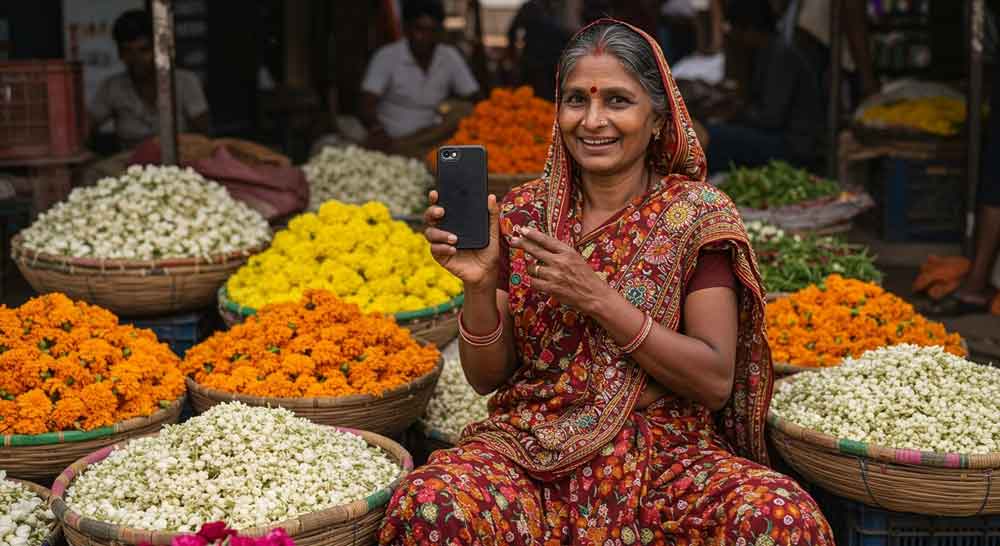
Women now head nearly 27 per cent of all proprietary enterprises. The share of female-headed proprietary establishments increased from 26.17 per cent in ASUSE 2023–24 to 26.93 per cent in ASUSE 2025. This means more than one in four sole proprietorships in India's informal, non-agricultural economy are run by women. While the increase seems modest, it indicates that women's entrepreneurship continues to grow rather than stagnate. Given the enormous size of the informal sector, even a small percentage increase translates into hundreds of thousands of additional women-led businesses.
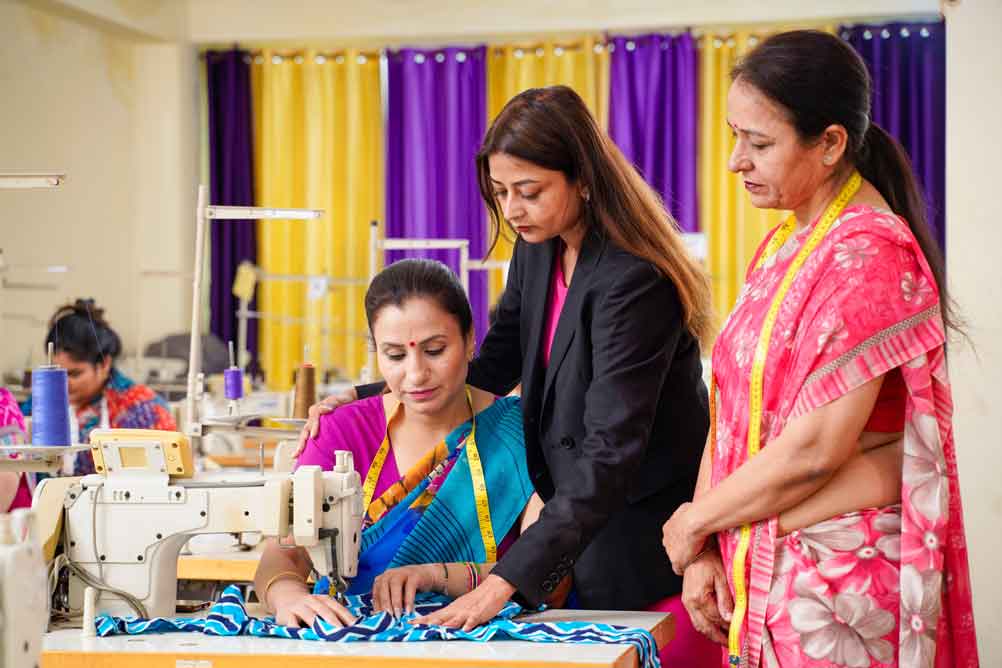
One of the survey's most striking findings is that female proprietors head over 60 per cent of establishments in the manufacturing sector. This doesn't mean women dominate all manufacturing. Rather, they are heavily represented in small-scale, unincorporated manufacturing, particularly garment and apparel making, tailoring, embroidery, food processing, handicrafts and home-based production. These are businesses that often operate from homes or small workshops and require relatively low capital.
Among all female workers, nearly 22 per cent are employed in the manufacture of garments. This confirms that India's apparel ecosystem remains one of the country's largest sources of women's employment. However, it also reveals a concentration risk, that women remain clustered in a few labour-intensive industries and there is still limited diversification into higher-value manufacturing and technology-based enterprises.
A particularly encouraging finding is that women entrepreneurs hire other women. Nearly 72 per cent of female-led establishments have hired at least one woman worker. This suggests a multiplier effect where women entrepreneurs are not only earning livelihoods for themselves but are also creating employment opportunities for other women.
This has important implications because women employees often report feeling more comfortable working in businesses run by women, especially in sectors like tailoring, beauty services, food production and childcare. Women account for about 29 per cent of all workers in India's unincorporated non-agricultural sector. Nearly three out of every ten workers in the informal sector are women, which suggests that roughly 3.7 crore women work in these enterprises.
Digital India Reaching Small Businesses
One of the survey's most encouraging findings is the rapid increase in internet use for business purposes. Overall, internet usage among unincorporated enterprises rose from 26.68 per cent in ASUSE 2023-24 to 39.37 per cent in ASUSE 2025.
The rural transformation is particularly striking. Internet use for entrepreneurial activities increased from 17.94 per cent to 31.06 per cent, while urban businesses also recorded strong growth from 37.01 per cent to 48.94 per cent. More than half of all trading establishments now use the internet for business activities.
Social media marketing, digital payments, WhatsApp Business, online catalogues and e-commerce have lowered barriers that once limited women entrepreneurs to customers within their immediate neighbourhoods.
Access To Formal Finance
Finance has been one of the greatest obstacles facing women entrepreneurs. Many women depend on personal savings or family support because collateral requirements, documentation and banking procedures often discourage first-generation entrepreneurs. The ASUSE findings suggest gradual improvement.
More than 80 per cent of outstanding loans reported by enterprises now come through institutional sources, indicating increasing access to formal financial systems rather than informal moneylenders.
Average fixed assets per establishment also increased from ₹3.24 lakh to ₹3.42 lakh, suggesting businesses are investing more in equipment, machinery and productive assets. This is encouraging because access to institutional finance generally allows businesses to expand more sustainably, invest in technology and generate better incomes.
Formalisation Is A Work In Progress
Despite these positive developments, formalisation is progressing slowly. The proportion of registered establishments increased only marginally from 37.2 per cent to 37.5 per cent. That means nearly two-thirds of India's unincorporated enterprises continue to operate without formal registration.
Registration can involve paperwork, compliance requirements, digital literacy challenges and concerns about taxation. Women running home-based businesses may also hesitate to formalise because their enterprises are often viewed as supplementary household income rather than full-fledged businesses. However, remaining outside the formal system can limit access to government schemes, institutional credit, insurance and larger market opportunities.
While ASUSE 2025 provides valuable insights into the health of India's informal economy, it also reminds us that women entrepreneurs are far from a homogeneous group. Urban women with smartphones, digital payment systems and social media skills are benefiting from India's digital transformation much faster than women in remote rural regions. Similarly, women from self-help groups or organised collectives often find it easier to access finance than individual entrepreneurs working alone.
The biggest takeaway from ASUSE 2025 is that India's smallest businesses are becoming more productive, more digitally connected and increasingly integrated into the formal financial system. For women, in particular, this shift represents more than economic progress. It opes doors to greater financial independence, strengthens their voice in household decision-making, creates local employment opportunities and inspires younger generations to see business ownership as a viable and empowering career path.