There is something quietly satisfying about freshly painted nails. It is one of beauty's smallest pleasures and, as it turns out, one of its more complicated ones. Nail polish is also one of the most chemically dense products in a standard beauty routine, packaged in glass and plastic that is rarely recyclable, and disposed of in ways that most consumers never think about. The sustainability conversation in beauty has reached skincare, haircare and even makeup. However, nail polish has largely escaped the same scrutiny.
What Makes Conventional Nail Polish Less Sustainable?
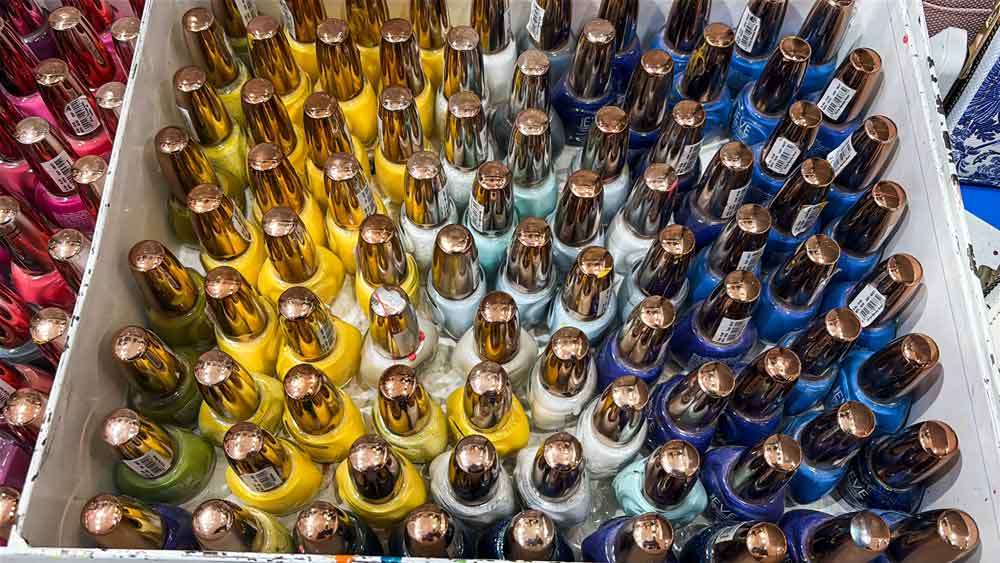
Conventional nail polish is essentially a solvent-based product. It’s a mixture of film-forming agents, resins, plasticisers, colourants and solvents that, when applied to the nail, dries by evaporation. That evaporation releases compounds into the air that contribute to indoor air pollution. When this happens in salon environments where ventilation is limited, it can pose genuine health risks to the workers breathing them in regularly.
Beyond the formula itself, the packaging usually combines glass, a metal cap, a plastic brush and a plastic or metal collar. This combination of materials cannot be separated for recycling by most household recycling systems. Most nail polish bottles end up in landfill, regardless of how conscientiously they are placed in a recycling bin.
Nail polish removers are most commonly made with acetone or ethyl acetate which are too hazardous to be poured down the drain. Additionally, the cotton pads or synthetic rounds used to remove polish add to the waste accumulated with the same toxins.
Ingredients To Know
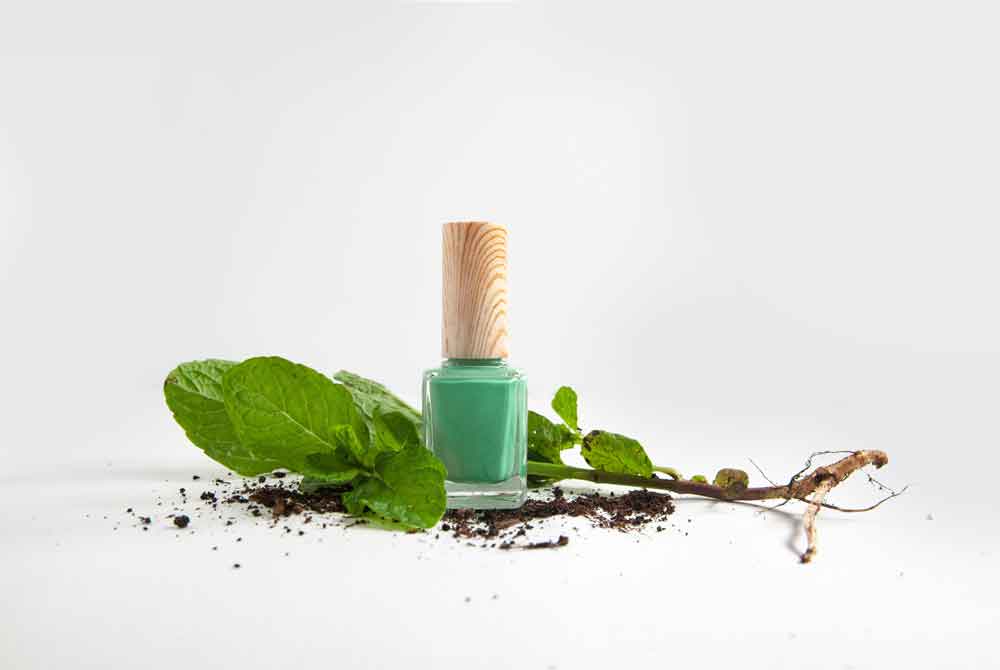
The conversation around nail polish ingredients has been building for years and the industry has responded by gradually removing some of the most concerning compounds. The original ‘toxic trio’ of formaldehyde, toluene and dibutyl phthalate have been removed from most mainstream formulations following consumer pressure, but they have been replaced by other compounds that are less understood and regulated.
Formaldehyde resin, present in many polishes, is derived from formaldehyde. Camphor, used as a plasticiser, is a known irritant. Triphenyl phosphate, or TPHP, also used as a plasticiser in many ‘free from’ formulas, has been identified as an endocrine disruptor. Tosylamide, another resin, can cause allergic reactions in some people.
The ‘free from’ labelling that has become common in nail polish marketing includes variations like 5-free, 7-free, 10-free, 21-free, each indicating that a formula does not contain a specific list of compounds. But ‘free from’ does not mean free from all potentially problematic ingredients. It means free from those particular ones. The list of excluded compounds varies between brands and is not regulated, which means a 10-free polish from one brand may exclude very different ingredients than a 10-free polish from another.
Water-Based, Plant-Derived And Lower-Impact Alternatives
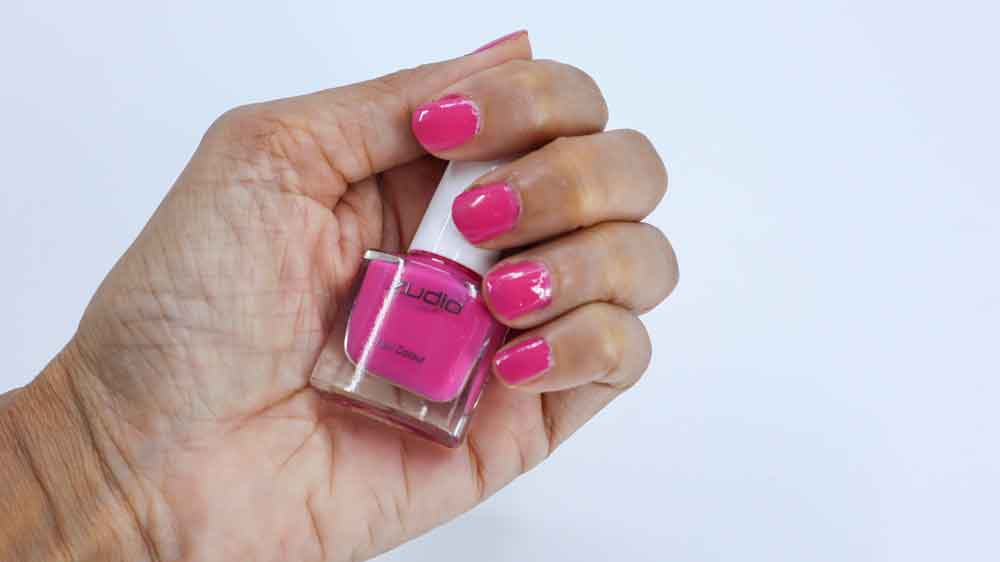
The lowest-impact nail polish category is that which uses water-based formulas. These, as the name suggests, use water instead of chemical solvents as their primary carrier, which significantly reduces compound emissions during application and drying. They can also be easily removed using water or a mild, non-acetone remover. This results in reduced chemical load at the disposal end of the product's life.
Water-based polishes, however, have a typically shorter wear time and a less glossy finish than solvent-based ones, though formulations have improved considerably in recent years. They also tend to be gentler on the nail, making them a better option for those with brittle or damaged nails.
Plant-derived polishes, made using bio-sourced resins and pigments, are another lower-impact category. The percentage of plant-derived content may vary significantly between products, and the claims are not standardised or regulated.
What To Look For When Choosing A More Sustainable Nail Polish
While no nail polish is entirely without environmental impact, some choices may be meaningfully better than others, depending on your environmental priorities. When navigating the category, a few considerations are worth prioritising.
● Look for water-based formulas over solvent-based ones, particularly if you are using polish regularly or in an enclosed space. Beyond the environmental benefit, they are simply gentler on the nail and the air around you.
● Check the packaging. Some brands now offer refillable nail polish systems, glass bottles with metal-free caps that are more easily recycled, or take-back programmes for empty bottles. These are worth seeking out and supporting when you find them.
● Look at what the brand does not say as much as what it does. Go beyond a long free-from list and pick brands that are transparent about their full ingredient list, their packaging choices and their production processes.
● Extend the life of what you have. The most sustainable nail polish is the one already in your collection, used until it is finished. Use thinners to extend the life of thickening polish. A quality base coat can significantly extend wear time, reducing how often you reach for a new bottle.
The choices made around your manicure add up over a lifetime of painted nails in ways that are worth knowing about.