Yoga Can Help Improve Your Mood
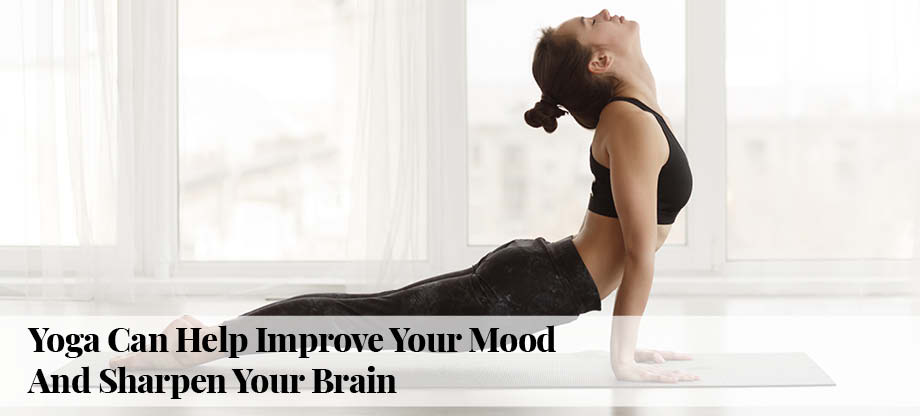
In a recent study by Harvard Health, researchers found that since yoga focuses on meditation and breathwork, it brings a host of mental health benefits like reduced anxiety and depression. If you thought yoga was all about improving your flexibility only, well you’re in for a surprise. With regular practice, it can actually make your brain work better. Here’s everything you need to know.
Yoga helps sharpen the brain
Think of yoga as a workout for your brain. It technically is like one since it helps your brain cells to build new connections, ultimately resulting in better cognitive skills, like improved memory and faster learning. How does it do that? Researchers have found that people who practiced yoga regularly had a thicker cerebral cortex–the part of the brain that processes information–and hippocampus i.e. the area that is involved in learning, compared to non-practitioners.
Researchers used brain imaging technology like MRI scans to conclude that these areas of the brain that generally shrink as you age showed lesser shrinkage in yoga practitioners compared to those who didn’t do yoga. This suggests that yoga can counteract age-related cognitive decline, like memory loss, and may improve learning, reac¬tion time, and reasoning.
Yoga may boost mood
All forms of exercise can boost your mood because of the release of feel-good chemicals like endorphins, but yoga has additional benefits. It can boost mood by elevating the levels of a chemical in the brain called gamma-aminobutyric acid which has been linked with better mood and decreased anxiety. Yoga can also help reduce emotional reactivity which may help you to process a stressful situation and react to it in a calmer manner. Additionally, it lowers the stress hormones in the body and is a great complementary remedy to combine with talk therapy. A review published in the journal Aging and Mental Health looked at the effects of relaxation techniques on anxiety and depression in adults. In addition to yoga, participants also took part in activities like listening to music, massages, progressive muscle relaxation, and stress management. Out of all the techniques, yoga provided the longest effect and music came second.

 home
home HERoes
 StrongHER
 exclusive
 bizruptors
 connect
 showcase
 engage
 grow
grow goals
goals period goals
 fertility and pregnancy goals
 diet and fitness goals
 finance goals
 help
help contest
 about us


