Binge Eating Disorder: What You Should Be Aware About

Rashi Mittal (name changed) loved a good meal, whether at home or outside. There was a possibility that you would find her checking out new restaurants in town every other day. Not only this, in times of distress, she often found comfort in a hearty meal from one of her favourite fast food joints.. When this became a daily occurrence, she started noticing changes in her body, and her family and relatives further pointing it out, didn’t help either. This led to more binge sessions, until it seriously affected her health and she had to be rushed to the emergency room. Later, she was diagnosed with Binge Eating Disorder (BED).
BED is a type of feeding and eating disorder, where you consume copious amounts of food, and feel a loss of control. According to statistics, it affects almost two per cent of people worldwide, and can cause additional health issues linked to diet, like high cholesterol levels and diabetes. Dr Mehezabin Dordi, clinical psychologist, rehabilitation and sports medicine department, Sir HN Reliance Foundation Hospital, Mumbai, adds, “Feeding and eating disorders are not about food alone, which is why they are recognised as psychiatric disorders. People typically develop them as a way of dealing with a deeper emotional issue or other psychological conditions, such as anxiety or depression, or any other mood-related disorder.”
While an occasional binge may be okay, when does it lead to a disorder? Dr Dordi mentions that binge eating is characterised by repeated episodes of eating abnormally large amounts of food in a specific time period. It typically also involves feelings of disgust, guilt, or embarrassment directed towards oneself, which further leads to eating alone. Frequent episodes occur at least once a week (maximum up to three) continuously for three months, and there is significant distress after binging.

Signs And Symptoms
The signs and symptoms to watch out for are:
- Eating much more rapidly than normal
- Eating until uncomfortably full
- Eating large amounts without feeling hungry
- Eating alone due to feelings of embarrassment and shame
- Feelings of guilt or disgust with oneself
To be diagnosed, one or more of the above symptoms should be present.
Causes
Dr Dordi points out that BED is a condition that usually starts in the late teens to early twenties, although it can occur at any age, and has a lot to do with having a negative relationship with one’s body and food. Another characteristic to note is not taking any action to “undo” a binge. Unlike bulimia, a person with BED does not make themselves vomit, take laxatives, or over-work their bodies with exercise to try and counteract a binging episode. And if left untreated, BED can last for many years.
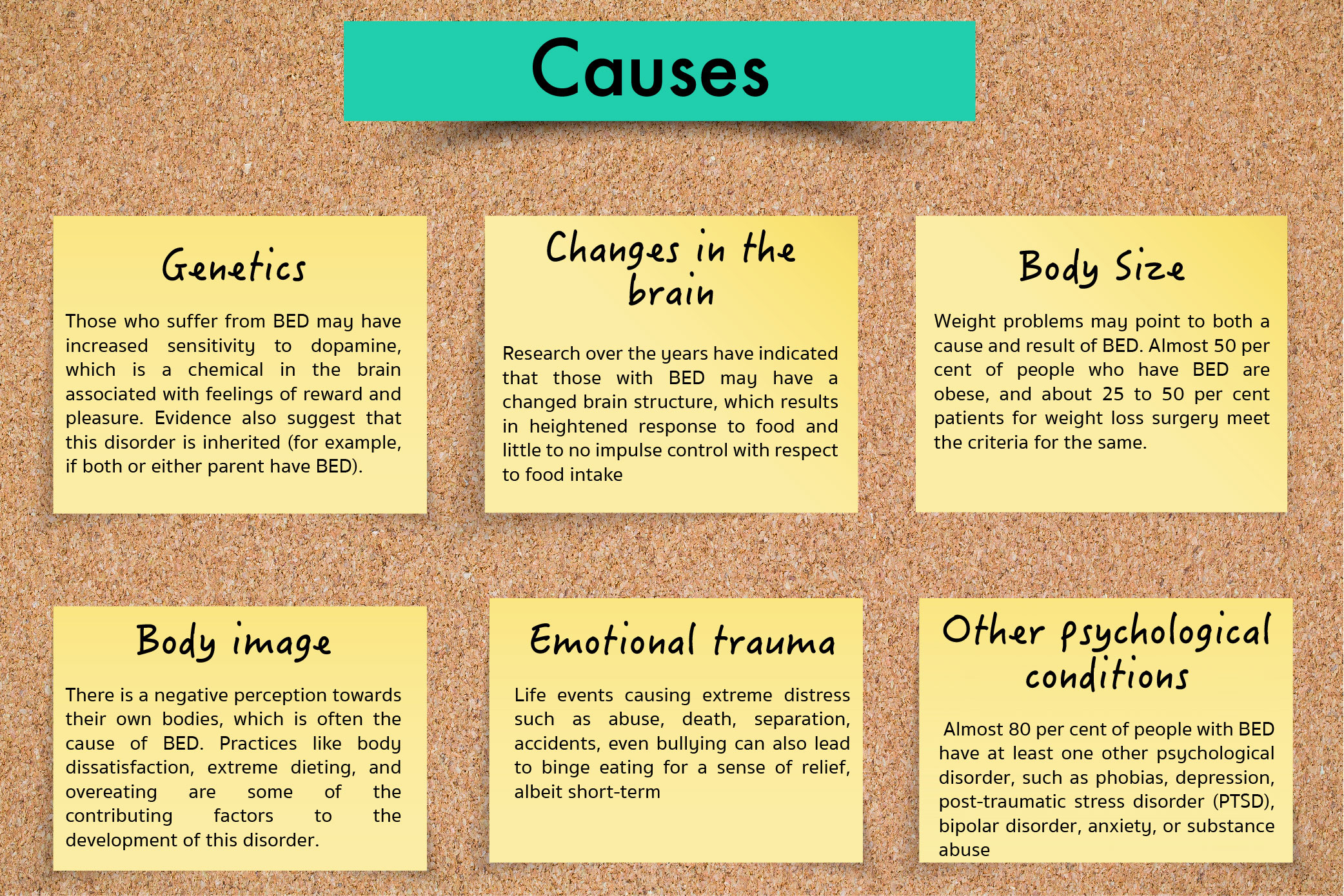
Binge eating over a prolonged period of time, can cause other disorders such as weight gain and obesity, sleep apnea (a condition where breathing stops many times during the night), heart diseases, high blood pressure, type 2 diabetes, and arthritis.
Dr Dordi warns that the presence of any symptoms of BED warrants a medical check, and suggests talking to your medical care provider or a mental health professional about your binge-eating symptoms and feelings. “If you're reluctant to seek treatment, talk to someone you trust about what you're going through as they can help you take the first steps to successful treatment,” advises Dordi.
Treatment Options
The treatment options varies for individuals, and is based on their triggers and their end goals. Dr Dordi lists out the following for BED:
- When it comes to therapy, the options include cognitive behavioural therapy, dialectical behaviour therapy, interpersonal psychotherapy, and behavior therapy for weight loss. Sometimes, group therapy sessions are incorporated to encourage shared experiences, which further helps in recovery and healing.
- While medications can help with binge eating in the short term, there is still some research needed to understand their effects in the long run. When compared to behaviour therapy, they may not be as effective and one shouldn’t rule out the side effects.
A medical or mental health professional is better equipped to advice on selecting an individual treatment plan.
Coping Strategies
Dr Dordi recommends the following coping strategies:
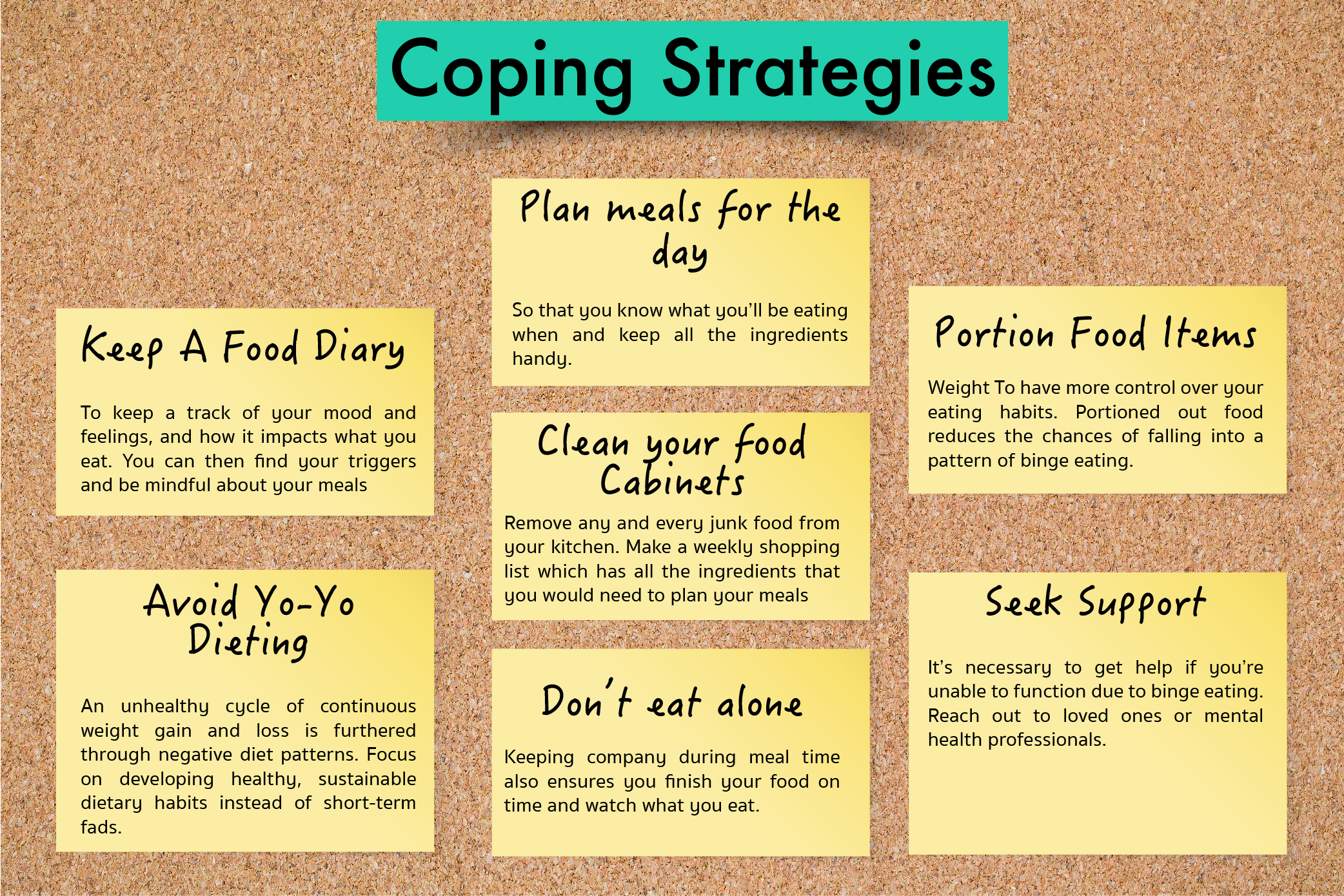
If you have a loved one who may be exhibiting symptoms of binge-eating disorder, Dr Dordi encourages having an open and honest discussion about your concerns. “A person with binge-eating disorder may become an expert at hiding this behaviour, making it hard for others to detect the problem. Provide them with the required encouragement and support to deal with their condition. Offer to help them find a qualified medical care provider or mental health professional, and make an appointment. You can also offer to help accompany them to the doctor, and assist them with setting up good practices suggested by the professional,” Dr Dordi signs off.

 home
 HERoes
 StrongHER
 exclusive
 bizruptors
 connect
 showcase
 engage
 grow
 goals
 period goals
 fertility and pregnancy goals
 diet and fitness goals
 finance goals
 help
 contest
 about us


