Number Of People With Hypertension Has Doubled Globally In Last 30 Years: Lancet Study
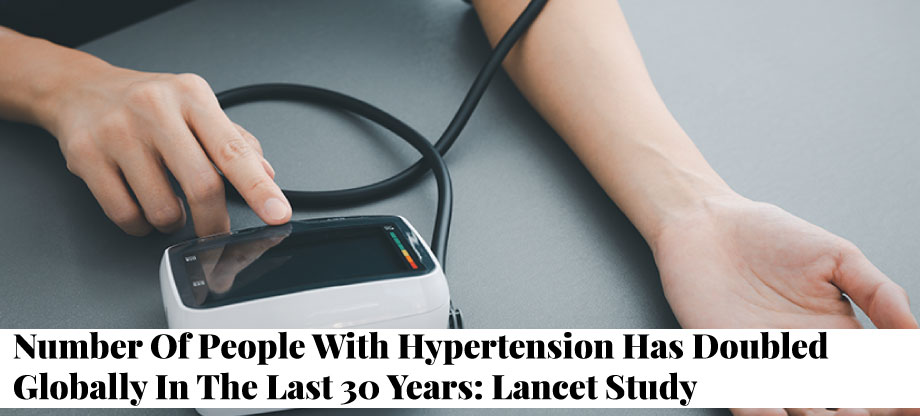
A study funded by the World Health Organisation (WHO) was published in The Lancelet showed that over the last 30 years, the number of adults between the ages of 30 to 79 years living with high blood pressure has doubled. The figure rose from an estimate of 33.1 crore women and 21.7 crore men to 62.6 crore women to 65.2 crore men. The study analysed blood pressure measurements from more than 10 crore people taken over three decades in 184 countries.
Hypertension was defined as having a systolic blood pressure of 140 mm Hg or greater and having a diastolic blood pressure of 90 mm Hg or greater or taking medication for high blood pressure. Many high-income countries like Canada, Switzerland, the UK, and Spain reported an all-time low prevalence but in low- and middle-income as well as European countries like Paraguay, Hungary, and Poland, hypertension levels were high.
The occurrence of hypertension in India has increased marginally from 1990, from 28 per cent in women and 29 per cent in men to 32 per cent in women and 38 per cent in men. High blood pressure is directly linked to more than 85 lakh deaths worldwide each year and is the leading cause of strokes, cardiovascular and renal diseases. Lowering blood pressure can reduce the chances of strokes by 35-40 per cent, heart attacks by 20 to 25 per cent, and heart failure by around 50 per cent.
It is important to note that despite being straightforward to diagnose and easy to treat with low-cost drugs, nearly half the people with hypertension globally in 2019 were unaware of their condition. More than 53 per cent of women and 62 per cent of men with high blood pressure weren’t treated. Blood pressure was controlled (medications were effective in bringing the levels down) in less than one in four women and one in five men.
In India, the National Programme for Prevention and Control of Cancer, Diabetes, Cardiovascular Diseases and Stroke (NPCDCS) is trying to do its bit. It focuses on spreading awareness for behavioural and lifestyle changes, screening, and early diagnosis of people with high-risk factors for the early diagnosis, treatment, and control of non-communicable diseases including cardiovascular diseases. To better this programme, there is a severe need for trained medical professionals and improved health infrastructure at the primary and sub-centre levels.

 home
 HERoes
 StrongHER
 exclusive
 bizruptors
 connect
 showcase
 engage
 grow
 goals
 period goals
 fertility and pregnancy goals
 diet and fitness goals
 finance goals
 help
 contest
 about us


