Does Journaling Actually Help With Mental Wellness? These Journals Make Self-Care Feel More Accessible

For the days when your mind has 37 tabs open, putting a few thoughts on paper might be a good place to start. You know those days when you replay an awkward conversation from three years ago, suddenly feel like there’s a dark film on your thoughts and vocabulary, mentally draft a resignation email you’ll never send, and somehow end up worrying about tomorrow’s to-do list? Same brain, different tabs.
Sometimes, what we need isn’t another productivity hack or a motivational video telling us to romanticise our lives. We need a little space to figure out what we’re actually feeling. And that’s where journaling comes in.
Think of it as having a conversation with yourself, minus the pressure of answering people, sounding articulate, making sense immediately or turning every difficult feeling into a life lesson. You can write about the feeling you can’t name, the colleague who makes your blood boil, the plan that fell through, or the small thing that made you smile. No audience, no perfect grammar and absolutely no need to make it Instagram-worthy.
Does Journaling Actually Help?
There is some science behind the practice. A 2023 meta-analysis published in the British Journal of Clinical Psychology examined 31 experimental studies involving 4,012 participants. It found a small but statistically significant overall reduction in symptoms of depression, anxiety and stress associated with expressive writing. The researchers also noted that the benefits may emerge over time rather than immediately.
The takeaway? Journaling can be a useful tool, but it isn't a magical cure for anxiety, a substitute for professional care or a guarantee that you'll feel better after every writing session.
So, how might it help in everyday life? Writing down a jumble of thoughts can make them easier to examine. You may begin to notice what tends to trigger your stress, which situations leave you emotionally drained, or how often you dismiss your own needs. Instead of having the same thought loop in your head, you have something concrete to reflect on.
And you don't have to be in therapy to start. Journaling can be a personal self-care practice in its own right, or something you use alongside therapy to reflect between sessions. It can also help you identify what you'd like to discuss with a counsellor. The important thing is to remember that a journal supports your mental wellness; it doesn't have to do all the heavy lifting.
What Does An Expert Say?
Counsellor Janhavi Rathore of Mood Space has previously highlighted the value of acknowledging difficult emotions instead of rushing to fix them. Writing can be one way to create that pause: it gives you room to separate a problem from the emotional noise around it and look at what you might need next.
The key is to approach the page with curiosity, not judgement. You don't need to turn every entry into a positive affirmation or find a silver lining in a genuinely rubbish day. Sometimes, ‘I’m overwhelmed, and I don’t know why yet’ is a perfectly good place to begin.
And if writing makes you feel more distressed, brings up difficult memories you aren't ready to process, or leaves you stuck in repetitive rumination, it's okay to stop. You can try a gentler prompt or speak with a mental health professional.
Four Journals To Help You Check In With Yourself
The blank page can be intimidating. What are you supposed to write when your only thought is ’I don't know what I'm feeling‘? Guided journals offer prompts, check-ins and exercises so you don't have to figure out where to begin. Here are four options, each with a slightly different approach to self-reflection.
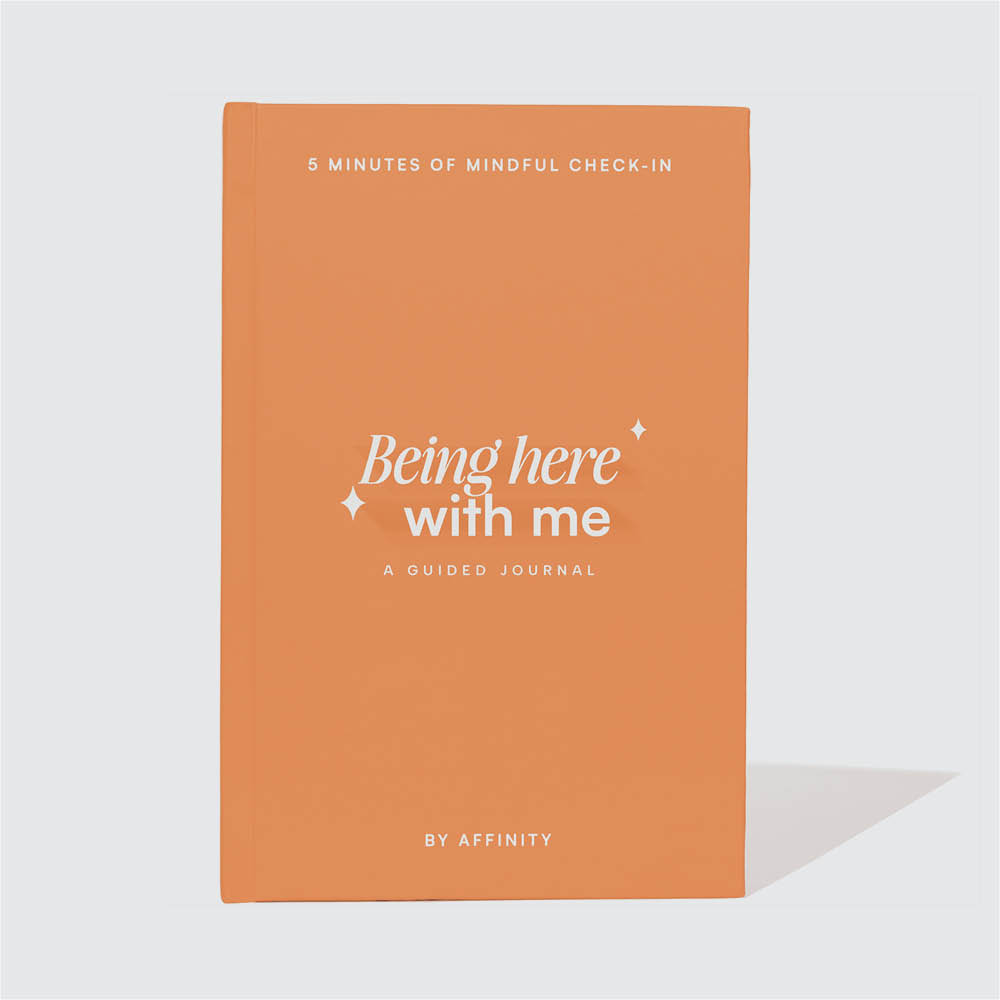
1. Being Here With Me Daily Self-Care Journal — Affinity | ₹1,100
If you're new to journaling and want something that feels manageable, Affinity's Being Here With Me is designed around a five-minute daily practice. Its mind–body–heart check-ins encourage you to look at your thoughts, emotions and physical state together, rather than treating them as completely separate things.
The journal also includes emotion-based prompts, an emotional wheel, gratitude practice, mood and habit tracking, weekend reflections and monthly self-review. That combination makes it useful for anyone who wants to notice patterns over time: perhaps your mood dips when you're not sleeping enough, or your stress levels rise when you keep saying yes to everything.
The three-month, undated format also means you can start when you're ready, without the pressure of keeping up with a dated planner. It's less about writing a long diary entry every night and more about making a small, regular appointment with yourself.

2. Feelings Journal, Sunshine Club | ₹899
Ever been asked, ‘What's wrong?’ and answered ‘Nothing’ because you genuinely couldn't explain what was going on? Sunshine Club's Feelings Journal is built for those moments when identifying an emotion is half the battle.
Its daily prompts help you explore what you're feeling and why, while weekly check-ins give you a way to look back at your emotional patterns. There's also an Explore Feelings section covering nine common emotions, along with deeper introspection prompts and monthly vision-board pages.
What makes this one stand out is its focus on emotional vocabulary and self-awareness. Instead of simply writing ’bad day‘, you can start asking whether you felt disappointed, anxious, frustrated, lonely or overwhelmed and what might have contributed to that feeling.
The five-minute format, undated daily pages and included stickers add a little fun to the process. It could be a good fit if you want emotional reflection to feel less like homework and more like a gentle daily check-in.
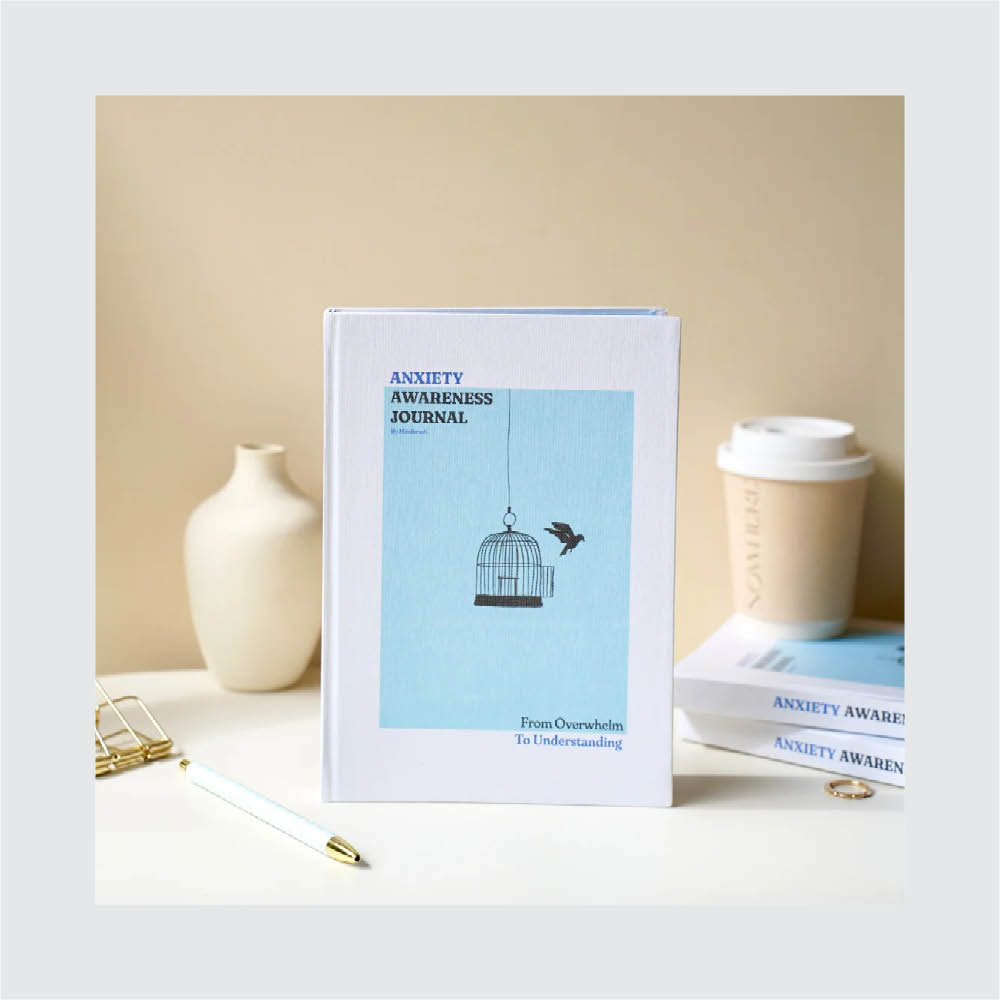
3. Anxiety Awareness Journal, Mindbrush | ₹1,210
When anxiety turns a small uncertainty into an entire imaginary disaster, a vague instruction to ‘write your feelings down’ might not feel especially helpful. Mindbrush's Anxiety Awareness Journal takes a more structured approach, using exercises inspired by cognitive behavioural therapy (CBT), mindfulness, relaxation techniques and reflective prompts.
Rather than repeating the same questions every day, it introduces different tools and strategies across its 66-day format. You get space to try them, reflect on how they feel and work out which approaches might be useful for you.
This makes it a particularly relevant option for someone who wants to understand anxious thought patterns and practise responding to them differently. It's not simply a diary of worries; the emphasis is on learning and experimenting with coping strategies.
One important distinction: although the journal draws on CBT-informed techniques, using it isn't the same as receiving CBT from a trained mental health professional. If anxiety is affecting your sleep, relationships, work or everyday functioning, consider seeking professional support too.
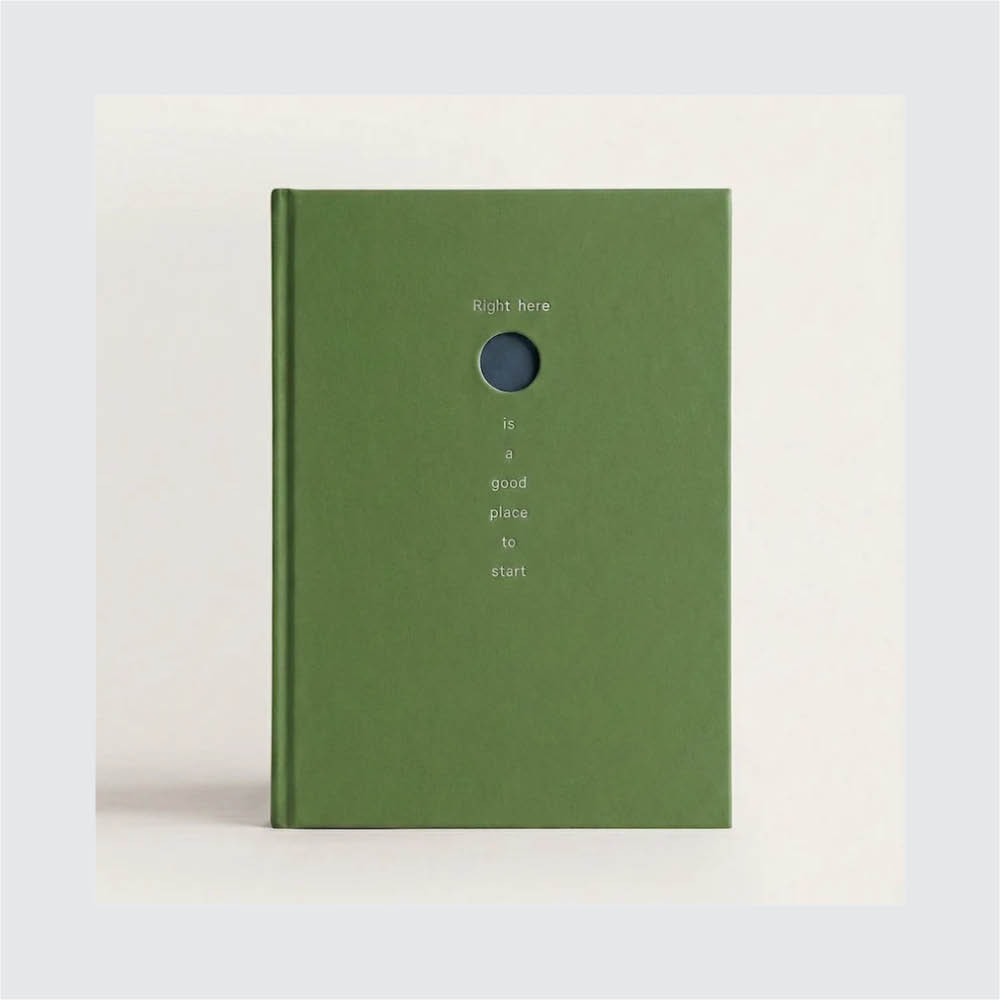
4. Know Yourself Guided Wellness Journal, Koi by Kanchi, available on Brown Living | ₹1,590
If you want to go beyond a quick daily check-in and spend more time understanding yourself, the Know Yourself Guided Wellness Journal takes a longer, chapter-based approach. Its guided writing exercises are spread across five chapters over 11 weeks, with Sunday check-ins to help you pause and reflect on what you've learnt.
The idea is to explore how your mind works and how your responses shape different areas of life, including work, relationships and your relationship with your body. The format gives you a longer stretch of time to revisit themes, rather than treating every entry as a separate thought of the day.
There's also a thoughtful material detail: the journal uses handmade rag paper, alongside a hardcover format and protective fabric sleeve. If the act of sitting down with a physical book is part of what helps you slow down, those details may add to the experience.
This one may suit people who enjoy a more deliberate, guided self-reflection practice and want to give themselves several weeks to explore it.
Try writing for five minutes. Start with a simple question: What has been taking up the most space in my mind today? If that feels too big, write down one thing that made you smile, one thing that drained you and one thing you need tomorrow. If you miss a day or a week you haven't failed. Pick it up again when it feels useful.
If you're already in therapy, you could use a journal to track recurring thoughts, note situations you'd like to discuss or reflect on what you notice between sessions. If you're not in therapy, it can still offer a little structure for checking in with yourself. Neither route needs to look the same for everyone.
But remember, journaling is a support tool, not a test of how well you're managing your emotions. If difficult feelings persist, become overwhelming or interfere with daily life, reaching out to a mental health professional is a worthwhile next step.

 home
 HERoes
 StrongHER
 exclusive
 bizruptors
 connect
 showcase
 engage
 grow
 goals
 period goals
 fertility and pregnancy goals
 diet and fitness goals
 finance goals
 help
 contest
 about us


