The Hidden Price of Everything We Buy
In every home, the dustbin lid lifts multiple times a day, something goes in, and the lid closes again after a few seconds. You’ll find empty shampoo bottles, food-delivery containers, a dress worn once, a broken charger, lipstick tube or a cardboard box from an online order.
India generated an estimated 4.14 million tonnes of plastic waste in 2022–23, according to data supplied by State Pollution Control Boards and Pollution Control Committees to the Central Pollution Control Board (CPCB). And our appetite for electronics is leaving an equally formidable trail. The CPCB estimated 1.25 million tonnes of e-waste in 2023–24, of which 61.94 per cent was reported as collected, dismantled and recycled or disposed of. The rest does not magically disappear because every discarded object has an afterlife.
The Waste Economy
A discarded object may enter a municipal collection system, a sorting facility, a landfill, a recycling unit, an informal scrap network or several of these in succession. India's waste economy is also a human economy. Much of the collection, sorting and recycling chain operates informally, involving waste pickers and casual workers. The International Labour Organization (ILO) notes that waste pickers contribute to public health, sanitation and resource circulation, while often lacking legal recognition, decent working conditions and social protection. For women, this becomes even more complicated.
The ILO's work on India's waste sector has highlighted the importance of gender-responsive approaches to a value chain in which informal workers perform essential environmental work. In Pune, for example, waste picker organisations have helped integrate informal workers into municipal waste collection. Suman More, a waste picker associated with SWaCH, told the ILO, ‘I am a waste picker and I used to collect waste, particularly plastic materials on the streets.’ So when we congratulate ourselves for ‘recycling’, we must also ask ourselves who is doing the sorting, under what conditions and who gets paid for the material we have thrown away.
‘The fact is that garbage is produced because of our consumption. The fact is that the richer we get, the more we need to throw and waste, and the more we pollute,’ Sunita Narain, environmentalist and director general, Centre for Science and Environment has said. She added, ‘If we pay more to throw, we will also learn not to throw more. This is the way of the future business. Not use, discard and forget.’
The Impact Of Fast Fashion
Once a trend appears on Instagram or a colour becomes popular or a celebrity wears a particular silhouette, we have this urge to update our wardrobes. The fashion industry's environmental footprint is enormous. United Nations Environment Programme (UNEP) estimates that textiles account for 2 to 8 per cent of global greenhouse-gas emissions, while the industry uses the equivalent of 86 million Olympic-sized swimming pools of water every year. UNEP also points to the sector's substantial chemical footprint.
India's ready-made garment sector has huge economic significance and directly employs more than 35 million people across the wider textile value chain, according to an ILO publication. Yet an earlier ILO-supported study of garment workers in India found troubling working conditions among the workers surveyed: four in five reported working longer hours or more days than agreed at recruitment, while only fewer than four in ten had received a written employment contract.
That does not mean every garment factory is exploitative, nor that every inexpensive garment has the same labour footprint. But it does mean that the low price on a shopping app may conceal costs that are not visible on the checkout screen.
The other problem is that clothes do not cease to have an environmental impact when they leave our wardrobes. Synthetic textiles can release plastic microfibres during washing, while chemicals used during manufacturing can complicate recycling. UNEP notes that more than 15,000 chemicals are used in textile manufacturing, including substances that may persist in the environment and make recycling more difficult.
You must not just ask yourself what your dress is made of, but also how many times you’ll wear it.
The Anxiety Economy
Shopping can offer novelty, distraction, social belonging and a brief sense of reward. Digital commerce has made that easier. Research into compulsive buying-shopping disorder describes a pattern in which buying becomes difficult to control and can continue despite financial, emotional or interpersonal consequences. Studies have also found associations between problematic social-media use, fear of missing out and anxiety. The result can be an endless cycle of perceived inadequacy followed by consumption. The most radical green purchase, is in fact not purchasing anything at all.
The terms ‘natural’, ‘conscious’, ‘eco-friendly’, ‘biodegradable’ and sustainable’ can be vague. In 2024, the Central Consumer Protection Authority (CCPA) issued the Guidelines for Prevention and Regulation of Greenwashing or Misleading Environmental Claims. They define greenwashing to include deceptive or misleading practices such as concealing relevant information or making vague, false or unsubstantiated environmental claims.
Consumers must ask if the packaging recyclable or if there is actually a recycling system that accepts it locally. Is the product biodegradable under ordinary conditions, or only in an industrial facility? Does ‘natural’ describe one ingredient while saying nothing about the rest of the product? Is a company measuring its entire supply chain or highlighting one small improvement? The CCPA's greenwashing guidelines exist precisely because environmental claims need substantiation, not just attractive language.
The Business Of Beauty
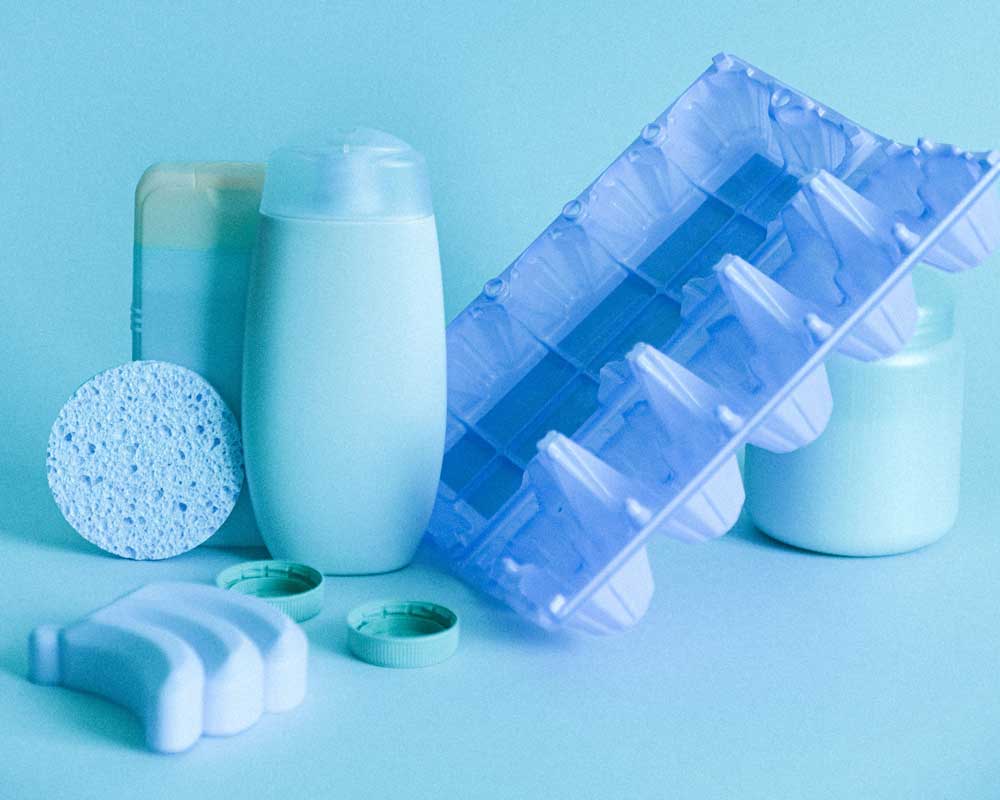
Beauty is another place where the contradiction becomes intimate. A moisturiser may come in a jar, inside a carton, sealed with a film, accompanied by a spatula and protected by additional packaging. A pump may combine several different materials while a toothpaste tube or sachet may not be accepted by the recycling system available in your neighbourhood. Even the product itself can contain environmental concerns. UNEP has documented the presence and potential environmental implications of plastic ingredients in personal-care and cosmetic products, including microplastics.
This does not mean that every refill system is automatically sustainable. For instance, a refill that requires a separate plastic pouch every month may solve one packaging problem while creating another. A heavier glass bottle may be reusable but have a larger transport footprint. A zero-waste product shipped individually across the country is not necessarily impact-free. Zero-waste beauty is therefore less about finding a perfect product and more about reducing the number of products, extending their use and choosing packaging systems that genuinely recover material.
The Perils Of E-Waste
The UN's Global E-waste Monitor reported that the world generated 62 million tonnes of e-waste in 2022, while only 22.3 per cent was documented as properly collected and recycled. It projects 82 million tonnes by 2030. India has its own formal system under the E-Waste Management Rules, 2022, which uses extended producer responsibility. Yet the sheer growth of discarded electronics shows why recycling cannot substitute for longer product lives, repair and reuse.
Sustainable consumption is sometimes presented as an expensive lifestyle where everything is organic, clean and artisanal. But some of the most consequential choices actually cost nothing. Wear the clothes already in your cupboard. Repair before replacing. Borrow occasionally. Buy fewer impulse purchases. Use a product until it is genuinely finished. Separate waste correctly. Keep electronics in use longer. Donate or resell usable goods rather than treating them as rubbish. Carry what you already own.
The goal should not be to become a perfect green consumer, which could actually lead to consumption anxiety. Instead, we could become more questioning consumers. We must ask:
*What a product is made of?
*How long it will last?
*Can it be repaired?
*What happens when we are finished with it?
It can include anything from water, chemicals, carbon, packaging, extraction, labour, transportation, waste and the work of the people who deal with everything we decide we no longer want.

 home
home HERoes
 StrongHER
 exclusive
 bizruptors
 connect
 showcase
 engage
 grow
grow goals
goals period goals
 fertility and pregnancy goals
 diet and fitness goals
 finance goals
 help
help contest
 about us


