School Bags Are Getting Too Heavy: Is Your Child Carrying More Than They Should?
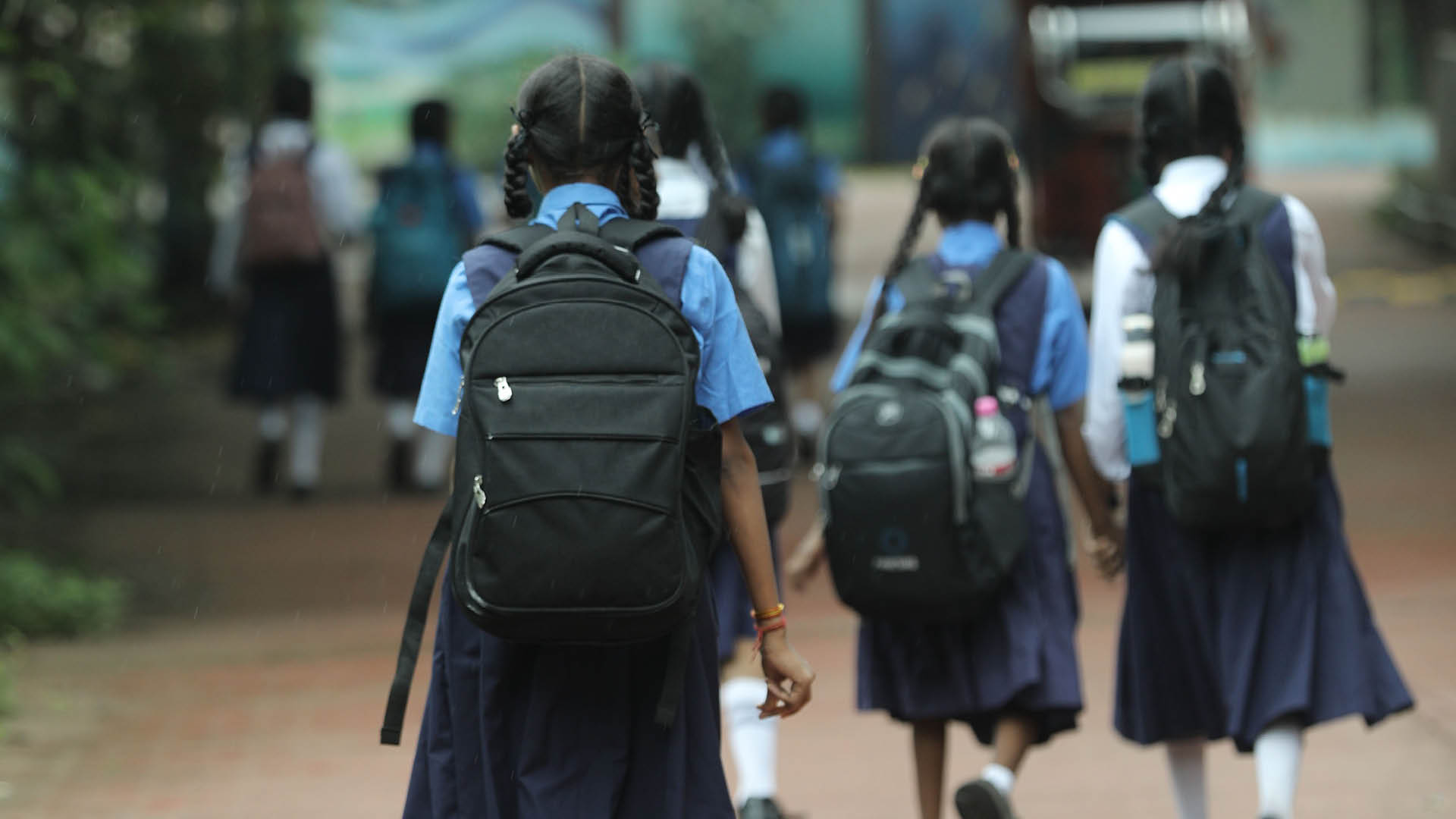
Remember struggling to lift your school bag on a Monday morning, only to discover that your water bottle, lunch box and every textbook known to humankind were inside? Now imagine carrying that weight when you're six years old.
For many children, the school day begins with a physical workout before the first lesson has even started. Between textbooks, notebooks, stationery, lunch boxes and water bottles, school bags can become surprisingly heavy. And while parents may joke about needing a forklift to lift them, the issue deserves more than a laugh.
India has had a School Bag Policy since 2020, which recommends that a student's school bag weigh no more than 10% of their body weight for Classes I to X. Yet, concerns about overloaded bags continue to surface, prompting renewed calls for schools to take the guideline seriously.
The 10% rule, explained
The idea is simple: a child's school bag should weigh no more than one-tenth of their body weight.
That means a child weighing 20 kg should ideally carry a bag weighing no more than 2 kg. For a child weighing 30 kg, the recommended limit would be 3 kg.
The policy also recommends that pre-primary children carry no school bags. Schools are encouraged to reduce unnecessary books, coordinate homework and timetables, monitor bag weights and provide suitable classroom storage where possible.
It isn't just about buying a lighter backpack. If a child needs a different textbook and notebook for every subject, the weight can quickly add up. Reducing the load requires schools to look at what children are expected to carry in the first place.
How big is the problem?
A study conducted in two rural schools in Maharashtra offers a glimpse into the challenge. Researchers studied 175 students in Classes VIII and IX and found that 51% were carrying bags weighing more than 10% of their body weight at the start of the study.
After awareness sessions with teachers and students, that proportion fell to 29%. The average bag weight also declined from 3.77 kg to 3.2 kg. However, the researchers noted that awareness alone did not eliminate the problem.
The lesson? Simply telling children to pack lighter isn't always enough. School schedules, the number of subjects taught each day and the need to carry multiple books can all contribute to the weight.
Why should parents care?
An overloaded bag can place additional strain on a child's back, shoulders and neck. Studies have associated heavy school bags with discomfort, pain and postural concerns, although the effects vary and a heavy bag alone does not automatically cause a spinal condition.
Children who regularly complain of back or shoulder pain, tingling, numbness or difficulty carrying their bags should be taken seriously. Parents can discuss persistent symptoms with a healthcare professional rather than assuming they're simply part of growing up.
Who is responsible for making school bags lighter?
In September 2026, Maharashtra's school education department directed schools across government, government-aided and private sectors to ensure that bags weigh no more than 10% of students' body weight. Schools were also asked to plan timetables so children carry only the books and study materials required for the day.
That kind of approach matters because the solution cannot rest entirely on parents or children. Schools can review daily subject schedules, avoid asking students to carry books they won't use, provide lockers or classroom storage where feasible, and weigh bags periodically. Parents can help by checking timetables, removing unnecessary items and ensuring that bags have two padded, adjustable shoulder straps.
A lighter bag, a better school day
School should challenge children intellectually, not leave them struggling under the weight of their learning materials. The 10% guideline gives schools a practical benchmark, but it only helps when it translates into everyday action.
So, the next time your child heads out with a bag that looks bigger than they are, don't just ask whether they've packed their homework. Check how much they're carrying, too.
Because learning should be a heavy subject not a heavy load.

 home
 HERoes
 StrongHER
 exclusive
 bizruptors
 connect
 showcase
 engage
 grow
 goals
 period goals
 fertility and pregnancy goals
 diet and fitness goals
 finance goals
 help
 contest
 about us


